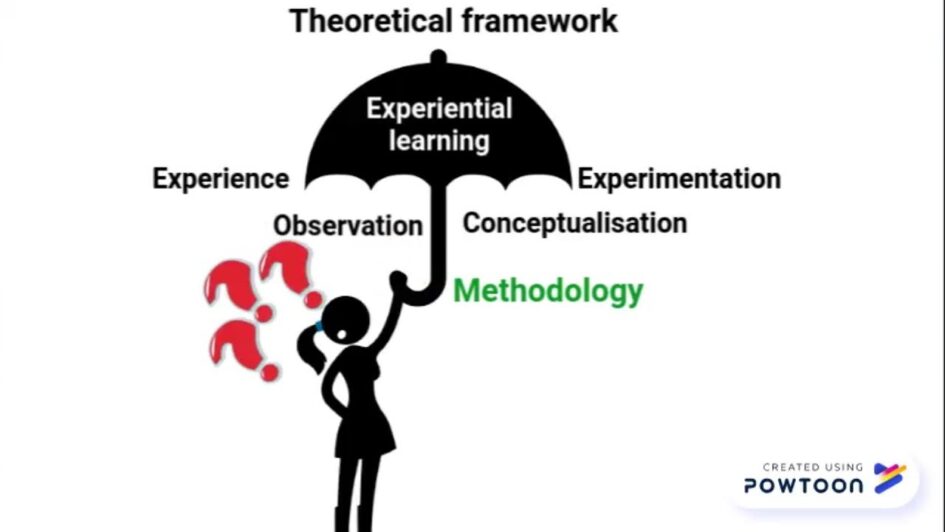
The main objective of my project lies within the question of how online technology can be used to support the reporting of workplace bullying? This question can be molded to fit multiple frameworks, so to get a stronger overview and help carry the proposed research, using several frameworks will be helpful in collecting and applying the research. Using multiple theories will allow me to be more objective and use multiple lenses; “competing theories are common in the social sciences because the nature of the phenomena being studied allows for those phenomena to be viewed from multiple perspectives. Each perspective could provide a reason and sensible explanation of the phenomenon being studied” (Anfara & Mertz, 2015).
There are times during my research that I feel as though I am hitting a brick wall, for example, when I research Alberta Colleges Policies and Procedures, most state to contact HR or report workplace harassment to a manager (BVC, 2019 & SAIT, 2020). When researching the actual technology aspect, I am finding non descriptive and vague examples; which tells me I need to do more quantitative research into what the actual (if any) technology is, as this is one of the largest road blocks I am seeing. Therefore, the technology acceptance model is most fitting for one of my frameworks. I need to examine the attitude and see what influence this has on the individual’s behavior. Would using technology make a person more disinterested in reporting workplace bullying? Technology acceptance brings to light certain variables I had not considered when doing my research. There could be potential losses, frustration and even create a realm of distrust (Chung, 2006): “It is equally important to understand what motivates employees to continue to use these systems once adopted” (Chung, 2006).
Systems Theory is broken down as a “framework by which one can investigate and/or describe any group of objects that work together to produce some result” (Gaia, 2020). Because I am dealing with a question which contains several different variables, I feel this will allow me to identify the many different “players” involved. For example, the bullying victim needs to go through a system to report workplace bullying, but what are the effective ways of navigating this system? I am dealing with anti-social behavior, technology, workplace policies and procedures and statistics of reporting bullying. Systems theory helps bridge a gap between the sociological and socio – science perspective. I am wondering if there are too many moving parts, which keeps the research very interesting, but makes it overwhelming.
“Emphasizing the impact of constructed knowledge on the individual’s active, reflective thinking” Ruey, S. (2010) plays a large factor in my research, as constructivism points out that the reality of the situation is based on the individuals experience. Finding out how bullying is reported is important but does not lend to the entire premise of the research, I need more than the individuals “real world perceptions” (McLeod, S. A. 2019), but I cannot dismiss their reality. Therefore, I want to ensure I use constructivism theory as something in my “back pocket” when reviewing the research to bring a stronger, deeper understanding of the logic and rationale as to what is being discussed in regard to bullying. Would social constructivism work best possibly?
Reading examples of why people do not report workplace bullying seems to boil down to victim blaming and fear of repercussions (Meidav, 2020), so having more autonomy and avoiding a long drawn out process is elemental in bringing both awareness and reporting to the forefront. Since we have moved the majority of colleges to an online capacity (due to the current climate), I would like to think we are more advanced in how we report workplace bullying. I find it interesting that we can take a picture, post it to facebook or snapchat and receive feedback and comments immediately. Yet, when I reached out to my Faculty Association and HR department 2 weeks ago regarding technology offered to help with reporting workplace bullying, I have been given a phone number or in one case – radio silence.
I always appreciate the great feedback I get from this group, so please let me know your thoughts. Thank you in advance.
- Kerry
References
Anfara, V. A., & Mertz, N. T. (2015). Theoretical frameworks in qualitative research. Thousand Oaks, CA: Sage.
Chung, S. (2006). Extending the technology acceptance model with social and organizational variables. Cornell University.
Gaia. (2020). What is Systems Theory? Retrieved November 30, 2020, from http://environment-ecology.com/general-systems-theory/137-what-is-systems-theory.html
McLeod, S. A. (2019). Constructivism as a theory for teaching and learning. Simply Psychology. https://www.simplypsychology.org/constructivism.html
Meidav, N. (2020). Why workers don’t report misconduct in the workplace. Retrieved from https://vaultplatform.com/why-workers-dont-report-misconduct-in-the-workplace/
Ruey, S. (2010). A case study of constructivist instructional strategies for adult online learning. British Journal of Educational Technology, 41(5), 703-720.
November 30, 2020 at 2:30 pm
Hi Kerry, you have an interesting topic and one that can be explored from multiple angles. It seems that your focus is on the technology aspect and how it can support staff to report workplace bullying. The technology acceptance model (TAM) sounds like a good framework to ground your research. Technology adoption is the ability of users to accept and utilize digital technologies introduced in the organization. Acceptance and use of digital technologies are based on its perceived ease of use and perceived effectiveness (Bernstein, McCreless, & Côté, 2007; Ifinedo, 2018). Furthermore, the same authors argued that leadership and role-modelling are also essential elements of technology adoption. Perhaps looking at change management and leadership may also unravel ideas and issues that could either support or hinder the use of technology for reporting bullying. I also stumbled on a theory of planned behaviour (TBP) when I was doing research on my topic. TBP is based on the premise that individual behaviour is influenced by attitude, subjective norms, and perceived behavioural control. “Attitude refers to an individual’s positive or negative feelings toward engaging in a specified behaviour. Subjective norms describe an individual’s perception of what significant others think about a given behaviour. Perceived behavioural control refers to an individual’s beliefs regarding the resources needed to facilitate a behaviour” (Ifinedo, 2018). Maybe TBP theoretical framework is another option to explore?
Resources:
Bernstein, M. L., McCreless, T., & Côté, M.J., (2007). Five constants of information technology adoption in healthcare. Hospital Topics, 85(1), 17-25. Retrieved from https://ezproxy.royalroads.ca/login?url=https://www-proquest-com.ezproxy.royalroads.ca/docview/214591108?accountid=8056
Ifinedo, P. (2018). Empirical Study of Nova Scotia Nurses’ Adoption of Healthcare Information Systems: Implications for Management and Policy-Making. International journal of Health Policy and Management, 7(4), 317–327. https://doi.org/10.15171/ijhpm.2017.96
November 30, 2020 at 7:29 pm
I am very interested in your topic. There is so much conversation right now about anti-bullying, but there is still so much of it happening.
I can see how technology acceptance model and systems theory would support your research. Your topic has two clear sides to it so the need is present for both frameworks. There are several aspects to bullying making it a system. As you state, your research is looking into the use of technology to report bullying. In order to see if there is a better tool, I would think you would need to understand the system. Good choice of framework!
The technology acceptance model framework is a clear choice since you are looking at what, if anything, technology can do to help victims. Might there be resistance to using technology to report bullying? What is stopping technology from being useful in this field?
I think these will help you build a good foundation.
December 8, 2020 at 10:14 am
Thank you Kathy, it is a super interesting topic and with so many people moving to online, I feel it is a good conversation to have. Yes, you nailed it when you pointed out that I am looking for a better tool (or any tool) that helps with the reporting of workplace bullying. I appreciate your comments.
– Kerry
December 1, 2020 at 3:54 pm
Good choices Kerry with both TAM and Systems theory and you’ve done a great job both explaining them, and showing the connection to your work. While the choice of TAM is really clear to me, systems theory seems a bit more on the edge in that it could go either as a background piece, or could be something that you explore further as part of the research, and so, if it makes sense as you get into the lit review to shift it out of the TF and into the mainstream you certainly can. And, likewise, if it makes more sense to leave as background that’s fine too. No concerns either way.
December 8, 2020 at 10:12 am
Thank you very much for your thoughtful comments Deb. I agree and I will keep Systems theory as a background piece as it makes more sense and with two many TF’s, I don’t want anything to get lost in translation. Using TAM and constructivism seems to be the way forward – thank you for helping steer me on the right path.
– Kerry
December 2, 2020 at 9:11 pm
Hi Kerry,
Wow, what a great topic!
With the movement of so much to online forms of communication, I almost feel like bullying is becoming more prevalent! It’s easy to say something online without any repurchasing, or some would think…..
TAM seems like a great fit for your research question, where as system theory seems like you could probably draw some great connections, but I’m not sure if it will lead you to the strength in support you are looking for. Systems Theory also seems to open up another door and somewhat draw my attention away from your focus.
Happy to discuss further at any time.
I’m really looking forward to seeing where this goes!
December 2, 2020 at 9:12 pm
Sorry that should say repercussions**
December 8, 2020 at 10:11 am
Thank you for your comments Leigha, I appreciate your thoughts and input. I agree! After reading through the comments, I think I am going to stick with TAM and Constructivism to help paint a clearer, more precise picture. I am going to keep the systems theory as a “background piece” (as Deb pointed out), as it applies more to how I will be conducting my research and not really at the forefront of the TF. Much appreciated Leigha and I will for sure take you up on the offer to chat about this further – thank you.
– Kerry