
Introduction
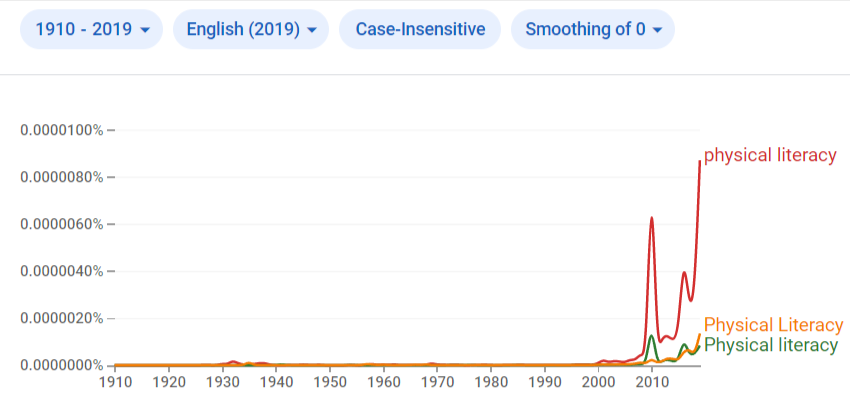
After seven years of development, Cycling BC, a member organization of Cycling Canada, recently launched the new HopOn instructor training tool and physical literacy curriculum for young cyclists across the country. Inspired by existing programs, like Run Jump Throw Wheel, JackRabbits, and the 60-minute kid’s club, HopOn builds upon recent interest in physical literacy (Google Ngram Viewer, 2021) to give instructors and participants tools that help pattern fundamental movements and build confidence through sport. This design case explores the author’s instructional design process during the multi-year development of the instructor tool. In addition, it offers insights that may inform the development of similar programs in the future (Paulus & Spence, 2010). The final product includes an Articulate360 eLearning module hosted on a user-friendly Learning Management System (LMS). In addition, it provides multi-modal videos, laminated cheat sheets, digital textbooks, and the option for printed resources and continued mentorship.
Background
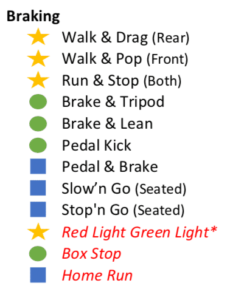
Previous iterations of the instructor tool started in 2017 and were developed annually through instructor feedback, stakeholder meetings, and core staff brainstorming. Nelson & Stolterman (2012) define instrumental judgment as an action taken to believe that it will positively associate with the desired outcome (Shanks & Dickinson, 1991). The program’s open-ended structure from 2015-2019 helped foster creativity, reinforce successful practices, and contextualize the choices made to pursue our prescribed end: big smiles, skilled riders, and confident instructors.
By playing the long game and adopting an appreciation for the non-linear and complex nature of teaching, new games, movements, and jargon could emerge at the local level and then be introduced at annual meetings and tested in another of our five operating regions across the province. Complexity theory encourages this osmatic approach (Brown, 2012; Marion & Uhl-Bien, 2001; Sprong, Driessen, Hillebrand, & Molner, 2021). After working with over 100 instructors and 60,000 students, attributes of self-organization (Boyatzis, 2008; Onyx & Leonard, 2010; Plowman et al., 2007) formed between the core staff and informed the recent 2021 design. The 2021 onboarding process uses an on-demand Articulate360 eLearning module, curated video libraries, and password-protected PDF materials to overcome previous challenges associated with geographic diversity, internet-connection inequities, document printing costs and logistics, and copyright concerns. The follow-up outdoor practice teaching session utilizes the entire video library and provides laminated textbooks for reference.
Design/Innovation Process
The program accommodates two distinct audiences. Ultimately, the program aims to help children explore their range of motion while riding a bike so that they can say with confidence, iRide! To make those experiences possible, instructors need to understand the cycling-specific movements, games, and jargon and engaging classroom-control techniques that maximize fun and safety. Guided by the Coaches Association of Canada’s NCCP program, this new instructor tool encourages participants to problem-solve and memorize the curriculum’s key attributes. Historical instructor demographics and feedback from earlier versions of the instructor training informed the design of the 2021 program. Due to current business models, instructors are often 16-22 and 35-45 years old seeking paid positions in their community. To help expand the program across the country and achieve Cycling Canada’s 2030 strategic goals, the author employed a small team of experts to design and develop the resources during the pandemic shutdown. The design needed to be comprehensive but flexible, multi-modal, highly visual, translatable/adaptable, easy to use, and bare no variable costs during future delivery.
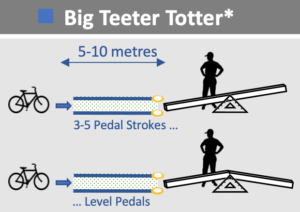
The team included a certified master coach developer, an experienced yet un-trained instructional design partner, a professional speechwriter, and a sales executive. Through the 10-month process, the original 20-page PDF from 2018 transformed into an engaging, fun, and interactive 4-hour eLearning module, accompanied by a highly visual 150-page textbook and 150 narrated videos. The experience of guiding +20 new staff through the onboarding process each year reminded the author to include only the fundamental concepts in the eLearning module, deferring any “nice to know” information to weekly in-season mentorship calls or on-site visits. The 2nd author experienced mentorship from a family friend and leader in occupational safety, informing their process of creating a story-based and action-oriented concussion eLearning module for athletes and sports leaders.
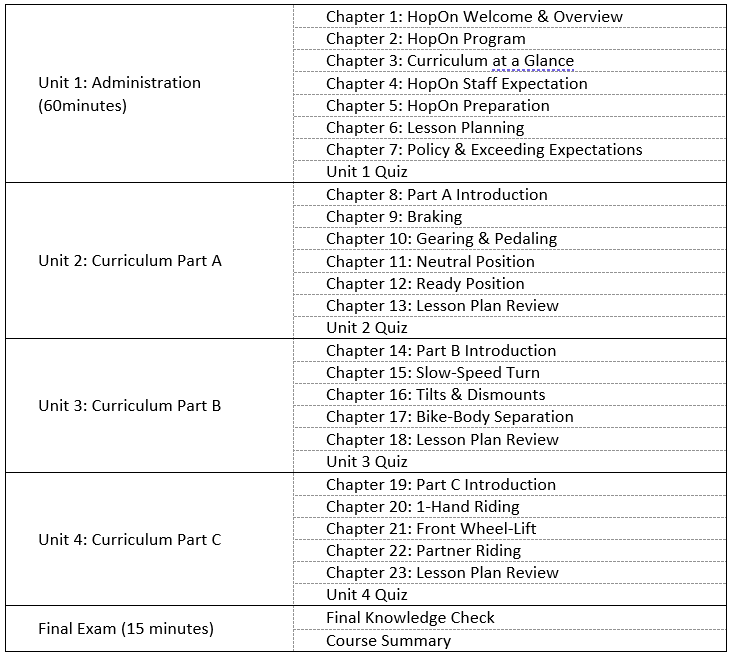
Along the innovation continuum, the module is more transformational than evolutionary. It builds upon the teaching and skill analysis tactics of the NCCP coach program but is the first comprehensive module adopted by Cycling Canada’s Learning Management System, the first program to include detailed video examples (predecessors like Can-Bike, Sprockids and until recently, Professional Mountain Bike Instructors Association (PMBIA), did not optimize the use of video), and embraces microlearning. Highly effective for hard skills training (Dolanski, 2020), the eLearning module used microlearning to scaffold the most critical information into four units and 24 chapters, encouraging participants to complete one unit per week and include personal bike rides in between units to help them try out the movement cues and games on their own.
Evaluation
Much to the author’s surprise, in retrospect, the TAPPA (Target, Accomplishment, Past, Prototype, Artifact) instructional design model closely matches the process of development. The eLearning and outdoor orientation targeted preparing non-cyclists as instructors and encouraging Canadians of all experience levels to get involved. The new design accomplished this goal by isolating key concepts, re-enforcing them, and getting the team out in the community with mentorship as needed. Past iterations of the instructor tool and the skills curriculum also fostered an appreciation for creativity, prototyping, and critical reflection. As a result, the new artifact helps introduce more people than ever before to cycling-specific physical literacy movements, acknowledges and builds upon traditional Canadian games, and achieves our goal of making it easier and more fun to get started in cycling.
Moreover, the Rapid Prototyping (Tripp & Bichelmayer, 1990) of “the discovery years” helped condense the curriculum into an easy-to-understand (open-source) template that encouraged staff to provide necessary feedback (Piskurich, 2006, as cited by Moore, 2016). Nationwide success, therefore, relies on a continued sense of curiosity and innovation among core staff. As a national initiative, Cycling Canada’s HopOn program is one of many programs in a diversified portfolio (Christensen, 2013), decreasing the risk associated with trying new things (Nooteboom, 1994) like the on-demand video-heavy nature of this instructor eLearning tool. Fortunately, nationwide programs foster healthy differences of opinion (Becher & Trowler, 2001; Seely Brown & Duquid, 2000), and project managers can optimize future innovation by facilitating discussions between instructors (daily implementors) with core design staff (innovators) (Brown, 2009).
Conclusion
The process of first authoring the eLearning module and now reflecting on the process allows us to understand better how the prototyping nature and creative freedoms afforded by ‘the discovery years’ helped consolidate over 100 instructors’ experience into a practical microlearning experience ready for nationwide expansion.
References
60-minute kids club. (2021). Get Active, Get Healthy. https://60minkidsclub.org/
Arshavskiy, M. (2013). Instructional design for eLearning: an essential guide to creating successful eLearning courses. CreateSpace Independent Publishing Platform.
B.C. Athletics. (2021). Run Jump Throw Wheel. https://tinyurl.com/2p8mrx4p
Becher, T. and Trowler, P. (2001) Academic Tribes and Territories: intellectual enquiry and the cultures of disciplines (2nd edition). Buckingham: Open University Press/SRHE.
Boyatzis, R.E. (2008). Leadership development from a complexity perspective. Consulting Psychology Journal: Practice and Research, 60(4), 298–313. https://doi.org/10.1037/1065-9293.60.4.298
Brown, T. (2009). Change by design: How design thinking transforms organizations and inspires innovation. London: HarperCollins. Retrieved from http://books.google.co.uk/books?id=8ZRpPgAACAAJ
Brown, B. C. (2012). Essentials of applying complexity thinking for sustainability leadership. Integral Sustainability Center, Resource Tool No. 12, 1–9.
Christensen, C. (2013). The Innovator’s Dilemma: When New Technologies Cause Great Firms to Fail. Watertown, MA: Harvard Business Review Press.
Clark, R.C. (2002). The new ISD: applying cognitive strategies to instructional design. Performance Improvement, 41(7), 10–16.
Dolasinski, M. J., & Reynolds, J. (2020). Microlearning: A New Learning Model. Journal of Hospitality & Tourism Research, 44(3), 551–561. https://doi.org/10.1177/1096348020901579
Fabac, J.N. (2006). Project management for systematic training. Advances in Development Human Resources, 8(4), 540–547. https://doi.org/10.1177/1523422306293010
Google Ngram Viewer. (2021, Dec 7). Physical Literacy. https://tinyurl.com/54p2r6hs
HopOn Canada. (2021). HopOn. http://hoponcanada.ca/
Marion, R., & Uhl-Bien, M. (2001). Leadership in complex organizations. The Leadership Quarterly, 12, 389–41. https://doi.org/10.1016/S1048-9843(01)00092-3
Moore, R. L. (2016). Developing distance education content using the TAPPA process. TechTrends, 60(5), 425–432.
Nelson, H. G., & Stolterman, E. (2012). The design way: Intentional change in an unpredictable world (2nd ed.). Cambridge, MA: The MIT Press.
Nooteboom, B. (1994). Innovation and diffusion in small firms: Theory and evidence. Small Bus Econ 6, 327–347. https://doi.org/10.1007/BF01065137
Nordiq Canada (2021). Engaging Youth Programs. https://tinyurl.com/2p8mrx4p
Onyx, J., & Leonard, R. J. (2010). Complex systems leadership in emergent community projects. Community Development Journal, 46(4), 493–510. https://doi.org/10.1093/cdj/bsq041
Piskurich, G. M. (2006). Rapid instructional design: earning ID Fast and Right (2nd ed.). San Francisco, CA: Pfeiffer.
Plowman, D. A., Solansky, S., Beck, T. E., Baker, L., Kulkarni, M., & Travis, D. V. (2007). The role of leadership in emergent, self-organization. The Leadership Quarterly, 18, 341–356. https://doi.org/10.1016/j.leaqua.2007.04.004
Seely Brown, J., & Duguid, P. (2000). The social life of information. Boston, MA: Harvard Business School.
Shanks, D. R., & Dickinson, A. (1991). Instrumental judgment and performance under variations in action-outcome contingency and contiguity. Memory & Cognition, 19(4), 353–360. https://doi.org/10.3758/bf03197139
Sprong, N., Driessen, P. H., Hillebrand, B., & Molner, S. (2021). Market innovation: A literature review and new research directions. Journal of Business Research, 123, 450–462. https://doi.org/10.1016/j.jbusres.2020.09.057
Tripp, S.D., & Bichelmeyer, B. (1990). Rapid prototyping: An alternative instructional design strategy. Educational Technology Research and Development, 38(1), 31–44. https://doi.org/10.1007/BF02298246
Van Rooij, S.W. (2010). Project management in instructional design: ADDIE is not enough. British Journal of Educational Technology, 41(5), 852–864.
Hi Ben,
Your design case study is really fascinating and i was surprised by the level of sophistication, design process and modelling involved in these cycling programs, especially with the digital platforms (LMS, ecourse, etc.). From your previous blog posts and participation in the group, I sense your passion for cycling and sports. I also have been focusing on micro learning for development solutions in my work. What were some of your innovative take aways from this case?