Team 4: Gillian Dixon, Terry Kent, Megan Li, Jessica Sirois
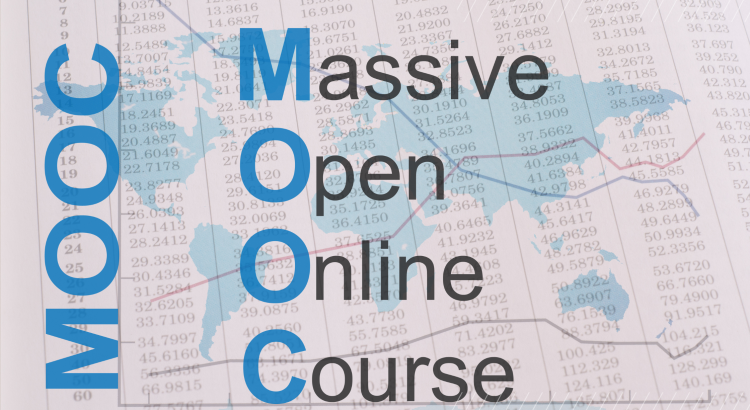
Our team has decided to explore open educational resources (OER), focusing on Massive Open Online Courses (MOOCs). As defined by UNESCO (2018), OER refers to publicly available educational resources, including textbooks, courses, syllabi, assignments, assessments, and more, all of which have an open license. This means these resources are free of cost and can be duplicated, reused, adapted, and shared. To gain a deeper understanding of OER, our team will participate in an “An Introduction to Open Educational Resources (OER)” course by Open Learn.
After exploring websites offering free educational courses like Coursera and MERLOT, we ultimately chose OpenLearn through The Open University. We found the website’s layout more user-friendly than others, with clear descriptions of each course, including course content, reviews, estimated study time and difficulty level. Additionally, we were impressed with the site’s functionality enabling users to filter courses based on estimated completion time. OpenLearn is also committed to accessibility by providing various options for diverse learning needs.
To enhance our understanding of MOOCs, our team investigated several resources. Initially, we focused on the OpenLearn website created by The Open University (OpenLearn, n.d.). OpenLearn provides free, accessible educational content, including bite-sized courses, for users from over 236 countries, catering to the public and the University’s students. We also delved into the OpenLearn FAQ section, which covers essential topics such as user requirements, technical issues, profile management, course information, privacy, accessibility, and copyright concerns (OpenLearn, n.d.). This comprehensive resource allowed us to grasp the platform’s features and offerings better.
According to Zhenghao et al. (2015), over 25 million people enrolled in MOOCs offered by Coursera, EDX, and other platforms globally between 2013 and 2015. The authors indicated that the MOOC skeptics are overly pessimistic, which MOOCs catered to well-educated and affluent individuals, and most people in this group were not completing the courses they registered for. Based on their research results, most people who complete MOOCs report career or educational benefits such as getting a new job, starting a new business, or completing prerequisites for an academic program. The findings also show that people with lower socioeconomic status and less education from developing countries benefit highly from MOOCs. In short, open access to the learning experience is favourable for education and career advancement.
After reflecting on the course readings, Fawns (2022) and Selwyn (2010), and the notion of the critical approach, we contemplated who we are, what we wanted from this project and our expectations of the learning experience. Both authors discuss how the learner’s context and experience using the technology is contingent on their context (Fawns, 2022; Selwyn, 2010). Fawns (2022) also notes that the student’s physical space and environment in which the learner engages and their values shape the experience. The other area of interest relates to context and the rating level of difficulty of the course. While we are not experts in OER, we wonder if the advanced rating is appropriate for our backgrounds and what contexts this course may or may not be useful because the course description does not indicate a target learner. As such, the team has agreed on these two questions to explore:
- How do our differing backgrounds shape our educational experience, the learning experience, and the perceived value of the course’s effectiveness?
- Who is this course appropriate for, and who may benefit from the learning experience?
We welcome feedback and further ideas to help shape our questions and project.
As for our critical approach, our team will enroll and complete a MOOC, focusing on Fawns’ (2022) framework for entangled pedagogy, noting that a holistic approach that includes purpose, context, and values towards educational technology allows for a stronger base and more awareness around complexities. Before we commence the course, we will all define what “effective” means to us in an online course and our expectations regarding online courses. We will also be noting our contexts and backgrounds. Finally, after completing our course, we will reflect on our experiences and note areas for further development.
References
OpenLearn. (n.d.). The Open University. Retrieved April 17, 2023, from https://www.open.edu/openlearn
Fawns, T. (2022). An entangled pedagogy: Looking beyond the pedagogy—technology dichotomy. Postdigital Science and Education, 4(3), 711–728. https://doi.org/10.1007/s42438-022-00302-7
Selwyn, N. (2010). Looking beyond learning: Notes towards the critical study of educational technology. Journal of Computer Assisted Learning, 26(1), 65–73. https://doi.org/10.1111/j.1365-2729.2009.00338.x
UNESCO. (n.d.). Open educational resources. https://www.unesco.org/en/open-educational-resources
Zhengoa, C., Alcorn, B., Christensen, G., Eriksson, N., Koller, D., & Emanuel, E.J. (2015, September 22). Who’s benefiting from MOOCs, and why. Harvard Business Review. https://hbr.org/2015/09/whos-benefiting-from-moocs-and-why