
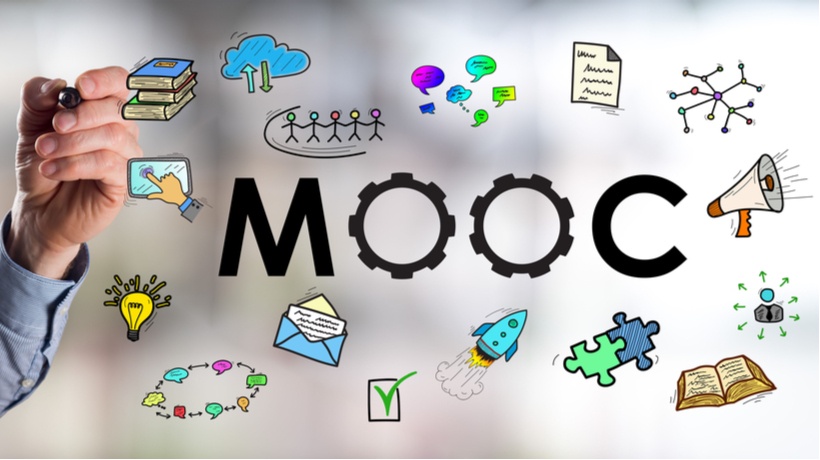
According to Pannekoek (2008, as cited in Anderson, 2008), for online learning to be effective for the next generation, it must “include mobile learning, e-gaming, online communities, and learning management systems that engage each user (para. 1).” As my team and I critically analyze Massive Open Online Course (MOOC), I am aware of the potential to incorporate these features to create an engaging and practical learning experience. Despite my limited experience with MOOCs, I am excited to explore their potential in our organization, which deals with new technologies regularly and is always searching for innovative ways to teach end-users.
My main challenge is to develop an accessible and engaging training program for new users of an online tool. Unfortunately, our current process for onboarding and training new managers to use this tool needs to be improved. Moreover, combining MOOCs with microlearning, an instructional design approach that uses brief learning segments adhering to specific standards, could effectively address this challenge. Dolasinski and Reynolds (2020) noted that microlearning is a technique that involves bite-sized learning segments that meet particular criteria. This approach would allow learners to access content in small, manageable chunks at their convenience, providing a structured and coherent learning experience.
I envision creating a program similar to Coursera, a global online learning platform that provides access to online courses anywhere and anytime. By integrating microlearning into MOOCs, we can present complex information in easy-to-digest segments that learners can comprehend and retain. This approach could revolutionize how our organization trains its employees and managers worldwide, saving time and resources while improving overall learning outcomes.
As I continue to explore the potential of MOOCs, I am interested in examining how they can address the challenges of online learning and engagement, specifically in onboarding and training new managers to utilize a specific tool. Additionally, I want to explore how incorporating interactive elements such as quizzes and discussions into MOOCs can enhance learner engagement and retention.
References:
Anderson, T. (2008). The Theory and Practice of Online Learning. In Google Books. Athabasca University Press. https://books.google.ca/books?hl=en&lr=&id=RifNwzU3HR4C&oi=fnd&pg=PA91&dq=the+theory+and+practice+of+online+learning+second+edition&ots=ShdjMkIRuu&sig=YPSRvkL1Lkqwp0qQcweXpVWwvZ4
Dolasinski, M. J., & Reynolds, J. (2020). Microlearning: A new learning model. Journal of Hospitality & Tourism Research, 44(3), 551-561. https://doi.org/10.1177/1096348020901579
McAuley, A., Stewart, B., Siemens, G., & Cormier, D. (2010). The MOOC model for digital practice. Retrieved from http://www.elearnspace.org/Articles/MOOC_Final.pdf