Throughout this course, I have gained a deeper understanding of leadership in digital learning environments. Reflecting back to my initial post on leadership, I realize that my perspective has evolved to encompass a more holistic view of leadership. In my previous post, I focused on the importance of communication and adaptability, but now I understand that leadership in digital learning environments is more complex and requires a multifaceted approach.
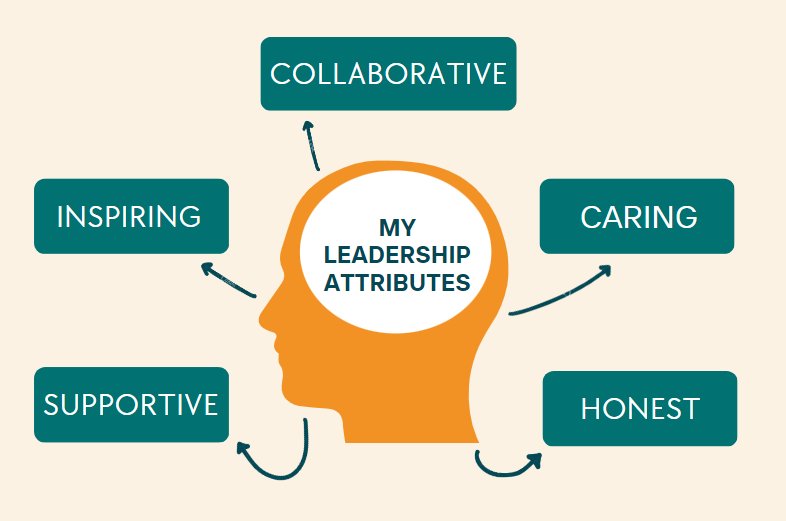
As highlighted in my external scan blog post, effective leadership involves merging people, processes, and technology to create a positive digital learning environment (Al-Haddad & Kotnour, 2015). I have learned that leaders must prioritize collaboration, establish a supportive culture, inspire and empower their team, and foster openness and trust (Castelli, 2016; Julien et al., 2010; Workman & Cleveland-Innes, 2012). These attributes are crucial for driving success in a rapidly changing technological landscape.
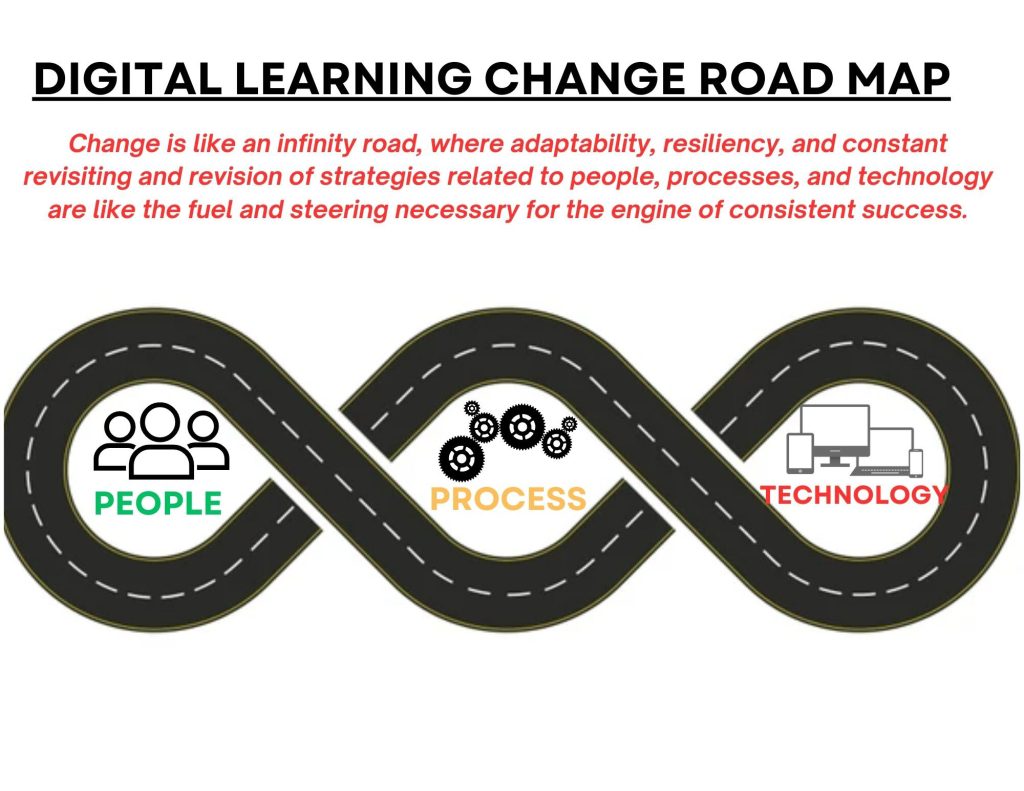
In my current role, I can help lead a change within my organization by implementing a digital learning change roadmap, as outlined in my Assignment 1 blog post. This model emphasizes the importance of involving stakeholders, creating a clear vision, building momentum, engaging stakeholders, creating a detailed implementation plan, and providing ongoing communication and support to adapt. By taking a strategic approach and involving all stakeholders, we can ensure a successful implementation of digital learning.
Looking to the future, I envision myself leading a digital learning transformation within my organization. I believe that by prioritizing collaboration, communication, and adaptability, we can create a culture of continuous learning that will drive success. As highlighted in my Leading Projects blog post, implementing a digital learning tool requires a programmatic approach, with stakeholder meetings, data collection across all ERP systems, and the establishment of a comprehensive policy and procedure for managing contingent workers globally. Taking a strategic and multifaceted approach can ensure a successful transformation that benefits all stakeholders.
In conclusion, this course has given me valuable insights into effective leadership in digital learning environments. I have learned that leadership requires a multifaceted approach that prioritizes collaboration, communication, and adaptability. By implementing a digital learning change roadmap and taking a strategic and programmatic approach to digital learning transformation, I can help lead a change within my organization that will drive success and benefit all stakeholders.
References:
Al-Haddad, S., & Kotnour, T. (2015). Integrating the organizational change literature: a model for successful change. Journal of Organizational Change Management 28(2), 234-262. https://doi.org/10.1108/JOCM-11-2013-0215
Castelli, P. (2016) Reflective leadership review: a framework for improving organizational performance. Journal of Management Development, 35(2), 217-236. https://doi.org/10.1108/JMD-08-2015-0112
Julien, M., Wright, B., & Zinni, D. M. (2010). Stories from the circle: Leadership lessons learned from aboriginal leaders. The Leadership Quarterly, 21(1), 114–126. https://doi.org/10.1016/j.leaqua.2009.10.009
Workman, T., & Cleveland-Innes, M. (2012). Leadership, personal transformation, and management. International Review of Research in Open and Distance Learning, 13(4), 313–323. https://doi.org/10.19173/irrodl.v13i4.1383
Over the past three years, I have helped lead the implementation of a cloud-based tool for managing contingent workers at my organization. The tool is intended to simplify and streamline hiring, managing, and paying contingent workers for our managers. Unfortunately, our organization did not have a consistent process for hiring contingent workers across its many divisions and sites worldwide. Therefore, our procurement department in North America collaborated with the IT team to find a solution to this issue, which resulted in the introduction of a cloud-based tool. However, we may have rushed the implementation process without defining the issue and creating a realistic plan.
According to Watt (2014), 44% of projects are “challenged,” 32% are “successful,” and 24% “failed.” Therefore, the author recommends understanding the correct business requirements early in the process, applying project management techniques, and monitoring project activities. We could have done a better job of defining the issue and creating a realistic plan. Although we implemented the tool within budget and on time, it was only for a small subsection of our global organization, which has multiple locations, Enterprise Resources Planning (ERP) systems, and regulations to consider. After watching a video on project management by Knolscape (2013), I learned the importance of distinguishing between a project and a program. In addition, our implementation only focused on one ERP system, leading to confusion among managers and contractors working in different ERP systems. Thus, to ensure consistency and avoid confusion, we should have implemented the tool simultaneously across all ERP systems and locations while establishing an overarching policy and procedure for managing contingent workers worldwide.
As a result, to approach this implementation as a program, we needed to create a better strategic plan, conduct stakeholder meetings, and collect data across all ERP systems. As Zettelmeyer (2015) emphasized, the most crucial skills in analytics are thinking skills rather than technical skills. Therefore, we should have defined the issue more clearly, created a realistic plan, and taken a strategic approach based on the problem we needed to solve. By doing so, we could have successfully implemented the tool across the entire organization while ensuring consistency and avoiding confusion.
Today, we are reassessing our approach and developing a more strategic plan to ensure the success of the remaining implementation of the cloud-based tool for managing contingent workers across our organization. In hindsight, a program would have been better than a project. It should have included stakeholder meetings, data collection across all ERP systems and locations, and the establishment of a comprehensive policy and procedure for managing contingent workers globally. Taking a more strategic approach would have made the implementation more successful.
Watt, A. (2014, August 14). Project Management – The Open Textbook Project provides flexible and affordable access to higher education resources. Opentextbc.ca; Pressbooks. https://opentextbc.ca/projectmanagement/
In today’s rapidly evolving world, the significance of change cannot be overstated. Change is like an infinity road that never stops. As technologies and digital learning become essential tools for enhancing workplace organizational effectiveness and skill development, organizations must embrace a mindset that fosters collaboration, productivity, and constant adaptation to new changes. Biech (2007) highlighted that organizations are always moving towards change, propelled by the abundance of information and the rapid pace at which we can access it. As a result, the key to success in creating a digital learning environment is to merge people, processes, and technology, recognizing that this is an ongoing and never-ending process. Consequently, Conner (1998, as cited in Al-Haddad and Kotnour, 2015) noted, “any change action has a chain reaction that impacts the whole organization” (p. 235). Hence, we must consider the change initiatives before implementing them.
After reviewing the literature, conducting peer interviews, reflecting on personal experiences, and listening to the “voices” of past students in the MALAT program, I found that selecting the best change model to address digital learning was challenging. As Al-Haddad and Kotnour (2015) noted, the high failure rate of change initiatives only emphasizes the importance of selecting the right model. I reviewed several models, including Lewin’s Change Management Model, Kotter’s 8-Step Model, and Prosci’s ADKAR Model. Still, combining the best practices from each model was necessary to develop an effective approach. This led me to create the “Digital Learning Change Road Map,” a customized model tailored to the unique context of digital learning. The “Digital Learning Change Road Map” is a continuous process that resembles an infinity road, requiring ongoing involvement of stakeholders to drive the change forward, processes to carry out the change, and technology to implement and utilize the change effectively. The model includes a clear vision, focuses on building momentum, engaging stakeholders, creating a detailed implementation plan, and providing ongoing communication and support to adapt.
People undoubtedly play a crucial role in change, especially in the digital world. In addition, people play a role in change by needing to recognize the organization’s working practices, know how new technologies and changes affect the organization and adapt to the demands of today’s business. Thus, people are an essential and ongoing factor in the infinity road map of change, and comprehending their apprehensions and necessities is critical for accomplishing any change initiative. In addition, the colleagues I interviewed noted that people significantly impact change and ensure you have the right people involved, like, leadership, executives, subject matter experts and professionals who understand the needs for and of digital change. Furthermore, they added that to implement digital change successfully, it is crucial to show executive and leadership support. When leaders support and deliver the change’s value and benefits, individuals are more likely to accept it.
Similarly, it is vital to assemble a team of dedicated individuals with the necessary expertise to implement the change. Jones (2022) stated that listening to the people being led is crucial for effective leadership. Therefore, change leaders must take the time to understand their audience, listen to their voices, and support them in successfully implementing a digital learning environment. Furthermore, Al-Haddad and Katonour (2015) emphasized that change leaders should employ the most suitable change strategies for their people once the nature of the change is known.
As we are now in the second phase of the infinity roadmap, which is the process, having a well-structured and engaging process personalized for employees is crucial to effectively implementing digital learning in the workplace. As my colleague stated, processes should be designed to fit seamlessly into the organization’s workflow and be easily accessible and user-friendly for employees. Moreover, Weiner (2019) claimed that consistent leadership messages and actions that convey the vision are essential throughout the change process to remind stakeholders why change is being pursued. Additionally, it is crucial to provide employees with the necessary tools and training to help them navigate the transition successfully. Furthermore, optimizing business processes is vital in digital change strategies, primarily customer-focused ones. For instance, in our organization, we utilize tools to monitor contingent workers, which assists managers with hiring, managing, and paying contractors, ensuring that these processes are efficient, secure, and cost-effective. Finally, any created process needs to seamlessly integrate with existing systems and technologies to provide employees with a simple, flawless user experience that makes sense to the business and its users.
Technology plays a crucial role in the digital learning change road map of people, processes, and technology in a workplace. Technology is all around us, from when we wake up to when we go to sleep. Still, more importantly, technology is widely used in our organization, providing employees with the tools and resources to work from anywhere and to help facilitate new ways of collaboration, communication, and training. As we progress through the different phases of the infinity road map for digital learning change, it becomes increasingly apparent that technology plays a crucial role in this process. Furthermore, according to Byerl et al. (2013, as cited in Al-Hadded and Kotnour, 2015), “technology is key to drive change and plays a strategic role in facilitating change and making it part of the organizational culture” (p. 244). Therefore, technology must be incorporated into all processes and departments if a company is to undergo a complete transformation. Like the infinity road map, my colleagues spoke about the importance of always ensuring technology is up to date and works for the needs of the end-users.
In conclusion, a continuous, ongoing change management process is needed to create a thriving digital learning environment in the workplace. People, processes, and technology are the three key components of this process, and they all need to operate in unison and coherence. It is essential to involve the right people, offer a user-friendly process that is simple to integrate with current systems and use technology to drive and facilitate change to succeed. This continuous process demands ongoing attention and flexibility in response to emerging changes, much like an infinity road. Understanding the significance of change and implementing an effective change management process will help organizations create a thriving digital learning environment that improves organizational effectiveness and skill development in the workplace.
References
Al-Haddad, S., & Kotnour, T. (2015). Integrating the organizational change literature: a model for successful change. Journal of Organizational Change Management 28(2), 234-262. https://doi.org/10.1108/JOCM-11-2013-0215
For this blog, we were tasked to write about leadership reflections and what we believe are the essential attributes of a leader working in a digital learning environment. I found this activity interesting because my answers were mostly the same before and after the readings when we were asked to complete a worksheet to list a leader’s most important to least important attributes. What I noticed was that my top five all embodied human connection. Being a leader is such an important role, and it should not be taken lightly. However, saying that, it was tough for me to pick just a few attributes, so I listed five important ones.
According to Workman and Cleveland-Innes (2012), the main goal of a leader is to inspire, develop, support, and guide their followers toward success. In a rapidly advancing digital learning environment, leaders must possess certain essential qualities to be effective. Based on my reading and personal beliefs, in my opinion, the five most crucial attributes are caring, honesty, supportiveness, inspiration, and the ability to foster collaboration.
Caring: A caring leader recognizes the significance of building relationships and creating a positive learning environment for their followers. They understand that education is about people and strive to create an atmosphere of trust and respect. Castelli (2016) notes that a leader must foster openness and trust to inspire others to perform at their best and feel a sense of belonging in the learning community.
Honesty: Honesty is crucial in building trust and credibility as a leader. Honest leaders are transparent and truthful in their communication and actions. As stated by Julien et al. (2010), integrity and honesty are highly valued leadership qualities necessary to gain employees’ trust and create a collaborative and successful working environment.
Supportiveness: Effective leaders in the digital learning environment must be supportive. They understand that success is often the result of teamwork and strive to create an inclusive culture that encourages collaboration. They provide resources and support to help individuals succeed and recognize their successes. According to Castelli (2016), a supportive leader empowers their team while maintaining performance expectations.
Inspiration: Inspiring leaders can motivate and inspire their followers to reach their full potential. They have a clear vision and communicate it effectively to their team. Julien et al. (2010) claim that inspiring others is a critical leadership ability that fosters an open and trusting environment for exchanging ideas.
Collaboration: Creating a collaboration culture is crucial for any organization’s success. Collaboration involves working together to achieve a common goal and fosters a sense of community. Workman and Cleveland-Innes (2012) state that collaboration and shared goals are the foundation of transformational leadership. By prioritizing collaboration, leaders can encourage a sense of ownership among all members of the organization.
In conclusion, leaders in the digital learning environment must possess a combination of caring, honesty, supportiveness, inspiration, and the ability to foster collaboration. By prioritizing these attributes, leaders can build strong relationships, foster trust, and drive success in a rapidly changing technological landscape.
References:
Castelli, P. (2016) Reflective leadership review: a framework for improving organizational performance. Journal of Management Development, 35(2), 217-236. https://doi.org/10.1108/JMD-08-2015-0112
Julien, M., Wright, B., & Zinni, D. M. (2010). Stories from the circle: Leadership lessons learned from aboriginal leaders. The Leadership Quarterly, 21(1), 114–126. https://doi.org/10.1016/j.leaqua.2009.10.009
Workman, T., & Cleveland-Innes, M. (2012). Leadership, personal transformation, and management. International Review of Research in Open and Distance Learning, 13(4), 313–323. https://doi.org/10.19173/irrodl.v13i4.1383