Design Principles

Image Credit: Yoann Boyer (2017). Free to use under the Unsplash License

Assignment 2b Introduction

The first part of this assignment, assignment 2a, was a team activity to participate in a design thinking process. Consequently, this assignment 2b builds on the design challenge defined through a process of emphasizing with a user, defining a problem using a Point of View (POV) Framework, and ideating or brainstorming ways to address the challenge defined.

Context

For context, I work as a curriculum teaching and learning specialist in higher education. The design challenge statement developed by Leah Yardley and myself in the first part (2a) of the assignment is; I (Jessica) need a way to help instructors create supportive learning environments because changes to the structure of learning combined with the collective trauma resulting from the Covid-19 pandemic have increased levels of stress and anxiety for students and instructors (Gemella & Yardley, 2023). In assignment 2a, Leah Yardley and I acknowledged that in higher education, student well-being is often supported through distinct services, such as counselling and medical services (Centre for Innovation in Campus Mental Health, n.d.; Fovet, F., 2020; Hsu & Goldsmith, 2021; Semu & Henshaw, 2022; Van Der Bijl-Brouwer & Price, 2020). Leah Yardley and I argued that instructors could also play an important role in minimising the impact of stress and anxiety within the learning experience (Centre for Innovation in Campus Mental Health, n.d.). The proposed solution within the context of our presented problem is to use a Universal Design for Learning framework (UDL). Briefly, UDL provides guidelines to ensure that all learners can access and participate in learning opportunities (CAST, 2020).

Design Thinking

Svihla (2017) stated that design thinking refers to methods, practices, and processes that guide instructional designers in creating learning experiences based on understanding the needs of learners. Tracey & Hutchinson (2019) suggested that to create meaningful learning experiences, instructional designers must be empathetic to learners’ cognitive and emotional needs. Design principles are a set of considerations and values that help guide decision-making, align decisions with desired outcomes, and advance design goals (Brignell, n.d.; Cable, 2015; Crichton & Childs, 2022). The following principles draw from the UDL framework, emphasising mental health. These recommended design principles aim to guide instructional design to minimise the impact of stress and anxiety within the learning experience.

References

Brignell, B. (n.d.). Design principles. https://principles.design/

Brignell, B. (n.d.). The ten principles of inclusive web design. https://principles.design/examples/the-ten-principles-of-inclusive-design

Cable, S. (2015, June 18). Design principles – a guide. Cxpartners. https://k12.designprinciples.org/design-principles

CAST. (2020). UDL tips for designing learning experiences. https://www.cast.org/products-services/resources/2020/udl-tips-designing-learning-experiences  

Centre for Innovation in Campus Mental Health. (n.d.). Recognizing, responding and referring students to crisis supports. https://campusmentalhealth.ca/wp-content/uploads/2022/03/CICMH-Recognize-Respond-to-Students-Flowchart.pdf

Crichton, S., & Childs, E. (2022). Design principles for schools. https://k12.designprinciples.org/design-principles

Enser, Z. (2021, December 03). Responsive teaching and the importance of formative assessment. [Blog]. The Education People. https://www.theeducationpeople.org/blog/responsive-teaching-and-the-importance-of-formative-assessment/

Fovet, F. (2020, March 03). Exploring the potential of universal design for learning with regards to mental health issues in higher education [Paper Presentation]. The 2020 Pacific Rim International Conference on Disability and Diversity. Honolulu, Hawai’i. https://viurrspace.ca/handle/10613/23314

Gemella, J., & Yardley, L. (2023). LNRT 524 Assignment 2a: Design thinking project [Class Assignment]. Design Thinking Process LRNT 524 2a – Jessica Gemella and Leah Yardley – Google Docs

Hsu, J. L., & Goldsmith, G. R. (2021). Instructor strategies to alleviate stress and anxiety among college and university STEM students. CBE Life Sciences Education, 20(1), 1–13. https://doi.org/10.1187/cbe.20-08-0189

Instructional Design Australia. (n.d.) First Principles of Instruction. https://instructionaldesign.com.au/what-is-instructional-design/first-principles-of-instruction/

Rose, E., & Tingley, K. (2008). Science and math teachers as instructional designers: Linking ID to the ethic of caring. Canadian Journal of Learning and Technology, 34(1). https://files.eric.ed.gov/fulltext/EJ1073835.pdf

Semu, L. L., & Henshaw, L. A. (2022). Building trauma-informed approaches in higher education. Behavioural Sciences, 12(10), 368. https://doi.org/10.3390/bs12100368

Tracey, M. W., & Hutchinson, A. (2019). Empathic design: Imagining the cognitive and emotional learner experience. Educational Technology Research and Development, 67(5), 1259–1272. https://doi.org/10.1007/s11423-019-09683-2 

University of Minnesota. (2015). Mental health and well-being ecological model. https://mch.umn.edu/resources/mhecomodel/

Van Der Bijl-Brouwer, M., & Price, R. (2020). An adaptive and strategic human-centred design approach to shaping pandemic design education that promotes wellbeing. Strategic Design Research Journal, 14(1). https://doi.org/10.4013/sdrj.2021.141.09

Wiliam, D. (2016, July 15). Dylan Wiliam: Formative assessment. [YouTube]. https://youtu.be/sYdVe5O7KBE
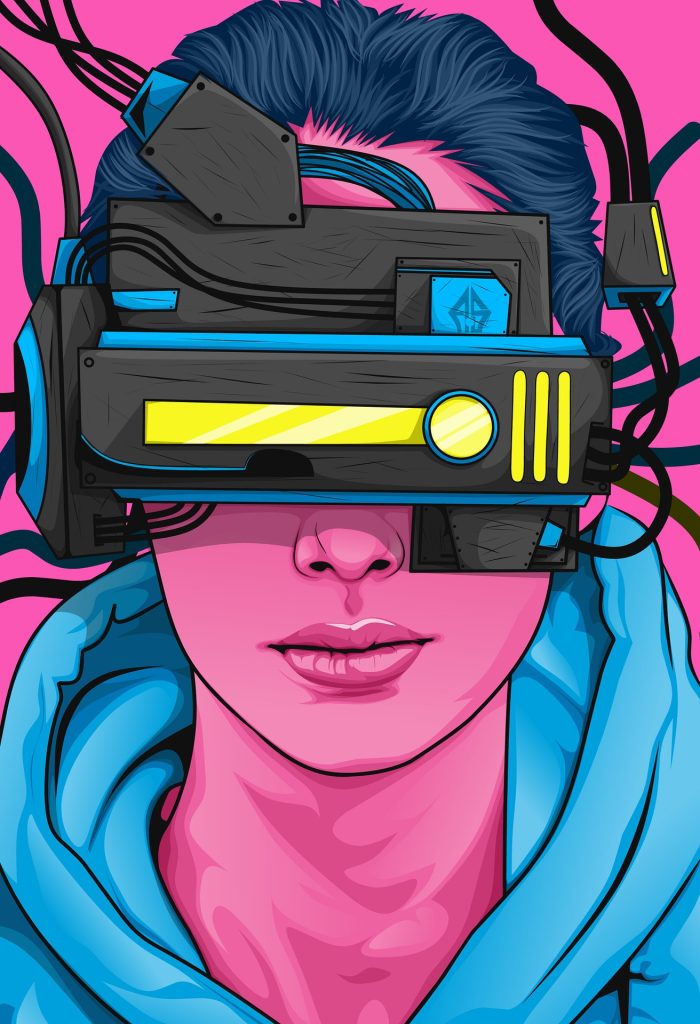
Virtual Reality for Enhanced Blended Learning in technical and vocational education and training (TVET)

Free to use under the Pixabay license
No attribution required

Before the 2020 COVID-19 disruption in education, online and blended pedagogy was well-established in academic higher education programs; however, blended learning is less prevalent in technical and vocational education and training (TVET) programs (Burke & Larmar2020; Dziuban et al., 2018; Herman et al., 2019; Vinden et al., 2021). Blended learning mixes face-to-face classes with online instruction using various educational technologies, including simulations or virtual reality, to enrich the learning experience (Vogt, 2014; Dziuban et al., 2018; Herman et al., 2019). Virtual reality can play many beneficial roles in TVET teaching and learning, for example, practising motor skills, working with avatars in simulations with virtual humans, and practising unfamiliar situations for behaviour training to prepare for emergencies (UNESCO-UNEVOC, 2022). This blog post critiques virtual reality as a technology to facilitate deep learning in blended TVET learning environments by describing (a) innovation; (b) impact on learning; (c) reliance on technology; (d) usability; (e) assess risk, and (f) value proposition. First, innovation in teaching and learning refers to a new pedagogical technique, tool or strategy that improves learning (Steph, 2022).

Virtual reality is innovative in the specific context of blended TVET because it addresses the need for experiential learning and motor skills training in a way different from traditional face-to-face approaches (UNESCO-UNEVOC, 2022). Virtual reality is a computer-based technology that creates an immersive experience with visual, auditory, and stimuli, providing the feeling of being present in a virtual setting and that provides individualized immediate feedback from body movement (Hu-Au & Lee, 2017; Karageorgaskis, 2020; Sánchez et al., 1997; UNESCO-UNEVOC, 2022). Although virtual reality is often associated with gaming and military training, it is innovative in TVET with the potential to adapt to specific learner needs, to be linked to authentic job site learning, and to engage and motivate learners (Fragkaki et al., 2020; Khukalenko et al., 2022; UNESCO-UNEVOC, 2022). Virtual reality engages students in practical skills in classroom settings, online environments, and training outside of school (for instance, learning on the job) (Fragkaki et al., 2020; Steph, 2022). Furthermore, virtual practice allows learners to gain confidence and safely practice dangerous or complicated techniques, lessening risks and reducing costs of material and equipment (Steph, 2022; UNESCO-UNEVOC, 2022). In addition, virtual reality provides benefits beyond engagement to promote deeper learning.

Fragkaki et al. (2020) proposed that virtual reality impacts learning by promoting deeper learning in blended learning settings. Fragkaki et al. (2020) advocated that deeper learning goes beyond content memorization and repetition to develop critical thinking, collaboration, and communication skills. Deeper learning is associated with increased retention, intrinsic motivation and a lasting understanding of the experiences and principles being studied (Fragkaki et al., 2020). Virtual reality also provides an approach that can evoke feelings of empathy in learners to encourage learners to take interactive and collaborative roles in learning (Fragkaki et al., 2020). Virtual reality enhances teaching and learning, but education faces some reservations due to teachers’ perception of instructional technologies, teaching approaches, and reliance on technology (Fragkaki et al., 2020; Karageorgaskis, 2020; Khukalenko et al., 2022).

Virtual reality relies on technology, and various input-output devices are used to immerse learners, usually headsets and handheld devices (Karageorgaskis, 2020; Fragkaki Khukalenko et al., 2022). Khukalenko et al., 2022 identified several barriers to virtual reality adoption, including limited budgets to develop applications, teachers’ low confidence in using new technologies and the lack of support, and resistance to changes and innovation. Also, Khukalenko et al. (2022) stated that virtual reality research provides mixed or negative evidence of virtual reality being more effective in achieving learning outcomes than other learning supports. Additionally, some risks of using virtual reality are gear overheating and cybersickness (mainly headaches, dizziness, nausea, fatigue, and increased heart rate) (Khukalenko et al., 2022). Lastly, Khukalenko et al. (2022) suggested that the lack of teacher training poses the risk of ineffective integration of virtual reality that does not address the learning challenges students may face.

In summary, I see virtual reality as an innovation in teaching and learning because it incorporates new pedagogical media and methods relevant to blended TVET. As well, virtual reality is valuable as it has the potential to provide opportunities to learn remotely or in person. For example, virtual welding and heavy equipment simulators provide beginners and advanced students with training modules to improve their skills remotely while conserving resources. Importantly, virtual simulations can promote deep learning through collaboration and problem-solving scenarios. However, educators need time, support, and technical skills to design experiences to meet learning outcomes.

References

Burke, K., & Larmar, S. (2020). Acknowledging another face in the virtual crowd: Reimagining the online experience in higher education through an online pedagogy of care. Journal of Further and Higher Education, 45(5), 601–615. https://doi.org/10.1080/0309877x.2020.1804536

Dziuban, C., Graham, C. R., Moskal, P. D., Norberg, A., & Sicilia, N. (2018). Blended learning: the new normal and emerging technologies. International Journal of Educational Technology in Higher Education, 15(1). https://doi.org/10.1186/s41239-017-0087-5

Fragkaki, M., Mystakidis, S., Hatzilygeroudis, I., Kovas, K., Palkova, Z., Salah, Z., Hamed, G., Khalilia, W., & Ewais, A. (2020). TPACK instructional design model in virtual reality for deeper learning in science and higher education: From “apathy” to “empathy”. DOI:10.21125/edulearn.2020.0943

Herman, C., Gracia, R., Macniven, L., Clark, B., & Doyle, G. (2019). Using a blended learning approach to support women returning to STEM. Open Learning, 34(1), 40–60. https://doi.org/10.1080/02680513.2018.1554475

Karageorgaskis, T. (2020). What is the impact of virtual reality in education? [Blog]. What is the impact of Virtual Reality in Education? — Educraft

Khukalenko, I., Kaplan-Rakowski, R., An, Y., Vera, Lushina, V. (2022). Teachers’ perceptions of using virtual reality technology in classrooms: A large-scale survey. Education and Information Technologies, 27, 11591–11613 (2022). https://doi.org/10.1007/s10639-022-11061-0

UNESCO-UNEVOC. (2022). Using augmented and virtual reality in TVET: MilleaLab – the all-in-one VR platform for education. [Video]. https://youtu.be/9jlK7jygSO0

Vinden, S., Flinn, C., & Carson, T. (2021, May 17). Strengthening digital teaching &learning for trades, vocational, education and training practitioners. BCcampus. https://bccampus.ca/2021/05/12/strengthening-digital-teaching-learning-for-trades-vocational-education-and-training-practitioners/

Vogt, R. (2014). Experiences with blended learning program delivery for apprenticeship trades: A case study. International Journal of Higher Education, 3(4). https://doi.org/10.5430/ijhe.v3n4p85

Exploring Design Models

I have taught in Technical and Vocational Education and Training (TVET) for about seven years, following a 25-year career as an environmental designer (landscape architect #286, under the BC Architects Act). My transition to teaching was abrupt and challenging. Like most TVET teachers, I transitioned into higher education as a subject matter expert without formal teacher training (Vinden, 2020). After my first year of teaching, I was eager to improve my teaching practice, so I embarked on the BC Provincial Instructor Diploma (PIDP). The PIDP provided me with an introduction to learning theory and instructional strategies. After reading about instructional design over the past two weeks in this LNRT 524 course, I am reminded that teachers have a vast body of research they should rely on to design effective, efficient, and engaging teaching and learning environments (Vinden, 2020; Heaster, 2020). In the article “Popular Instructional Design Models: Their Theoretical Roots and Cultural Consideration”, Heaster (2020) evaluated common learning models for designing inclusive learning environments. According to Heaster (2020), learning design decisions must consider the diversity of learners and culture.  

First, culture has a significant role in learning and beliefs about knowledge (Hester, 2020). Instructional design decisions should consider the cultural context (Hester, 2020). In my teaching context, TVET in western higher education, three paradigms underpin learning theory: behaviourism, cognitivism, and constructivism (Hester, 2020). Hester (2020) outlined three learning models shaped by behaviourism: the ADDIE model, Bloom’s Taxonomy, and the Dick and Carey Model. Behaviourist models are appropriate in a curriculum culture where managing student behaviour and transferring content is foremost (Western Governors University, 2021). Behaviourist models are unsuitable for analytical learning or for meeting the needs of diverse learners (Hester, 2020; Western Governors University, 2021). Cognitivism influences models by Merrill, Kemp, and Gagne (Hester, 2020). Learners are at the forefront of cognitive design approaches. Learners’ experiences are considered in the design, and learners are encouraged to take an active role in planning and self-monitoring (Hester, 2020). Lastly, Universal Design for Learning (UDL) is a constructivist approach with multiple means of engagement, representation and expression that removes barriers to include all learners. Learners are central to the design process. Learners are encouraged to connect their experiences to new knowledge (Kimmons & Caskurlu, 2020). Having read evaluations of instructional design models, I have developed a better understanding of selecting appropriate instructional design models. However, I am not yet confident about how I might find out more about the cultural context and learners in a future learning environment. Each group of learners will be different; many unknowns exist when designing a new course. Consequently, I think UDL is of particular importance.

UDL is a teaching and learning model that considers the diversity of learners by aiming to remove learning barriers. The approach is user-centred and offers many means of engagement, representation and expression (Takacs et al., 2022). The design process creates learning environments accessible to various abilities and preferences (Takacs et al, 2022). The UDL model is based on design thinking which encompasses empathising with learners, defining problems, brainstorming solutions, prototyping, and testing ideas (Kimmons & Caskurlu, 2020). UDL intends to create expert learners that are motivated, resourceful, and strategic (Takacs et al, 2022). For me, UDL provides insight into how I might draw on my experience as a designer. Instruction design takes a similar approach to environmental design by applying a design process that best meets the users’ needs for inclusive and diverse spaces.

In summary, the LNRT 524 course readings have highlighted how a design process based on theory can support effective learning design decisions. I feel that UDL is especially useful for making inclusive design decisions. Design models that emphasise analysis of the culture when defining desired outcomes are more likely to meet learners’ needs.

References

Heaster, K. L. (2020). Popular Instructional Design Models: Their Theoretical Roots and Cultural Considerations Kristen Lina Heaster-Ekholm. International Journal of Education and Development Using Information and Communication Technology, 16(3), 50–65. https://files.eric.ed.gov/fulltext/EJ1275582.pdf

Kimmons, R. & Caskurlu, S. (2020). The Students’ Guide to Learning Design and Research. EdTech Books. https://edtechbooks.org/studentguide

Takacs, D. S., Zhang, J., Lee, H., Truong, L., & Smulders, D. (2022). A Comprehensive Guide to Applying Universal Design for Learning. Justice Institute of British Columbia. https://pressbooks.bccampus.ca/jibcudl/

Vinden, S. (2020). Backward Design. [Presentation]. Trades Summit Series. BC Campus. https://bccampus.ca/event/strengthening-teaching-and-learning-for-the-future/

Western Governors University. (2021, March 23). What is the behavioral learning theory? Western Governors University. Retrieved November 19, 2022, from https://www.wgu.edu/blog/what-behavioral-learning-theory2005.html#close