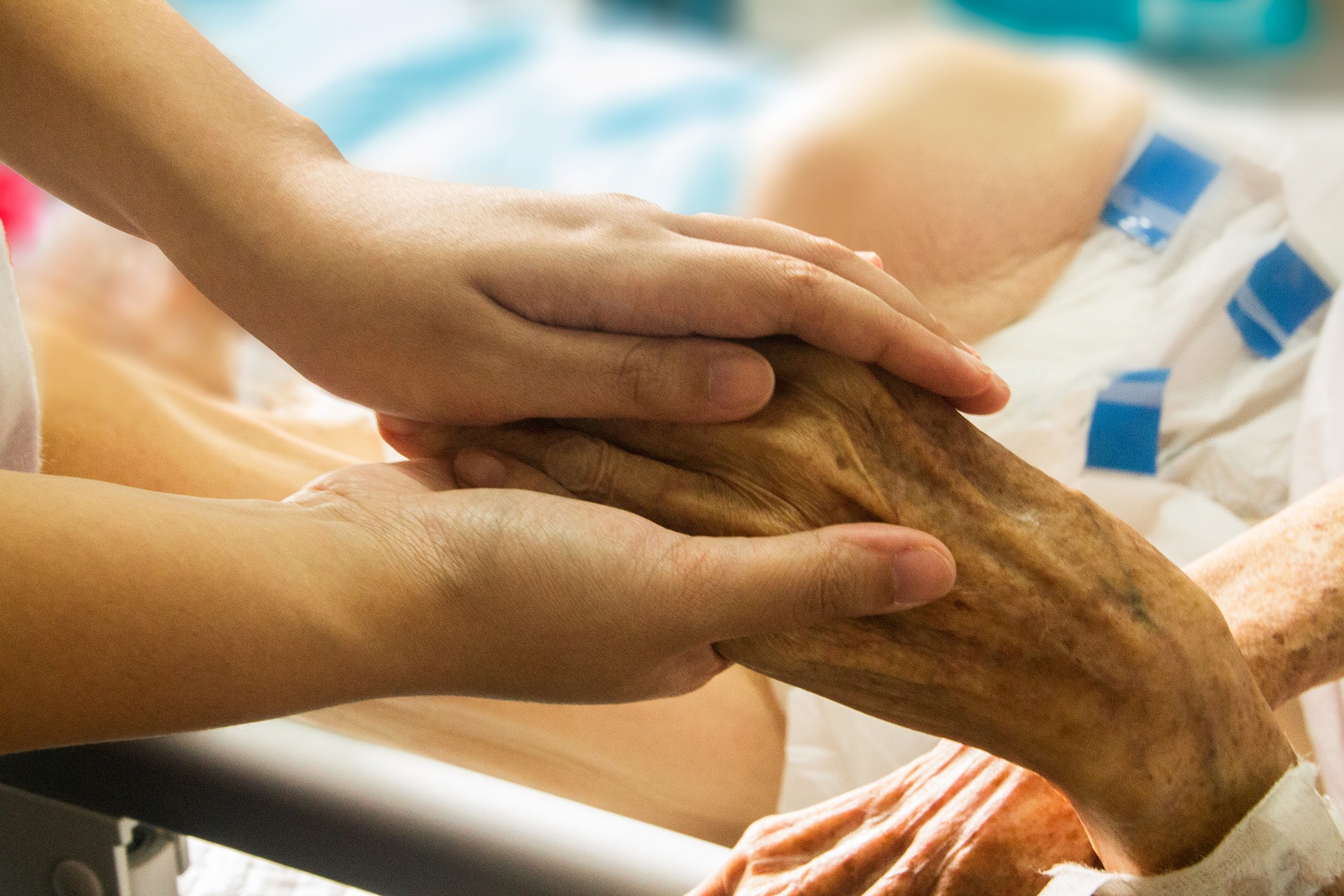
Empathy: an innovative tool for healthcare disruption? Photo credit to Pixabay user truthseeker08.

Are we being innovative enough as an organization? How can we support a more disruptive organizational culture? These are two questions that I have recently heard being asked by senior leaders in my provincial health authority. So what are they really asking and what is their vision for future directions?
What I think they are asking:
How do we use technology to the maximum of our capability to increase healthcare efficiency and improve population health?
What I believe they should be asking:
How do we support an understanding of our patient needs to the maximum of our capability, such that patients become co-creators of their own care design?
Why is the second question more innovative?
- It supports user-centric, design-thinking (Stanford University Institute of Design, 2016; Crichton & Carter, 2017)
- It requires maximal collaboration with healthcare ‘users’ of all backgrounds and cultures
- It will result in the development of unique solutions as it connects numerous contexts and perspectives
- It places pedagogy, self-management, and patient experience considerations before technology
- It disrupts current power differentials and hierarchies, allowing unheard voices to come to the forefront
- It recognizes that care providers cannot build the best possible healthcare system while burnt out and sitting in silos (Neumann, Edelhäuser, Tauschel, Fischer, Wirtz, Woopen, & Scheffer, 2011).
Lok, Ferdig, Raij, Johnsen, Dickerson, Coutts, Stevens, and Lind (2006) inform that all good innovations must start with good pedagogy”(p 185). Learning design for healthcare should consider strong pedagogical underpinnings instead of being designed primarily around the affordances of available technologies.
For the past 8 weeks, I have been researching the use of Immersive Virtual Reality to develop healthcare provider empathy skills. The reason that this topic has been so compelling is that the central goal is to improve an understanding of the patient experience. The unique, desired learning outcome is directing the use of available technology. Developers are being led by the need for a better understanding of a human experience within the context of caregiving, to a technology that may actually be able to provide it. Instead of forcing the technology affordances to fit our needs, the needs of our patients and providers are driving a unique development. How better to create understanding than to immerse an individual in the ‘life’ of another for a short, yet emotional experience? How better to make this experience accessible than to deliver it with the very devices that everyone walks around with inside their pockets and purses?
I am hopeful that my research on the topic of IVR, as evidenced through my recent blog posts:
April 19, 2019, Engaging with VR
May 12, 2019, How can VR Affordances be leveraged to improve healthcare practice?
May 26, 2019 Immersive VR in Healthcare: Training tool for patient-centered care?
and my upcoming final paper for RRU MALAT LRNT 526 -Inquiry into Contemporary Issues in Learning Technologies, will help me create a framework to support a shift in the concept of innovation in healthcare. This framework will be supported by existing literature explored in the RRU MALAT Program highlighting the grounded and critical use of educational technologies.
I welcome your thoughts on this conversation as I truly believe that the co-creation of a new era of healthcare is necessary to be truly innovative and disruptive.
CB
References:
Crichton, S. & Carter, D. (2017). . Open School/ITA.
Lok, B., Richard, R.E., Ferdig, E., Raij, Johnsen, K., Dickerson, R., Coutts, J., Stevens, A., & Lind, D. S. (2006). Applying virtual reality in medical communication education: current findings and potential teaching and learning benefits of immersive virtual patients. Virtual Reality (2006) 10:185–195. https://doi.org/10.1007/s10055-006-0037-3
Neumann, M., Edelhäuser, F., Tauschel, D., Fischer, M. R., Wirtz, M., Woopen, C., & Scheffer, C. (2011). Empathy decline and its reasons: a systematic review of studies with medical students and residents. Academic medicine, 86(8), 996-1009.
Stanford University Institute of Design. (2016). A virtual crash course in design thinking.
June 7, 2019
Christy, I appreciate that you first took the time to listen carefully to what is being asked by health care authorities, reframed it, and then situated it in a patient-centric philosophy supported by research. I’d like to see your words in neon lights, as they should be at the core of our first approach to consideration of technologies in learning:
“Learning design for healthcare should consider strong pedagogical underpinnings instead of being designed primarily around the affordances of available technologies.”
In contrast, we need less of the by-now weary innovation and disruption narrative, and more of the importance of understanding the patient experience and how their needs can be better met, starting from a place of empathy. Thanks for sharing the eye-opening research you’ve undertaken over the past few months.
June 9, 2019
Thank you for your supportive comments Irwin! I truly believe that, in the future, it will be our capacity for connection that will support human success within a technological world – in all contexts.
I find it interesting that many people have felt more disconnection as a result of using social media. There is a gap in our ability to teach humans to truly understand their worth and value, despite cultural expectations, despite any past trauma that taught them otherwise. Perhaps if we are to begin a journey that requires empathy for others, we need to support self-empathy and recognition of barriers to vulnerability. To lead this change, as you say, we need to move away from the pressure of innovation and disruption into exploring how to understand and communicate with each other in more meaningful ways.
I can say that my own journey with this type of thinking began with Brene Brown’s work on vulnerability and shame research and in particular, her TedTalk in 2011 (TED, 2011). and continues with her recent work on daring leadership (Brown, 2018).
I’ve truly enjoyed everyone’s thoughts on the use of Immersive VR on empathy skills development and thank you for your engagement.
Best,
Christy
References:
Brown, B. (2018). Dare to lead: Brave work. Tough Conversations. Whole hearts. New York: Random House.
TED (2011, Jan 3) The Power of Vulnerability – Brene Brown. [video file] Retrieved from https://www.youtube.com/watch?v=iCvmsMzlF7o