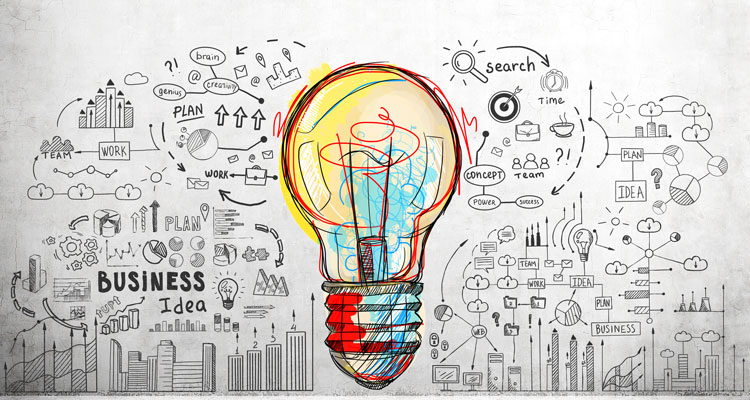
To Innovate is to introduce new, exciting ideas – so how could innovation ever be a negative? How do we constitute what is innovative? Why is innovation change but change is not innovation? After reviewing the required readings, I felt I didn’t have the answers I was looking for and so I searched and scoured the web looking for what it took to make something innovative. Just because something is new, does not mean that it is innovative. With that being said, it really comes down to the person, industry, tool or technology in regards to whether something is deemed innovative. Innovation needs to be help aid knowledge and make life easier in order to earn it’s namesake, but again this can be very subjective depending on who you ask. We will take the IPad for example, that was a revolutionary innovation, I am able to take a mini computer with me wherever I go – play games, listen to music and check my email on a large screen. But is every new update/version innovative? If you ask me – no; it merely changes a few features and adds on already existing software. If you ask someone running their own business who uses specific Apps now, which they couldn’t before – they would probably disagree with me.
When discussing the world of online learning, it appears we are in a continual state of evolution and with this is the continual advancement of research within the field. At one time, and maybe still, we as people would relish in the changes and continue to ask more questions along the way… but when is enough actually enough? Dron (2014) states that with the change in speed and capacity of technology that “it is becoming apparent that humans, as biological creatures, are not genetically equipped for the same speed of change.” Will this give rise to more problems and issues that we cannot plan for? I personally never think it ends well when I am more reactive, opposed to preventative, so I am merely thinking of the larger population when it comes to innovation. Another great point by Dron (2014) being that technology is changing at lightning speed and we need to react and ask greater research questions, as they are just as pertinent as the technology itself.
I found some great links on the topic if you would like to fall down the innovation rabbit hole:
https://www.cairn.info/revue-projectique-2008-1-page-13.htm#
References:
Dron, J. (2014). Chapter 9: Innovation and Change: Changing how we Change. In Zawacki-Richter, O. & T. Anderson (Eds.), Online distance education: Towards a research agenda. Athabasca, AB: AU Press.
Goldman, S. et al. (2012). Assessing d.learning: Capturing the journey of becoming a design thinker. In H. Plattner, C. Meinel & L. Leifer (eds). Design thinking research: Understanding innovation. (pp. 13-33). Berlin: Springer.
January 12, 2020 at 11:15 am
Hi Kerry
Thank you for your insightful blog post. I have to admit your post made me really think about ‘when is enough actually enough (Sharples, 2019). Your comment made me reflect on my career and my professional worlds (law and municipal government) over the last twenty years. I have lived through more than 10 upgrades and/or adoption of innovative technologies to ‘make the users life easier’. The innovations and changes continue into the 21st Century. Therefore, in my opinion, enough will never be enough and we have an opportunity of a lifetime.
As designers of learning, we have the opportunity to work as change agents, helping our students adapt to the new and innovative hard and soft technologies. Some of these technologies may be soft (we can configure the system) and some of them may be hard (the system is configured and we need to work within the parameters set out) (Dron, 2014). Regardless whether the technology is hard or soft, we have the ability to affect the change positively. This can be completed by employing pedagogies that bring about learning in our students (Dron, 2014). As designers and facilitators, we should be ensuring that our students are competent end users so that regardless of the degree of hardness or softness they are comfortable with the change and see it as an innovation to make their life easier (Dron, 2014).
References
Dron, J. (2014). Chapter 9: Innovation and Change: Changing how we Change. In Zawacki-Richter, O. & T. Anderson (Eds.), Online distance education: Towards a research agenda. Athabasca, AB: AU Press.
Sharples, K. (2019, December 15). Can we keep up with the continual change? [Blog post]. Retrieved from https://malat-webspace.royalroads.ca/rru0109/can-we-keep-up-with-the-continual-change/
January 13, 2020 at 4:10 pm
Hi Caroline,
Thank you for your response, I really appreciate your thoughts on my post. I really like that you brought up “new and innovative hard and soft technologies” as we continually see the jump forward and vast movement in technology. You must have seen such crazy changes working in your area of expertise, do you feel all the changes were beneficial? Were any of the technologies implemented too quickly? I fully agree with what you are saying in employing pedagogies to help and guide students through the technology shift. I sometimes feel overwhelmed as an instructor when dealing with all the new advances that I sometimes don’t stop and assess what this added pressure may do to the students. Being a student now as made me become more introspective and reflect on how I will be working within the parameters to allow a depper understanding of the soft and hard technologies (Dron, 2014).
References: Dron, J. (2014). Chapter 9: Innovation and Change: Changing how we Change. In Zawacki-Richter, O. & T. Anderson (Eds.), Online distance education: Towards a research agenda. Athabasca, AB: AU Press