
The project I was tasked with creating was the PLRD Repository (see http://resource.plrd.ab.ca/). It was a database that aligned curriculum expectations to local resources. The project’s goal was to create a one-stop resource for curriculum-related resources; this is very beneficial for our division because the physical distance is relatively large. I was in charge of the tool’s technical creation, and such, I made a flow chart of the technical specs, flow of the tool, and its scope following the design methodology based on meetings with the superintendent and deputy superintendent. One focus was how the tool created a simple workflow for adding materials that could easily be shared and searched by students, teachers, and parents. A rather powerful search method was developed and modified for teacher searches, focusing on learner expectations (see http://resource.plrd.ab.ca/curriculum/; see figure 1) and student/parent searches, focusing on the related keywords (see http://resource.plrd.ab.ca/parents-and-students/; see figure 2). From a technical perspective, the tool was a success, yet the division staff did not adopt it, highlighting the need for systemic thinking paired with design thinking (Conway et al., 2017). Simple issues like being able to designate teacher-only resources were quickly addressed and implemented to ease the anxiety of sharing resources. However, the core issue with the system was not a technical one. It was a social-culture one.
Figure 1
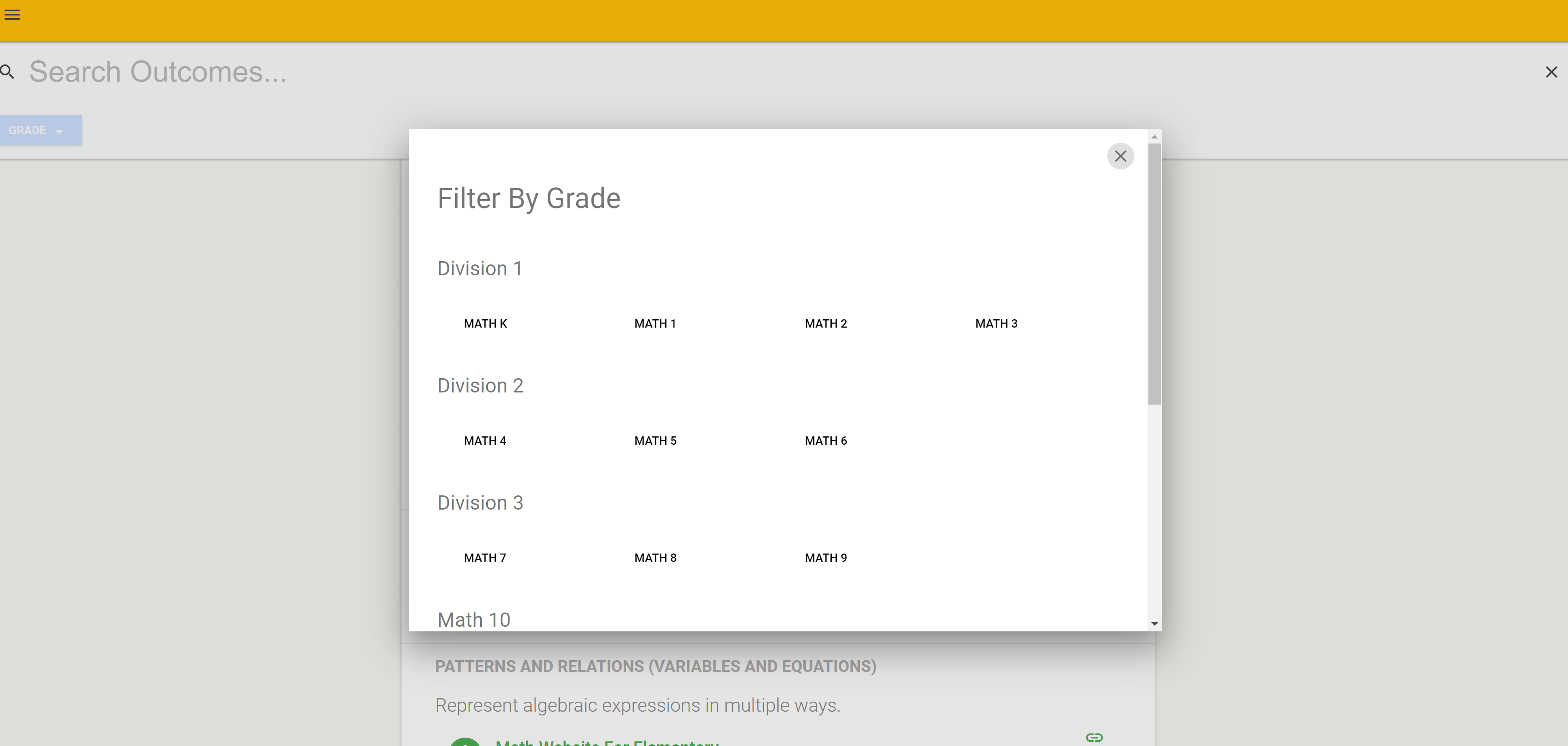
Note. A view of the teacher section, focusing on expectations, searching and filtering.
Figure 2
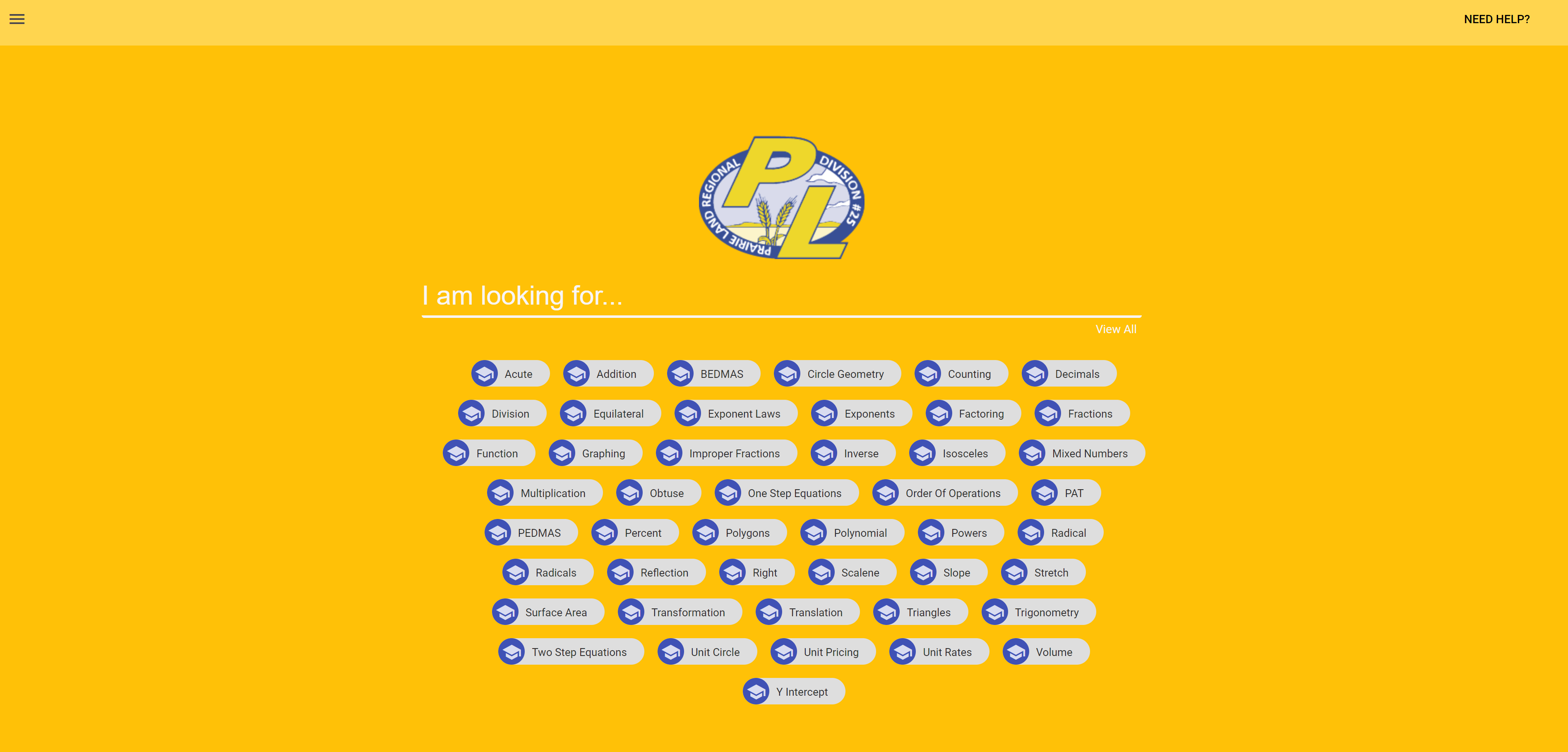
Note. A view of the student/parent section, that focused on searching through keywords.
What do you think were the barriers? Considering some of your readings, how would you suggest overcoming those?
At the time, my thought process was focused on the technical abilities and limitations of the project and not the division’s social-culture. In the autopsy I performed, when I consider the project a failure, I highlighted a few items:
- Staff felt it was another thing and did not want or did not have the time to devote to adding materials.
- Staff feared the tool would be used to judge their effectiveness as a teacher by the quality of the tools they added.
- Most teachers’ overall culture was not that of sharing resources, at least not on the scale that was being attempted.
- Many classroom teachers felt teaching was a solitary act to performed by oneself in the classroom (this was especially true in the K – 6 areas).
- There is still a wariness of technology permeating the division and community, resulting in some people shunning the tool out of principle.
As Conway et al. (2017) points out, a strategy that should have been utilized to calm and clear up misconceptions was meeting with the resistant parties during the tool’s creation and before its release in the division. PLSD’s (formerly PLRD) culture was not a factor taken into account; the idea of cultural theory domains (Conway et al., 2017) should have been implemented in the early stages of development to determine the best path forward.
What methods do you see yourself using in your practice?
I cannot honestly state what methods I will use in the future. As I have cited Conway et al.’s work quite a bit, I like the idea of merging design thinking with a systemic approach because it gives the flexibility of designing thinking with the stability, comfort, and familiarity of systems methods. Likewise, I have bought the PMBOK Guide book discussed in Wyatt’s work (2014). After the readings, I have acknowledged that a design methodological approach works for most of my individual projects but does not scale to larger group projects because it does not clearly lay out the integration, scope, schedule, costs, quality, human resources, communication, risks, procurement, and stakeholders (Watt, 2014). I have a budding idea of what this looks like but will need the experience to flesh it out.
Reference
Conway, R., Masters, J., & Thorold, J., (2017). From design thinking to systems change: How to invest in innovation for social impact. Royal Society of Arts, Action and Research Centre. https://www.thersa.org/globalassets/pdfs/reports/rsa_from-design-thinking-to-system-change-report.pdf
Watt, A. (2014). Project Management. Victoria, BC: BCcampus. https://opentextbc.ca/projectmanagement/
I have also experienced having some staff who resist changing or adding a new technology or tool. In the past, I have had some success by finding and empowering allies. Did you find any strategies successful in motivating change in those who were resistant?
Thanks for the reply,
I have had mixed results (at best) when inciting change in others. I have improved my delivery as before I felt a logical analysis of the benefits out way the short-term learning curve. Today, I tend to “get ahead” of the group and find people that I can use to incite change rather than it coming from me. Most of my colleagues think I am closer to a wizard than a teacher when it comes to technology, prescribing to the idea that anything I do is just technological wizardry and outside their scope. Instead, I tend to find a few interested parties and instruct them on the change and let them model it. I have to start very small in my division, moving individuals and small groups to persuade the hierarchical “clicks” to accept change through a process more kin to erosion than a systematic approach. Still, in general, the people that would benefit the most ignore most of my efforts. In fact, I know many colleagues who will leave the profession before learning anything related to technology or reflective practice. I like and use the idea of empowerment, however, in my case you need to have someone that is willing to experience new things to become empowered and that is not always possible. Sorry, I do not have much, feel free to share any of your experience, may help.