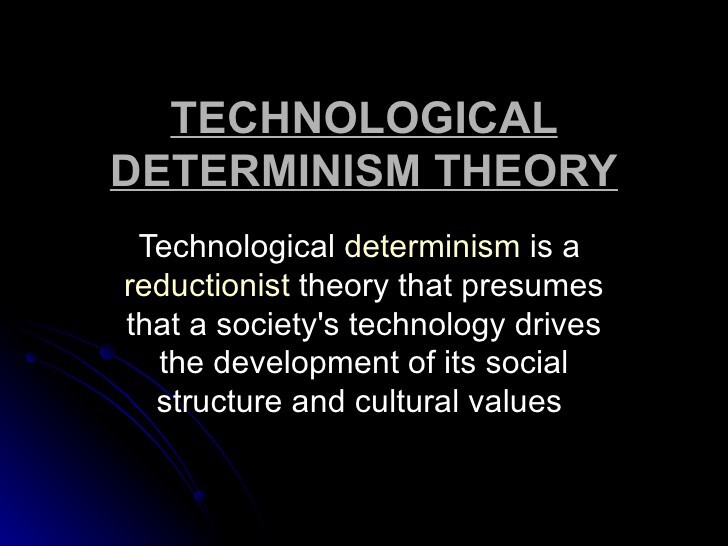
Technology has drastically changed since 1994, with advances that had not yet been imagined at the time that Clark (1994) and Kozma (1994) wrote their respective papers. Weller (2020) outlines the numerous technological advances that have been introduced since, such as e-learning, blogs, social media, and video; it wasn’t even until 1995 that the internet took off in the public domain. The following sections will highlight two separate articles that exhibit signs of techno-deterministic thinking. Each article will highlight two claims promoting the use of technology to enhance learning and will be evaluated through the lenses of Clark and Kozma’s thinking and the learning theories of their time.
Video increases memorability and information retention
In her post, “Does Video Actually Improve Learning and Engagement”, Anderson (2022) asserts that the utilization of video increases learners’ abilities to memorize and retain information. The medium of video affords the simultaneous use of images, text, and audio, which allows the brain to not only understand the information faster, but as a result, to memorize the information more easily.
Clark (1994) would contend that memorization and retention are not outcomes specific to the medium of video and have been proven to be replicated with other forms of media. This is demonstrated through the example that Clark provides, where computer simulation was used to train pilots and his assertion that people learned to fly planes well before simulation technology.
Meanwhile, Kozma (1994) would counter that learning is not just about knowing the content, but also the understanding of the application of the content. Video, with its ability to engage multiple senses, allows for the demonstration of applying the material in real-life scenarios to the learner, which provides for true comprehension and not just rote retention and memorization. According to Kozma (1994), “the medium is an inert conveyor of an active stimulus to which the learner makes a behavioural response” (p. 8).
Video allows for personalized learning
Anderson also suggests that video allows for personalized learning experiences by providing learners with the opportunity to set their own pace of their learning. Video content is now widely accessible, which allows users the flexibility to consume content on multiple platforms or devices at any time that is convenient. In addition, users can pause, rewind, and re-watch videos as they feel necessary in order to best understand the material presented (Anderson, 2022).
Clark (1994) would argue that, “there is strong evidence that many very different media attributes accomplish the same learning goal” (p.1), and that a student can stop, go back and re-read sections of a textbook, which they can also take with them on the go; so again, these characteristics are not unique to video and prove that it is the message and not the medium that is of importance.
Kozma (1994) would maintain thatlearning is not just about the outcome, but the process, and that, “learning is an active, constructive, cognitive, and social process by which the learner strategically manages available cognitive, physical, and social resources to create new knowledge by interacting with the information in the environment and integrating it with information already stored in memory (Shuell, 1988, as cited in Kozma, 2014).
Audo technology personalizes learning
Benzinga’s (2022) latest release, “Audo to Launch Personalized AI-Powered EdTech Platform with Dual Interfaces for Learning and Earning” claims that Audo’s latest technology, Audo Guide, uses learner’s personalities, experiences and competency to provide customized content, in turn optimizing learning outcomes through courses that carefully align with career goals. This course-based platform leverages artificial intelligence (AI) technology to increase employability skills and improve earning opportunities for individuals. Skilling up allows employees to gain relevant and marketable expertise while employers have access to a more relevant job market in terms of what skills are needed now.
Clark (1994) would claimthat creating course content based on personality theory and other individual inputs highlights the theoretical framework and pedagogy that provide the foundation for customized content and rely less on the mode in which the custom content is delivered.
Kozma (1994) would defend that the interactions that take place to foster learning are influenced by both the content that underpins the learning alongside the media in which it is delivered. Kozma would argue that learning and its environment are complementary to one another and that learning is based on both the presentation of material and interactions together (1994).
Audo’s AI technology focuses on course content based on labour market needs
A follow-up claim by Audo suggests that access to relevant data allows Audo’s AI to match the skills sought by the labour market for course content and the skills that are advantageous in leveraging careers and improving earning potential.
Clark (1994) would argue that the knowledge and skills required by the economy can potentially be identified in a number of ways outside of Audo’s AI platform; moreover, media choice is made through calculated, cost-effective choices based on resources available and attributes necessary to support learners.
Kozma (1994) would insist that part of the learning involves not only identifying pertinent information, but in addition, gaining and leveraging skills which then transfer to practical applications. In this case, the skills are achieved and practiced through Audo’s AI platform and, as Korma asserts, “our media theories and research must reflect both the capabilities of media and the complexities of the social situations within which they are used” (p. 15).
Linking Clark’s & Kozma’s claims to more recent examples of techno-deterministic thinking allows us to recognize and appreciate the implications of how media can be both integral as well as adaptable to learning outcomes. The claims examined above include statements alluding to the ability for technologies to: increase memory and information retention, allow for personalized learning; provide customized content; and, lastly, the ability to access relevant data. Though the validity of each side of this media debate can be argued, the lines between technology and pedagogy have become increasingly blurred as technological systems become more embedded and part of our everyday learning outcomes.
References
Anderson, E. (2022). Does video actually improve learning and engagement? Pixel Productions. https://www.pixelproductionsinc.com/does-video-actually-improve-learning/
Benzinga. (2022, September 22). Audo to Launch Personalized AI-Powered EdTech Platform with Dual Interfaces for Learning and Earning. Newsfile. https://www.newsfilecorp.com/release/138066
Clark, R. E. (1994). Media will never influence learning. Educational Technology Research and Development, 42(2), 21-29. http://www.ucs.mun.ca/~bmann/0_ARTICLES/Media_Clark.html
Kozma, R. B. (1994). Will media influence learning: Reframing the debate. Educational Technology Research and Development, 42(2), 7-19. https://citeseerx.ist.psu.edu/viewdoc/summary?doi=10.1.1.167.4904
Weller, M. (2020). 25 Years of Ed Tech. Athabasca University Press. https://doi.org/10.15215/aupress/9781771993050.01
09/26/2022
I had a free moment and took a quick read of this post – I’m so glad you mentioned how much tech has changed since 1994 and that the lines between pedagogy and technology are getting blurrier. So much has changed about how people learn in the past 30 years.