Individual Critical Academic Reflection of my Coursera Experience
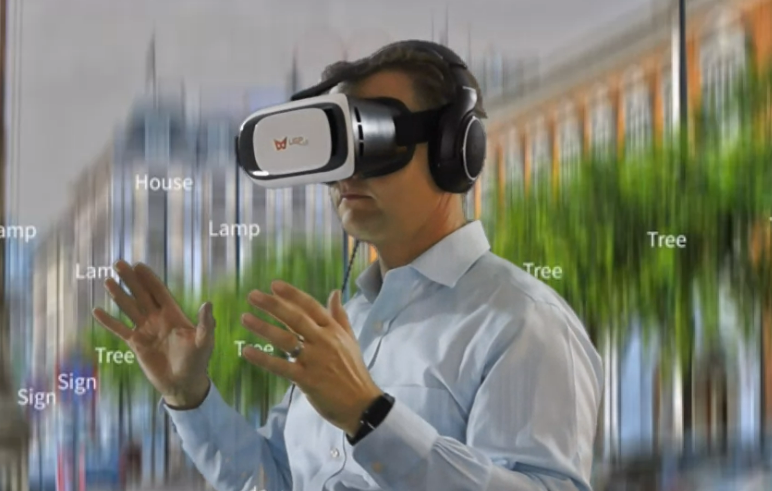
This reflection piece looks at my experience with using Coursera, a Massive Open Online Course (MOOC), to explore one module of a larger course called “New Technologies for Business Leaders.” The module our team selected to explore focuses on Virtual Reality (VR), Augmented Reality (AR) and everything in between, according to the Coursera description provided by Rutgers University, NJ (Coursera, 2018). The main goal of exploring the VR, AR and Mixed Reality module was to look at how data privacy and security are implemented, incorporated and shared in the context of participating in online learning. The insights gained can then be leveraged as a starting point and applied to my individual paper.
Although this was not my first experience with a MOOC for online learning, it was, however, my first experience with using the MOOC, Coursera. Initially, I assumed that a platform such as Coursera that monetization educational courses and uses a freemium model would likely flow nicely between concepts and incorporate a mix of text, articles and videos to support learning. Freemium is a sales strategy that allows users to access a version of the content for free while allowing premium features to be accessed for a fee. Furthermore, because our team was committed to trialling the free version to understand what this experience looked like at the most accessible level, we only evaluated the features available at that level.
As I begin to explore further, I am interested in the interconnectivity between learners, instructors, institutions and Coursera as a business and how this presents itself to learners who engage with Coursera. I am finding many themes emerge in my research about the roles and responsibilities when it comes to data control and stewardship that I have begun flirting with as I reflect on my own personal online experience. A more granular look at Coursera’s policies around data sharing and the responsibilities of users and providers is an area I am both deeply curious about and concerned about. I noted quite a number of data privacy features in my initial exploration of the online learning platform that I look forward to exploring further.
It is clear Coursera has many strengths and has the ability to react quickly to technology engagement and changes to adopt and adapt to meet the needs of users. Although I cannot contest to any noteworthy reasons why a learner that has access to the Internet may question Coursera’s utility, I do, however, believe there are opportunities to make digital learning more equitable and accessible by bringing in design thinking, modified course delivery and accessibility options. I must admit that there may be some of these solutions currently available; however, they were not presented to me in the free trial. This is an area I may want to explore further in my upcoming studies.
Reference List
Mueller-Eberstein, M. (2018). New Technologies for Business Leaders [Online course]. Coursera. https://www.coursera.org/learn/new-technologies-business-leaders/home/info
Prinsloo, P., Slade, S., & Khalil, M. (2019). Student data privacy in MOOCs: a sentiment analysis. Distance Education, 40(3), 395–413. https://doi.org/10.1080/01587919.2019.1632171
Recent Comments