
By Vince R
The case of the boring classroom.
I am a certified teacher, a storyteller, and someone who has always been interested in creative things. As a kid, I would draw comics, write stories and play Dungeons and Dragons with my friends. Today, although I teach English and Social Studies in high school, I still enjoy a good story. Here is a little about how I arrived here. My journey into education didn’t begin in a classroom. Before becoming a teacher, I spent some time pursuing acting. I was attracted to the physical expression, the opportunity to be creative, and become immersed in a story. As you might know, acting is a relationship between the performer and the audience. You’re not simply presenting a story; you’re building it together with the experience of the audience. The audience brings its own imagination, emotions, and interpretation to what is happening. That’s why sometimes stories work best when some of the details are left unsaid and open to interpretation.
I eventually needed to move into a new career, and teaching felt like a natural progression. In acting, you’re building a story with an audience. In teaching, you’re building a learning experience with students. However, I noticed a difference that was occurring in the classroom for the most part, and that was that kids were not enjoying school. This seemed odd to me in a way because kids love learning. They learn constantly, often without even realizing it. They are excited to learn on the playground, making up game rules, experimenting, and discovering new things. They learn when watching television shows and love becoming immersed in stories and characters. They pick up new video games, spend hours learning complicated rules, develop new strategies, and persist through hard levels and challenges. They learn all this for fun because they want to, so why does that enthusiasm sometimes disappear when they walk into a classroom? I was in my teaching certification program and wanted to understand this mystery and learn how I could make learning in the classroom fun again. The answer to this, I found, was in examining the traditional education lesson format. What was the design for the classroom? Was the emphasis on listening rather than doing? Were students learning facts without engaging with them? How were the students’ emotions engaged? It became clear that sometimes education could become so focused on the intended outcome and could lose sight of the experience of getting there. This style of teaching, that I now call teacher default mode, emphasizes learning by lectures and power points that don’t engage or challenge students. When students are told what they need to know, what they need to do, and what they need to demonstrate, they lose the exploration that makes learning interesting and engaging.
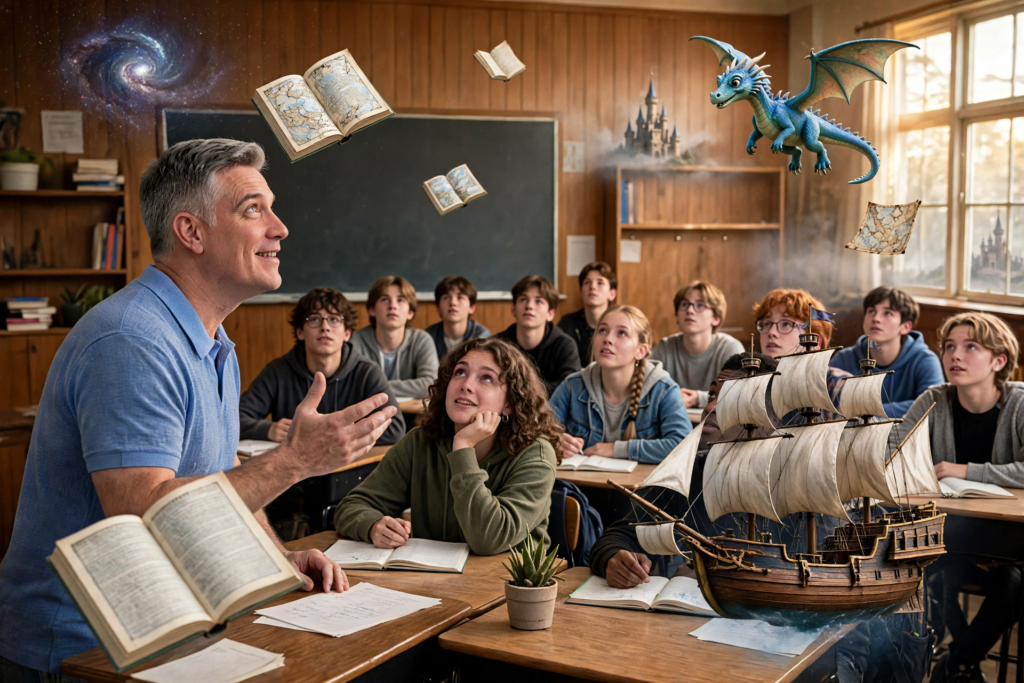
Understanding this I started focusing on the designing of my lessons as the beginning of the exploration process. Lesson design is key to student engagement. Is this lesson just delivering information? If so, why does it need a teacher to do it? Why not show students a YouTube video? Why not have an AI explain the topic? Information delivery is increasingly something technology can accomplish anyway. Or is this lesson creating an experience that makes students want to learn? I began learning to create lessons where students actually wanted to participate and even asked me to repeat. One example that stands out in my mind involved teaching students about the First World War. Rather than simply asking students to recall information about the war, I designed an assignment where they had to write a letter home from the battlefield. They needed to incorporate the historical information we had discussed in class, trenches, rats, gunfire, no-man’s land, etc. and they had to describe why it was so painful to live through. I was amazed at some of the creativity that some students displayed, and they all learned the challenging material well. The students weren’t simply listing facts about trench warfare or describing historical events, they were considering what those experiences meant for them.
Going forward
Of course not every lesson can be a performance, a game, or an elaborate creative project, but I am suggesting that the lesson designing process is critical to creating student engagement. Sure, some classes can be direct instruction, practice, or structured learning; however I am suggesting that teachers should think about why students would want to participate in those experiences. Education is constantly changing and these days it can be harder than ever to build engaging classrooms because technology has become so ubiquitous and distracting. As I explore the MALAT program I want to increasingly explore the relationship between technology, creativity, and student engagement so I can still create engaging classrooms that get students talking and having fun.
Be First to Comment