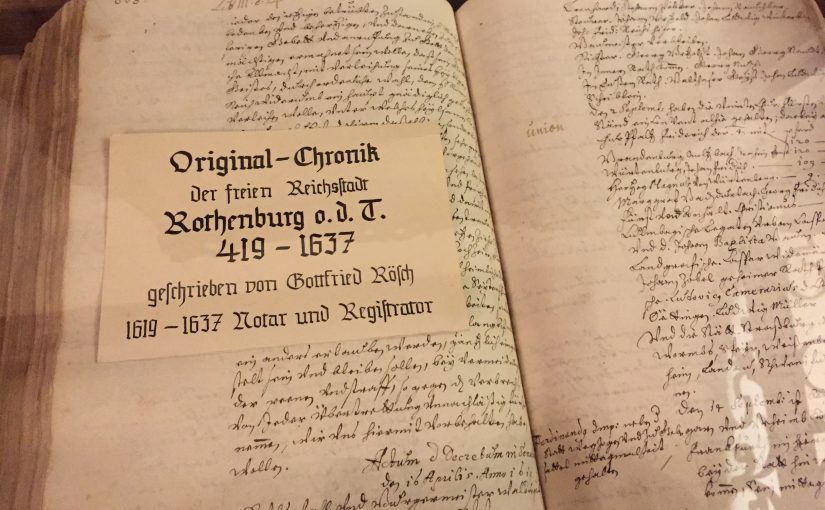
As I began this activity, I was reminded of a story told to me by a good friend who was a book binder with over 30 years of experience working for the same employer. In his story, my friend shared how his employer was making a substantial capital investment into their infrastructure which would allow them to diversify and provide book binding services for additional types of books, thereby providing the organization with the ability to bid on more jobs. It was great news, as everyone working for this employer would have enough work to sustain their jobs on a full-time basis.
On his first day back to work with the new equipment, my friend found that the physical location of the equipment did not allow the operator to work effectively, as there was not enough room to control the equipment safely. The only tangible solution was to remove the equipment and rotate it by thirty degrees, thereby allowing enough room to operate the equipment effectively and safely.
As I reflect on this story through the lens of “designing products that fit the user’s life” (Kouprie & Visser, 2009, p. 438), I realize what went wrong. In reading more about using an empathic framework in design, I am beginning to realize the importance of understanding the end user’s needs. I appreciated Seelig’s (2013) examples of the benefits of reframing a problem. Instead of focusing on what we think members need to know to be successful in their professional practice, I will reframe my problem to explore how members access the products and services that we provide to support them in their professional practice. My desired outcome is to reframe our approach so that the training we provide around products and services proactively meets the needs of our end users, instead of taking our current reactive approach to solving problems as they arise.
My Empathetic Framework
In my design challenge I have decided to explore our new member orientation, which is a mandatory course that is designed to help new members better understand the products and services we provide. I chose this particular course because it has remained almost unchanged for over a decade, coupled with the fact that the metrics collected from our help desk uncovered gaps in the training and led us to wonder if we could be doing a better job of on-boarding our members. I liken the current orientation to drinking from a firehose, with so much information provided in a short time that it seems impossible to remember it all. I wonder if we are providing the right level of training, too many topics or if our scope is too narrow.
I plan to start building out my empathetic framework by using an experience prototype (Kouprie & Visser, 2009), wherein I will step into the member’s experience by simulating the user’s experience in accessing our products and services. Having never been in professional practice in this industry, I realize that my experience will be different than that of the end user. However, our suite of products and services perform discrete functions, the outcomes for which I am very familiar.
I started by mapping out a typical day-in-the-life of a member as they perform the core tasks required in their profession. Doing so allowed me to experience both bottlenecks and seamless experiences, thereby allowing insight into which topics need to be fleshed out and which can remain static – at least from my experience as a user.
To further validate my findings, I have reached out to a new member who I already have a relationship with as I coached them around using a core tool during their first week. By observing this user in their environment, I will “stay beside” (Kouprie & Visser, 2009, p. 443) the user and be drawn into their experience. I imagine I will gain insight into whether the challenges they face are the same that I faced during my experience prototype. This work should allow me to have a more “comprehensive objectification” (Kouprie & Visser, 2009, p. 443) of the member’s experience, leaving me with a more fulsome understanding of their experience.
Potential Challenges:
Challenges I expect include that my experience prototype will not accurately reflect the needs of all users as each individual has their own unique experience (Kouprie & Visser, 2009). However, even with a small sample size to build from, I will gain the ability to step outside of my own perspective and see the existing design through the eyes of our member (Matthews, Williams, Yanchar, & McDonald, 2017).
Another challenge I anticipate is balancing the tension of multiple stakeholders (Matthews, Williams, Yanchar, & McDonald, 2017). How will we provide the same quality of learning provided by our new member training to existing members? We typically onboard about 80 members per year, with each member having unique challenges, whether they be understanding the rules, regulations and bylaws (which are written in complicated language) or whether they lack the digital technology skills to effectively manage the various technology products. I hope that uncovering bottlenecks and seamless experiences will help bring an empathetic perspective to our work, helping us to achieve a broader range of goals (Matthews, Williams, Yanchar, & McDonald, 2017), including an improved experience for all members.
I know that I am not the first person to experience these challenges and look forward to your insights and ideas on how I can face these potential challenges.
References
Kouprie, M., & Visser, F. S. (2009). A framework for empathy in design: stepping into and out of the user’s life. Journal of Engineering Design, 20(5), 437-448.
Seelig, T. (2013). How reframing a problem unlocks innovation. Extracted Sept.
Matthews, M. T., Williams, G. S., Yanchar, S. C., & McDonald, J. K. (2017). Empathy in Distance Learning Design Practice. TechTrends, 61(5), 486-493.
Hey Karen!!
This is a really good idea. How do you intend to balance the demands of numerous stakeholders if they aren’t in agreement with your ideas? What I like about design thinking is if there are disagreements, it is not necessarily negative, because it they help to continuously refine ideas to make them better.