U3 A4 – Design Challenge C A S P

Computers Applied to Solve Problems

Computers Applied to Solve Problems (CASP) evolved from the mid-1990s training which enabled online access to the workers’ pay slips in the payroll system.

Since unionised workers have no interaction with computers on their shifts, they were trained to access their pay slip online using dedicated workstations.  During implementation the workers had the option to acquire desktops to consult payroll information from home.

Months later, many workers wanted to learn more about computers thus Information Technology launched a course covering the basic Microsoft Office software the company used world-wide.  Introduction to Computers is now the pre-requisite to attend the CASP course.  Nonetheless in accordance with the workers’ union, newly-hired workers that fulfilled the pre-requisite should sign an exemption letter.

Components

The approach of a design challenge shall provide structure and openness to allow for learning enrichment as researched by Crichton & Carter (2017), including five components (p. 24):

 Overview.  CASP is a knowledge-application oriented course hence the sessions contain problem based learning (PBL) experiences.  The participants shall apply their computer literacy to build feasible solutions of problems that have occurred in their workplaces.  The problems could be pre-selected by the coaches, or described by the participants at the beginning of the session.

Design rationale.  Although PBL can be an individual exercise, collaboration is key according to Uden (2008).  He refers to interpersonal skills being highly valued for future business needs, therefore making the program teamwork-based benefits the company and the participants (p. 14).

Problem scenario.  The kind of topic shall specify if the participants would work on a pre-defined scenario handed out by the coaches, or if each team shall select a problem that happened in the plant.

Success determinants.  The kind of solution would suggest the outcome the participants shall attain using Word, Excel, or PowerPoint, or a combination of those.  The kind of solution also scaffolds the participants’ assessment on how well their product might have helped solve the problem.  The outcomes of the sessions might become valuable initiatives for the company.

Parameters.  Constraints for the sessions shall be negotiated collectively.

Mechanics

Each session shall begin with a discussion of the kind of topics the participants would work on, and the kind of solution they think they should achieve.  Next, the coaches shall explain the TAPPA process (Moore, 2016, p. 429), which will guide the sessions by asking the participants to respond in the following order:

  1. Target
    • What will you do with the outcome of this training?
  2. Accomplishment
    • What do you expect to achieve?
    • How would you know if you have achieved the target?
  3. Past
    • Have you done this before?
    • What did you learn then?
  4. Prototype
    • Can you create an example of the expected product?
  5. Artefact
    • What have you created?
    • What is it?
    • How would you implement it to fulfil the learning?

A closing thought

Empathy (Vann, 2017, p. 235) is the soil where learning grows… have fun!

____________________________________________


A4 Readings of LRNT 524

Empathy: Make it or break it

Reading about empathy with regard to instructional design for adult participants, made me reflect on what it was like empathising with students when teaching preschool and kindergarten classes.  Contrary to what most people would expect due to obvious differences between the audiences and their settings, empathy is equally perceived by both audiences the adult learners and the young children.

“Consideration of self, while considering others, is a component of the
process of taking another’s perspective” (Chadwick & Ralston as cited by Vann, 2017), and that consideration is noticed by the learners regardless of  their age.  While an adult might feel excluded from the session if the content is uncomprehensible or too hard to grasp, young children would look for something else to do which might have them wrongly labeled as ADHD candidates.

Thus the effect empathy -or the lack of it- has on the learner is an emotion as appointed by Trout (cited by Vann, 2017) saying that while empathy has to do with understanding the other person, sympathy is the positive emotion felt as a response to being understood.  This might explain what happened to a colleague that, after hearing other teachers saying how much they enjoyed their time with their young students, she commented: “How can you stand them until 3:30 p.m.? I am wishing for the bell to ring since 10 a.m.!” (From personal experience).  Her lack of empathy made the children behave in a way that challenged her patience constantly, and this might be seen as a survival mechanism from the children’s perspective while completely unacceptable from the teacher’s standpoint.

Empathical instructional design makes the participants feel welcomed since the learning ocurrs effortless due to the complementarity between empathy and sympathy.  When empathy is intentionally present in the instructional design process it not only extends the design’s concept but also anticipates the achievements the design aims to obtain (Parrish as cited by Vann, 2017).

I conclude that for empathy to happen at least two things must ocurr beforehand: first, you should know your audience in order to be able to consider the content of the session from their perspective; and second, you should like what you do because your audience will notice, which would have an impact on their performance.

References

Vann, L. S., (2017) Demonstrating empathy: A phenomenological study of instructional designers. Making instructional strategy decisions for adult learners. International Journal of Teaching and Learning in Higher Education 2017, 29(2), 233-244. Retrieved from http://www.isetl.org/ijtlhe/

U3 A3 – Continuum of Innovation for the case study

Continuum of Innovation

The implementation of a new payroll system at multiple sites involved training for the users operating the system, as well as for the final users of the payroll service.  The sequence and type of training offered per facility follows:

  1. Operation and management. Audience: Human Resources Department.
  2. Train the trainers. Audience: payroll personnel.
  3. Introduction to the new payroll system. Audience: end users, workers and employees.
  4. Using the electronic payment module. Audience: end users, workers and employees.
  5. Electronic payment module and support. Audience: personalised remote attention.
  6. Remote training sessions. Taught by IT from corporate headquarters.  Audience: workers and spouses.

Two months after completing the first go-live implementation the Human Resources Department requested IT to schedule training sessions for basic users.  The audience would be workers and spouses in groups of six pairs at a time to share six computers.  Sessions would be held in the plant’s conference room where the video conferencing infrastructure existed —YouTube would arrive nine years later.

The sixth item on the list is an additional element that was not contemplated by the project.  The remote training sessions became an ongoing program that brought computing technology to many households, not only for the payroll’s payslip but also for the children’s homework and families’ development which impacted the way many families were used to learn.

Although not all the workers took the optional plan to purchase a computer, almost all who did attended the basic users’ training with their spouses.  A year later, the union’s leaders were among the most satisfied people with the outcome of the project.

U3 A3 – Design Principles for the case study

Design Principles

Throughout the narrative of the case study presented in the previous post, the design principles are identified with a number that relates them to the following list:

  1. Simplification through extensive use of IT. Established by the CEO’s global directive.
  2. Unification of payroll systems. Directive set by Human Resources in the home country in alignment with the CEO’s global directive.
  3. Benefits of the new system:
    • Shorter total run time
    • Check-points for quick re-processing
    • Standard accounting interface for all business units
    • Customisable management reports
  4. Consult payroll information wherever you go. Provided there is an Internet connection.
  5. Electronic Payroll support available 24/7.
  6. Consult your payslip from home.  Similar to #4 but centred on the plant’s workers.


U3 A3 – The Reach of Distant Learning (Case Study)

The Reach of Distant Learning
 Impacting the Learning Practices in Households

An international cement company with operations in over 30 countries faces the challenge of increasing productivity and competitiveness.  In the home country the company had 15 cement plants, 211 ready mix plants, 67 distribution centres, and a headcount of 5,000 people, including the corporate offices.  Before the Internet era, a company with offices and plants in multiple locations usually had commercial packages, spreadsheets, and in-house developed programs for the same purpose, and all must feed the accounting month-end cycle.  The payroll was exactly the case.  This study is prepared to describe how the project of improvement obtained additional benefits beyond the business expectations.

Executive Summary

The company set a global strategy to simplify its operations relying strongly in revamping and expanding its information technology infrastructure (see #1 in following post on Design Principles).  Human Resources launched several projects aligned with the directive, among which was the unification of the payroll applications.  The new system worked based on parameters, and parametrization was a lengthy and meticulous process because each parameter should comply with terms and conditions specified in the labour contract language.  The first three cement plants would be implemented one at a time; afterwards, the implementation team would split to do three cement plants simultaneously.  The rest of the facilities would be implemented gradually since they are smaller and less complex.

Findings

Each cement plant processed two types of payroll: The workers’ payroll for unionized personnel, and the employees’ payroll; each payroll was processed weekly or fortnightly, respectively.  There are more differences between the two types of payroll than their frequencies.  The employees’ payroll considered hiring terms and conditions per person due to individual work contracts, while the workers’ payroll had all workers under the collective work contract managed by their union.

The employees’ payroll was complex because the hiring terms and conditions were as diverse as were the individual transactions per payroll period.  Additionally, executives’ payroll was managed separately, as a different company, to avoid exposing confidential information by mistake.  The employees’ payroll calculated each payslip as a tailor-made suit every time.

The Human Resources Department set the goal of optimising the payroll process by implementing the same system nation-wide (see #2 in following post on Design Principles).  Due to legal regulations the two types of processes prevailed because the law considered them as two different compensation schemes, thus each needed undivided fiscal attention.  The project offered important benefits like: Shorter process run-time; check points for quick partial re-processing runs—previously, every re-processing run was done from the beginning compromising punctuality; standardized month-end accounting interface; customisable management reports (see #3 in following post on Design Principles).

Discussion

During the 1990s the Internet was an incipient tool for everyone, individuals and companies alike.  The pioneers tried the online environment even turning established ways of doing business into technological challenges.  The company’s CEO was prone to use information technology whenever possible, so IT became a strategic tool that developed several competitive advantages for the business to the extent of the company being referred to as cyber-cement by financial periodicals (Dolan, 1998).

The company had been operating for 90 years which explains why aspects of its internal dynamics seemed particularly rigid.  For example, the working conditions agreed upon with the worker’s union, a topic that brought up an unforeseen difficult situation.  The company’s Labour Department was reluctant to accept the slightest modification to the established procedures.  The attorneys in that department argued that any payroll-related modification might put the company at risk of a nation-wide strike should the worker’s union disapprove the changes.

According to the Human Resources Department all the changes were positive, and the reluctance of the Labour Department was hard to understand until, after several meetings, the Labour Department’s attorney explained their deepest concern: The new system will not require the worker’s physical signature on the payslip to attest receiving due payment for the period.  In fact, among the features of the new system was the electronic signature of the payslip, and the corresponding worker’s payroll history.  The information would be password protected, and the person would be able to access information whenever needed, and from wherever there was an Internet connection (see #4 in following post on Design Principles).

The electronic payment module had captured the interest of personnel that travelled often —employees and executives—, who were usually troubled when the payday occurred during a trip, and the deposited amount did not match.  They had to wait to be back to review the information on their payslips.  Online access allowed them to request clarification, if needed, and electronically sign the payslip.  A few months before workers started being paid through bank deposits, an important progress with the union aimed to increase worker’s security by not having workers leaving the plant carrying cash on pay day.

Implementation

It took several meetings with the Labour Department to finally convince them to support the project in front of the union, and in order to achieve that the Human Resources Department researched instances when the electronic signature was regarded a valid resource by the International Labour Organization keeping the employer out of trouble.  Appendices A and B contain citations of examples of such documented cases.

Once the Labour Department felt confident, the meeting with the union’s leaders took place.  Human Resources outlined the project explaining how the workers would benefit from the new system emphasising two aspects in particular: The access to the worker’s information and its security; and the increasing use of technology not only by the company but everywhere, and how this trend could be positive for the workers and the business.

The union’s leaders received the information not hiding some scepticism about the innovative features described.  All workers would be trained in site to access the system using public workstations placed conveniently throughout the plant.  Direct access to the remote help-desk support would be available via the telephone next to each workstation (see #5 in following post on Design Principles).  The payslip would be printed using the public workstation in the Human Resources area, which had the printer assigned to the module.  All sounded right but what if the worker was unable to print the payslip?  Would the worker go home without the payroll document?

Conclusion

The Labour Department did not know that Human Resources had an additional plan to make sure the union accepted the idea: Each worker would have a one-time-option to acquire a desktop computer at an incredibly low price —IT helped obtaining a massive discount from the account representative which made the workers’ payments symbolic, and they would pay in instalments.  The goal was to facilitate the workers access to their payslip from home (see #6 in following post on Design Principles).  The fact that computers were being increasingly useful at home mostly for the kids’ homework made this a great supporting argument.

The plan itself totally surprised the Labour Department’s attorneys.  In addition, being optional instead of imposed, the plan made the union not only to accept it but to adopt the project altogether.  They valued the plan as a way for their workers and families to learn and develop basic computer skills.  About the new payroll system, they asked to attend the training sessions to learn more about what their workers would get.

The Continuum of Innovation is detailed in the following post on the topic.

References

Dahlman, C., Mealy, S., & Wermelinger, M. (2016). Harnessing the digital economy for developing countries. OECD Development Centre Working Papers, (334), 1-79.

Dolan, K. A., (1998, June) Cyber-cement. Forbes. Retrieved from https://www.forbes.com
/forbes/1998/0615/6112060a.html#678be2c85811

Lipton, S., & Matyas, S. (1978). Making the Digital Signature Legal and Safeguarded. Data Communications, 7(2), 41.

Appendix A

Harnessing the digital economy for developing countries

This report makes a call for why the digital economy matters for developing countries and what they need to consider when developing a national digital strategy.  The world is undergoing digital revolution with significant implications for global economies and livelihoods.  This revolution is predicated on the ever-increasing pace of technological innovation and diffusion.  Digital technologies and their attendant applications are reshaping whole domains of human activity, and are spreading across the world faster than previous waves of technological innovation.  The digital revolution is thus too important for any country to overlook.  As outlined in Section II, the digital economy can be harnessed for inclusive and sustainable growth: digital technologies make life easier for citizens and consumers, raise the productivity of workers and firms, and help governments extend key services to those who need them most.  However, this does not just happen randomly: governments must engage in strategic planning to maximise the development impact of digitalisation and ensure that its benefits are evenly distributed. (Dahlman, Mealy, & Wermelinger, 2016)

Appendix B

Making the Digital Signature Legal and Safeguarded

The need, use, and legal significance of one’s signature on documents or instruments must be viewed from a perspective embracing several branches of the law.  Many of these bodies of law presume a paper-based society.  If such transactions were to be implemented exclusively via an electronic communications system, it would be necessary that the system provide a capability for the transmission of “signed” messages.  One possible method for obtaining digital signatures is to make use of a “public-key cryptosystem.”  Protocols for implementing digital signatures will require an initial written agreement between the parties in question containing a complete description of the procedure being agreed to and the bit-patterns which are needed as part of the validating process.  This event will have implications about the Statute of Frauds, the Law of Acknowledgement, the Law of Agency, and the Uniform Commercial Code. (Lipton & Matyas, 1978)

U2R – Readings on Distant Learning

Online Distance Education: Towards a Research Agenda.

I chose this reading because the scope with which authors Anderson and Zawacki-Richter addressed the online distance education provides an accessible perspective, organising their study in three levels of research that allowed me to parallel my case study as follows: Macro-level, to consider related systems and theories that in the case study correspond to the global strategy of an international corporation; Meso-level, in which they include pertinent aspects of management, organisation, and technology that for the case study represent a nation-wide project for a single country; and Micro-level, to focus in what learning and teaching in distance education environments involve, as well as contributing to the success of the project implementation of the case study.  Furthermore, the chapters that build up the levels contain the work of one or more experts on specific matters providing a collection of knowledgeable information upon which to support a wide variety of future research studies.

In chapter 4, Online Distance Education Models and Research Implications, the invited experts Evans and Haughey refer to Distance Education as a form of education that is based on the objective of providing education to people unable to obtaining it at schools.  The individual cases varied from geographical location, to family and work commitments, to cost factors, as well as non personal issues like not enough institutions, or full-time funding, or insufficient staff (Anderson & Zawachi-Richter, 2014).  For the case study I am preparing the situation can be somewhat different although the education through the distance still occurs.

Distance education happens within larger socio-economic and political contexts, which are not only reflective of societal characteristics as those Keegan (as cited by Anderson & Zawachi-Richter, 2014) identified:  immediacy, globalization, privatization, and industrialization.  The authors add professional learning to these, and in my case study I must add the happenstance created by the technological drive of the CEO of the company, as well as the features of a Human Resources project.  Distance education was a consequence instead of the focus since the project consisted in the nation-wide implementation of a new system replacing all previous means used in processing the payroll, including an innovative way for the personnel’s physical and electronic access to their payslip.

References

Anderson, T., & Zawacki-Richter, O. (Eds.). (2014). Online distance education : Towards a research agenda (Issues in distance education series). Edmonton, AB: AU Press, Athabasca University.

U1 A1a – Travel Agency Begins

Following are some details of the making of the Assignment 1A that Fiona and Alfonso worked together as a team.

Sometimes it takes the feeling that you are going to crash to make yourself aware and take real action. Image retrieved from Creative Commons, 2017.

The crash course on design thinking left both of us with more questions than answers.  Specially considering that we were asked to build an online training having as an example how to devise a new experience around giving/receiving a gift… honestly, the example did not contribute much to the brainstorming session.

In life as when travelling knowing where you are going is important… enjoying the journey is vital. Image retrieved from Creative Commons, 2017.

We met twice in-person within one week: once in Vancouver and once in Victoria.  Ironic, since we are in an online course, doing an assignment to develop an online training.  Alfonso was having technical difficulties, so we planned a real-world work-around.  For instance, when we agreed to meet in Vancouver, Fiona was in Victoria and Alfonso was in Monterrey, Mexico, and we connected using Zoom although on his end Alfonso had to type because the computer did not have a working microphone.  

A few days later we had our first meeting in Vancouver, and worked through the d.school Design Thinking process at the Salsa & Agave Mexican Grill on Fiona’s ReMarkable Paper Tablet.  We met again to co-write the assignment’s blog post at Fiona’s in Victoria.  Please follow the link to Assignment 1A in Fiona’s blog, and provide us with your feedback on our work.

Thank you for reading this post.

U1 A1 – Tony, Tommy, Addie, and Friends

The instruction process is complex because it involves more activities than only presenting content.  Teaching in itself can be difficult enough to require being prepared with organised material, and a plan to go about it.  Among the strengths of ADDIE as stated by Bates (2014) is its adecquacy to deliver high volume courses, which was demonstrated with its use during the Normandy landings in the World War II.

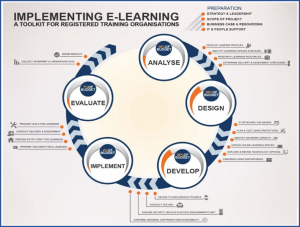
ADDIE’s model as Bates conceives its implementation cycle for registered organisations (Bates, 2014).

Coincidentally with Bates, I like the idea of “PADDIE” to start the process with a planning or preparation stage (Bates, 2014).  Nonetheless, the ADDIE model is not the universal solution because it was conceived to deal with large projects which tend to be complex by nature.  Although smaller sized projects are better served with other models (Bates, 2014), the info-graphic provided by Bates may serve as a thorough check-list to make sure all pertinent components of a given case are taken into consideration.

IBM Selectric Typewriter from 1965. Retrieved from Creative Commons, 2017.

In order to complete the picture of the history of instructional design, Thomas mentions models and theories of various researchers among which is Jean Piaget, a psychologist whose study identified discrete phases in children’s learning as they grow (Thomas, 2010).

KONICA Photographic Camera from 1967. Retrieved from Creative Commons, 2017.

The progress of technology during the last fifty seven years may cause Piaget’s discrete phases to differ from his original observations, and that is because children nowadays have access to mobile digital devices which allow them to experiment and develop abilities that are additional to those Piaget recorded then, and with tools that, even though available at the time, they were not regarded as appropriate for the children to use.

ERICCSON Telephone from 1965. Retrieved from Creative Commons, 2017.

For instance, let’s consider the following inventions: The typewriter, the camera, the telephone, the computer, and the cellular phone.  The first four already existed when Piaget did his research in the 1960’s, but they were designed for adult use only, as was also the case of the cellular phone when it first came out.

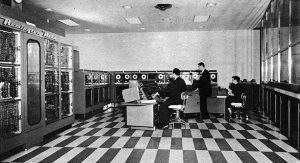
UNIVAC Computer -formerly Remington Rand- inside of a computer room in 1963. Retrieved from Creative Commons, 2017.
Motorola DynaTAC 8000 from 1984, the first cellular phone. Retrieved from Creative Commons, 2017.

It was until capabilities like: Typing, taking pictures, store and retrieve information, and communicate –verbally, graphically, and via text messages–, were clustered in the smartphone that these tools  entered the infants’ realm.  The arrival of the electronic tablet made these resources completely children-friendly.

Current mobile devices including the electronic tablet. Retrieved from Creative Commons, 2017.


Thomas referred to Piaget stating that: “very young children are only able to process concrete, operational information; they are unable to think abstractly, reflect on the past, or project into the future. Older children develop these abilities over time” (Thomas, 2010, p. 183).  In my opinion, Piaget’s assertion can be challenged today since it is common to see preschoolers and even younger children handling mobile devices more skilfully than some adults.

Thomas also cited Gustafson and Branch (2002) regarding their mention of the advent of microcomputers in 1980s which favoured “a variety of
developments and trends that have had significant impact on instructional design practices” (Thomas, 2010, p. 188).  From my perspective, ID faces a multiplying factor in the 21st century which is greater than that of the microcomputers because for mobile devices, as described above, the challenge encompasses a broader range of learner’s abilities which must be taken into account if instruction is to tune-in with the audience effectively.

New generations engage intuitively with mobile devices without requiring instruction on their use. Retrieved from Creative Commons, 2017.

My conclusion is that instruction design models and theories need to consider the relevance of the role technology plays in today’s daily life, starting as early the age be at which children first become in touch with technology devices.  The reason for this being that technology triggers the use of human capabilities earlier than before, probably opening new paths for learning to occur.  Thus leaving the high-tech components out of  the instructional equation would result in a loss of opportunity for society, as well as in harder times during instruction for both teachers and learners.

References

Bates, T. (2014, September 9). Is the ADDIE model appropriate for teaching in a digital age? [Blog post]

Thomas, P. Y. (2010). Learning and instructional systems design. In Towards developing a web-based blended learning environment at the University of Botswana. (Doctoral dissertation).