LRNT525 U5 a1 – Final Reflection

Final Reflection

As the end of the course gets closer I become aware of its richness.  What has been covered with the readings, collaborative sessions, activities, assignments and, most of all, teamworking have made LRNT525 one of the most comprehensive pieces of the MALAT program so far, and maybe the best part of my assertion is that I have heard it from my peers… and I agree.

Reading my first post I noticed that a few weeks ago I thought differently about change in general.  With regard to education, and specifically involving digital learning, there are times when it is necessary to cause change regardless of the interruption of continuity that comes with it.  As I stated in the last assignment, the awareness of the disruptive nature of change often makes me refrain from causing it, although through the fourth assignment it became clear that at times it is the right path to follow.

Several aspects are of relevance so that we know we are planning a project that involves some changing, and it has to be in the right direction.  Involving the adequate people is of utmost importance because simply stated if there is no people, there is no project.  Somebody would have to provide the resources to carry the project forward.  Somebody would have to be interested in the project to take place.  Somebody would have to be involved in performing the activities and tasks that conform the project. And, finally, somebody would be using the outcomes of the project once it is implemented.  That is why without stakeholders there cannot be a project.

It is interesting to note that in my final assignment the project for a change related with learning technology would bring in an additional piece of technology, and the complex system it would have to become in good terms with in order to succeed is the bureaucracy of the public school system, not another technology platform or environment.  Which stresses the importance of identifying the stakeholders and involve them on time in the project.

I am planning on following a research path closely related to the topic I developed for the last assignment of LRNT525, and it was so motivating to think forward on what the project might bring me in contact with, very exciting!

On a last note I would like to thank my instructors and peers for their patience and collaboration.  Studying remotely is proving to be both challenging and fulfilling.

Thank you all, we will keep on working along our journey!

Alfonso

LRNT 525 U3 a2 – Environmental Scan

While at Sam Houston Elementary in Port Arthur, I. S. D., located in Port Arthur, TX., where I taught Kindergarten and Pre-K, I volunteered to make a SWOT analysis and, although the study did not focused on teaching nor learning activities, the focal point of the SWOT study has a direct impact on the educators’ main responsibility: teach.

The school district requires all schools –ranging from early childhood to 12th grade– to create and maintain files of all their students.  The files are referred to as “permanent folders”, and that is what they actually are: paper folders containing paper sheets.  The sheets contain forms and formats in which data of specific processes have been registered, and the sheets have to be placed in the folder following this sequence:

  1. Birth certificate, social security card, proof of address (stapled inside of the folder’s front cover).
  2. Permanent record card.
  3. Final report card (updated at the end of the school year).
  4. Current school year test scores (TAKS, STARS, iStation, Chicago Early-PK).
  5. Current school year parent conferences (beginning and end of year).
  6. Current school year promotion/retention information (filed at the end of the school year).
  7. Important notes and communications (as required) (*).
  8. All previous school years information to be kept in this section, starting with most recent.
  9. Home language survey form (if applicable, filed before the school starts, stapled inside of the folder’s back cover).

Several school members are involved in compiling information througout the school year.  The numbers of this list serve to match individuals with documents of the previous list:

  1. Attendance clerk receives documents from parent/guardian.
  2. Teacher of title.
  3. Teacher of title.
  4. Teacher of title.
  5. Teacher of title.
  6. Teacher of title.
  7. Attendance clerk, teacher of title, or administration staff as required.
  8. Current teacher of title must verify all documents are in sequence and complete.
  9. Admission/multilingual clerk (if applicable).

With regard to resources all is managed on paper, and the forms are manually filled out by the required person.  It is important to take into account that the filing cabinets are within the attendance office, and their custody is responsibility of the attendance clerk.  So a log is kept for the permanent folders to be available for consult or update only during the office hours of the attendance office –7:00 a.m. to 4:00 p.m.–, and all files checked out during the school day must be returned before attendance closes for the day.

Since the processes of compiling the information to fill out formats were all manual, there was no digital technology involved.  Although the school district policies clearly stated the mandatory nature of keeping complete and flawless records of every student, every year at convocation, the superintendent emphasized that this matter was subject to a random compulsory audit process.  His style of leadership was obviously power, due to the hierarchy of the post as head of the school district (O’Toole, 2017, p. 4).

In the end, the school’s principal must make sure all faculty and staff complied with the permanent folders’ procedures.  The leadership style varied according to the principal of each school, and the effectiveness would differ greatly depending on the approach the principal took toward the permanent folders process.

There were several due dates during the school year to make sure the permanent folders were kept up to date.  As those dates approached the need of the teachers to work with the folders increased, and the tight schedule of folders’ availability made the teachers find time during the day to get some progress with the folders’ duty.  The most demanding process was the year-end massive update.  To the extent that some teachers gave the students assignments to work with in the classroom while the teachers tended to the folders.

Even though faculty is not supposed to do this, it was a common practice that is easier to do the higher the grade level. On personal experience I can state that Pre-K and Kinder students do not engage long enough to allow the teacher to work on the folders, since their constant interaction with the educator might increase the chance of error.  Some colleagues even resorted to have the children watching movies, but I considered it an inappropriate practice.

Instead, I requested the assistant principal for an extended schedule that allowed me access to the folders, and she agreed to let me enter the attendance office while she was in the school.  I got the extra time I needed without cutting my instruction short.  Her servant leadership style was absolutely helpful (O’Toole, 2017, p. 4).

The SWOT analysis is summarized as follows:

STRENGTHS > Faculty was highly commited to comply with the requirements established for the permanent folders.  Even if this resulted from the convocation reminder, it still represented a strength.

WEAKNESSES > The reduced availability of access to the folders forced faculty to diminish instruction time in order to be able to complete all the folders-related administrative work, thus affecting the amount and quality of their teaching.

OPPORTUNITIES > Having an information system would greatly benefit the schools and the district.  The information shall reside in a central repository, allowing online access without a restrictive schedule.  The information system shall have appropriate security management in place, with access provided in accordance to a privilege structure of user and password.  Additionally, back-up procedures would be in place to comply with audit processes, as well as to ensure prompt recovery of information in a crisis scenario.

THREATS > The current situation has the schools and district exposed to data loss due to unplanned events ranging from spilling coffee over one folder’s documents to floods and fires.

Undoubtedly there would be costs involved although they were not identified nor calculated at the time, and they would refer to both options: continue with the current practices and procedures, or implement the recommended measures of improvement.

Not implementing the change would mean keep affecting the learning of the students by eroding the teaching quality of the educators due to the time and effort required by the administrative duties described in the case.  Additionally, the cost of re-building the paper folders again –to the extent of what would be possible– should a crisis occur must also be considered.  While implementing a change would require budget to buy or develop the information system with the functionality broadly described above, the technology platform was already in place so the cost would refer almost solely to the software, its implementation, and the training of personnel.

The learning opportunities would be for all the schools’ faculty and staff, and the district’s personnel in learning how to use the information system that would help them fulfill the administrative duties of the permanent folders –they may no longer exist as such– in a much more efficient way to become digital permanent folders.  There would be other benefits derived from having such information system, among which are the information available and better use of faculty’s time.  And last but not least, the students would also benefit from having more time of their educators devoted to prepare class and teach.

__________________________________

(*)  To further document the time shortage certain situations caused the teacher, consider the case of a student who the educator detected as candidate for special support.  It is the teacher of title’s responsibility to open a file and follow the procedure, coordinate and attend meetings with parents and specialists, and do the paperwork to document the case for the school and district to evaluate.  The process can take more than a school year to complete thus the student’s special needs might stay unattended for quite a long period of time, which affects not only the student’s performance taking up teacher’s time, but might also impact the quality of the classroom climate.

References

All graphic material retrieved from the creative commons website https://search.creativecommons.org/

O’Toole, J., (2008). Notes toward a definition of values-based leadership. The Journal of Values-Based Leadership1(1).

LRNT525 U3 a1 – Project Management

In every organisation each department is expected to complete their duties and do it well.  Nobody likes the idea of having someone else stepping in to check their work.  The audit department (or firm) is generally seen as an unwelcomed entity, and being regarded so makes everyone’s job less comfortable.

Why does audit exist?  Regardless of the size and type of organisation, there is the need for an independent check and balances reporting, mostly on the financial aspects of the business (Braiotta, Colton, & Ramamoorti, 2010), although some corporations extend the coverage to include non-financial stand points of its operations.  Such was the case of an international cement company which, by explicit request of the CEO,  had not one but two departments with auditing functions in its organisational structure.

One unit, named Internal Control, was part of the Accounting and Comptrollership Division focused exclusively on financial information.  The other unit, Process Assessment, reported to the Administrative Division and, as the name stated, covered all productive processes within the company linking them to the use of financial resources.

Inevitably, the auditing activities of both units overlapped when going over finance-related topics.  Although not frequently, sometimes different opinions about specific audit matters were reported to the CEO generating friction between the auditing units.  These unsettling situations added up to the unwelcomeness of both auditing departments, making them unpopular throughout the company.

To strengthen its then recent expansion to several countries, the company turned to the post-merger integration (PMI) team to use that same approach to all the organisation with the goal of streamlining and standardising procedures supported with computerised information systems.  The audit function was not an exception.  A system for Management of Internal Control (MIC) was implemented, for which a training program took place including both Internal Control and Process Assessment.

The PMI team prepared briefing information to address the top management of every country as well as pre-training guidelines and assignments to work on before attending the MIC workshop.  The challenge for the PMI team was to successfully train the audit units in spite of an environment loaded with enmity.

The leadership styles I used to conduct the MIC workshop included: The shared style to open the sessions in coordination with the comptrollership of each host country; the cognitive style when teaching the participants about MIC; the transformational style to present the audience with the plan to work in small groups that combined the talents of both departments, this way the rivalry they had would loose meaning.  And last but not least, the servant style when helping the teams finish their assignments (O’Toole, 2008).

References

All graphic material retrieved from Creative Commons website.

Braiotta, L. J., Colson, R., & Ramamoorti, S. (2010). The audit committee handbook. Retrieved from https://ebookcentral.pro
quest.com

O’Toole, James (2008). Notes Toward a Definition of Values-Based Leadership. The Journal of Values-Based Leadership1(1).

LRNT525 U2 A2 – External Scan

Change is constantly occurring as the information from contacts in my network demonstrate.

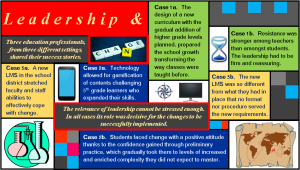
Click below on the name of the graph to open the file, enable editing, and then run the presentation to display its animation.

LRNT525 Leadership n Change Infographic

Case 1.  Change of curriculum & expansion of grade levels.

This is the case of an EC-9 school that had plans to expand to an EC-12 school.  The identity of the school and the people involved shall remain undisclosed.  Usually changes to the school’s curriculum even when mildly complex might require some adjustment in addition to teachers’ training.  In this case the new curriculum represented a serious challenge: first, the content of all subjects would be organised differently; second, the  classes would be oriented to be hands-on learning; and third, the teachers would act as coaches allowing the learners to be in the driver’s seat.

The initiative for this change came from the school’s principal, and it took a great effort on every level to get it started.  To begin with there was the school board to approve the project.  Then administration and, most importantly, faculty had to adopt the idea because organisational readiness is fundamental for a change effort to be successful in any organisation (Weiner, 2009).  Parents had to understand the project’s vision and the commitment needed to succeed.  And last but not least, the student body had to be involved too due to each adolescent having their voice heard at home regarding where  to study high school.  Existing high schools increased the challenge of the project.

Several factors were key for the success of the effort.  Training teachers to perform in a maker-space setting helped them break paradigms to accept and experience innovation.  Active involvement of students included them participating in the design of a new cafeteria which gave them sense of ownership towards the new high school.

As Weiner asserted it: “The content of change matters as much as the context of change” (Weiner, 2009) could not have summarized the project better, and without the intense leadership exerted by the school’s principal the effort would have failed.

Case 2.  Gamification.

As they enter the room, the students in Mr. Magallon’s 5th grade class ask the question right after greeting their teacher: “Do we get to play Kahoot! today?”  Kahoot! is a free game-based learning platform that makes it fun to learn – any subject, in any language, on any device, and for all ages (2018).

Mr. Magallon regarded the gamification successful because oftentimes previously unengaged students ask him for a Kahoot! link to play at home.  He then realised game-based made a difference.  Kahoot! got students plugged into learning, helped them improve mastery of complex science topics, fostered social learning, unlocked learners’ potential, and deepened pedagogical impact (2018).

Leadership was modelled by Mr. Magallon when he played with the students for the first time.  Kahoot! is played in teams rotating the leader role, who coordinates the team and voices their answers supported by the team-debated arguments for which the students practiced collaboration skills.  By placing the learners in settings that make them think critically to solve problems or arrive to solutions, game-based learning becomes as effective as project-based learning (Farber, 2016).

Case 3.  New Learning Management System. 

Although the need of a new Learning Management System (LMS) was obvious, the change took most teachers and staff by surprise because the system became operative a few days before the first day of classes which meant the old system to be gone.

It took the principal, the assistant principal, and the computer lab teacher a lot of hours to provide in-classroom support to every teacher in campus in order to get the school running with the new LMS.  Names not to be disclosed.

Due to the sudden start the only training available was on the fly, and the difference people was having started as early as calling attendance, which now was done with the system.  Pen-marked rosters sent to the office before 9:45 a.m. were a thing of the past.

At some point during the daily support of teachers, the  principal instructed his team to concentrate on aspects of the LMS that were essential to the school’s daily operation, and forget about other features not needed in the short term.  The principal followed a strategy that resonates with Feldstein (2017) who described that any LMS is likely to be built as a series of add-ons to an original idea, which ends up saturated with added features that cause the core functionality to be hidden somewhere.   Miller (1982) postulated that an incremental approach can be a cost-effective manner of facing change that provides for stages of stabilization, and this resembles what the principal asked his team to do.

References

Farber, M., (2016). Gamify your classroom. The Education Digest 81(5), 37-42.

Feldstein, M., (2017, May 28). A flexible, interoperable digital learning platform: Are we there yet? [Blog post].

Magallon, D., (2018). E-mail to Alfonso Mac Gregor, sent from Sam Houston Elementary at P.A.I.S.D., Port Arthur, TX.

Miller, D., ( 1982 ). Evolution and revolution: a quantum view of structural change in organizations. Journal of Management Studies 19(2): 131 – 151.

Weiner, B. J., (2009). A theory of organizational readiness for change. Implementation Science4(67).
What is Kahoot! (2018). Retrieved from https://kahoot.com/what-is-kahoot/

LRNT525 U2 a2 – Successful Change

Technology-based renovating processes

First, “F” stands for Failure…

As a typical example of globalization a multi-national corporation was expanding rapidly to other countries, thus experienced an urgent need for qualified employees viable for relocation.  In full concordance with the statement that “what this globalization means for business-people is that the need to interact with people who are culturally different has never been greater and will only increase in the future” (Thomas & Inkson, 2008), thus the company regarding the assimilation of a foreign culture as key for the success of the relocated employee as well as the expansion projects was right but something happened during implementation.  The human resources department hired an external consultant firm to identify the candidates in all areas of the company that would make a good fit for the openings.  The consultant firm installed their surveying system on the corporation’s platform making it company-wide available, although  the access to the system was granted on a personal basis.

Once invited through a formal letter that explained the details of the expansion project and the procedure to gain access to the consultant’s system, each candidate had to train herself/himself on how to use the system, and that self-training was performed only with the guidance of the system’s directions displayed on the screen.

There were several pieces missing in this effort.  First, the invitation letter was the only information the employee received regarding what  the  corporation was doing.  In a different context, a personal letter from the company would be extraordinary in itself but in this case it lacked the human touch to allow the person to interact with someone that could provide more meaning to the content.  The corporate effort to anticipate the availability of qualified individuals depended on a surveying technology that, according to Shneiderman, should be in harmony with the users’s needs while enriching their experiences with support of their relationships and activities (2003).

Second, due to the objective of the survey several questions explored subjective aspects with regard to the adaptability of the candidate.  The study was delicate because it required that information.  Nonetheless, the answers were interpreted solely by the consultant firm’s staff thus lacking  the context of each candidate in order to properly understand the answers.  There were several cases of inexact results caused by that situation which generated conflict.  Which, again, proves that information technology is most valued when it provides the user with a sense of security, mastery, and achievement (Shneiderman, 2003).

And third, being the process a  direct invitation to participate not everyone in the company received a letter.  Regardless of the criteria to select whom shall receive such letters which only top management levels knew, the project was informally -although perhaps rightly so- stigmatized as discriminatory.

Even though there was a personal written communication, it was not enough nor correctly used.  The leader in charge of the change process must constantly communicate the objective of changing to all in the company, and those acting as change agents should plan on how to bring about such communication (Biech, 2007).

Second, “S” stands for Success…

The state of Texas in the U.S. is divided in 20 geographic regions.  Each region includes public school districts and public school charters.  Region 4 encompasses 48 public school districts and 34 open-enrollment charter schools, representing more than 1.2 million students, 95,000 educators, and 1500 campuses.  Half of the student population is of Hispanic origin, and 22.3% of the total of students are English Language Learners.  This supports the importance of having a bilingual program in place (Wells, 2018).

Region 4, in coordination with local universities, had the Alternate Certification Program (ACP) taught in several cities of Mexico, during which the instructors travelled from the US to the Mexican locations on weekends back and forth for the ten months the program took to complete.  When physical security started to be an issue in Mexico, Region 4 looked for ways to avoid exposing their staff thus enabled an online version of the ACP which was gradually implemented.

The moderate introduction of the online version of the ACP helped the students as well as the instructors, since similar to the conductor’s full involvement needed for the flawless performance of the orchestra, the instructors had to actively pay detailed attention to achieve effective engagement of all students.  The ACP acquired a new dynamic thanks to both, the online asynchronous interactions amongst learners and instructor, and the Blackboard synchronous sessions.

Leadership was fundamental because the involvement demonstrated by the instructor over the gradual shifting of the program allowed the students to assimilate the way the class would be online and, at the same time ask questions receiving the coaching needed to take off with the new version.

Two things were evident: An immediate and natural resistance to change, and the absence of the human contact provided by face-to-face sessions.  As the weeks went by the quality of online interactions together with the constant participation of our instructor (which not necessarily happened in other groups) helped the learners assimilate the transition, and succeed in the program without the feeling of something lacking in the process.  I credit our instructor fully for that result due to her authentic rapport with the group.

We recognized our instructor’s merit of having each one of us actively collaborate with one another, regardless of how each one was presenting their work on screen.  This has to do with assimilating the shared notion of digital environments as mentioned by Feldstein (2017), and by achieving this she broke more than one paradigm in her students’ minds.  When we were done with one assignment we were already eager to peek into the next assignment in order to share our work with other peers and exchange opinions and comments.  That degree of interaction is not easily accomplished.

References

Biech, E. (2007). Models for change. Thriving Through Change: A Leader’s Practical Guide to Change Mastery. Alexandria, VA: ASTD

Feldstein, M. (2017, May 28). A flexible, interoperable digital learning platform: Are we there yet? [Blog post]

Shneiderman, B., (2003). Leonardo’s laptop: Human needs and the new computing technologies. MIT Press. ISBN: 9780262692991

Thomas, D., & Inkson, K., (2008). Cultural intelligence: People skills for global business. ReadHowYouWant.com (Ed). ISBN 1442953861, 9781442953864

Wells, P., (2018). Retrieved from http://www.esc4.net/about/about-region-4

LRNT525 U2 a1 – Managing Change for Learning in Digital Environments

Change, the one and only constant

Change occurs in all aspects of life and at every possible scale for an individual, a company, the community, a country, or the world.  Now more than ever change has become a constant concern for organisations.  Moreover, change can be related to any topic ranging from environment regulations to fiscal reforms, and from organisational structure to learning management systems.  Authors Al-Haddad and Kotnour (2015) present an extense list of 17 methods besides the change outcomes and alignments post-change to comprehensibly manage change which can be as diverse as the existing kinds of organisations and the ones still to come.

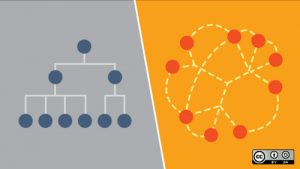
Figure 1. The change from a traditional hierarchical and rigid structure to a flexible and dynamic setting in which team members are assigned based on skills and projects’ needs represents a challenging transformation.

The scale or size of the change as well as the duration of the change effort play important roles in selecting the approach.  For instance, when planning a large scope change Stock (as cited by Al-Haddad & Kotnour, 2015) considered necessary to adjust the change efforts to match closely the culture of units and departments.  The diagrams in figure 1 show the contrast between two ways of organising people that are dramatically distinct, and would require individuals to be prepared in advance.  Hence probably one of the most difficults factors to take into account is human behaviour as stated by Harrison (as cited by Al-Haddad & Kotnour, 2015) specially when the change process takes a long period of time, strong leadership is a must to provide for a sustained effort.  Furthermore, involving people’s participation in the change process helps endure the required duration according to what Rachele stated (as cited by Al-Haddad & Kotnour, 2015).  I personally have experienced how important it is to have people actively participating in the change process since by doing so they would develop ownership of the new settings, thus making it less hard to let go of the previous frameworks which, to many of them, would represent their comfort zone.

Figure 2. Change does not happen just because top management announces it. There are many factors involved in the success of a change process, and clear and open communication is one of them.  All factors within a system are interrelated (Senge as cited by Biech, 2007).

When dealing with change in any form it is useful to approach the change process bearing the systems’ theory in mind since, according to Peter Senge (as cited by Biech, 2007), all the parts involved would be interrelated.  Additionally, combining theories is another way to increase the likelihood of a successful change process because any given organisation, in order to perform efficiently and effectively, must take care of organisation capabilities and economic values.  Theories O and E focus on these aspects respectively, Beer and Nohria (as cited by Biech, 2007) described these theories to work approaching the company from both ends.  Theory E with important involvement of external consultants aiming at cutting costs, streamlining the structure, and optimizing assets; while theory O fosters high levels of employees’ participation thus facilitating the assimilation of the new structures and processes.

Figure 3. Participation brings people onboard, mainly when the leaders demonstrate willingness and commitment with the change process, and are available to answer questions and consider reasonable proposals from the audience.  Commited people bring about the change more easily (Bandura as cited by Weiner, 2009).

The post-merger integration process I experienced with an international cement corporation  allowed me to know the difficulties people faced when they were not prepared and coached to enter a change process.  They had many doubts and were not convinced that that was the way to go.  At the same time I witnessed a contrasting positive disposition of people that were involved in a constructive manner, and the difference resided in the attitude of the leader of each area when they communicated and managed the change process.

Change management starts taking place well in advance to the actual  change itself being implemented.  Paralleling what Bandura stated about individuals being committed to goals (cited by Weiner, 2009), Weiner asserted that the commitment of people in an organisation prior to starting the change process denotes ability and will to carry it on (2009).

Figure 4. The contrast between levels of technology can give origin to the willingness to change which might be supported by the sense of belonging, as stated by the theory of human motivation regarding fulfillment of basic needs (Maslow, 1943).

Three different roads take people to a change process as explained by Herscovitch and Meyer (cited by Weiner, 2009): people want to change, which represents the highest level of commitment; people have to change because there is little choice for them to do otherwise; or people feel obligued to change, which is similar to having to change.  Bandura also mentioned a notion of collective efficacy which instills confidence in people that they are able to attain change as long as they act as a collective entity, providing mutual support amongst individuals.

Figure 5. Applying resilience to open education develops engagement, education, empowerment and encouragement, which also helps students, staff and wider communities to further build upon these attributes (Hall and Winn as cited by Weller & Anderson, 2013).

Technology has the ability of erasing distances and time zone limitations, thus making itself an indispensable ingredient for achieving resilience in higher education, according to Hall and Winn (as cited by Weller & Anderson, 2013).

Furthermore, Walker et al (as cited by Weller & Anderson, 2013) considered resilience to be conformed by four aspects:

  1. Latitude: similar to stretching a rubber band represents the limit to which a system can be modified without losing its ability to recover.
  2. Resistance: the degree of ease or difficulty for performing those modifications to the system; how ‘resistant’ it is to being changed.
  3. Precariousness: can be understood as the fragility of a system with regard to how close it is to a limit or ‘threshold’.
  4. Panarchy: refers to the susceptibility of the system to external forces at scales above and below its boundaries.
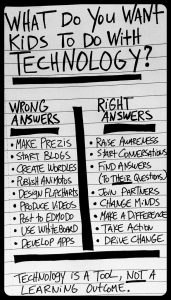
Figure 6. The question is key to define the route of change in education.

My conclusion is that given the speed at which events occur today most of the methods and approaches to manage change have to be able to adjust to faster response times.  This might reflect some type of syndrome of instant gratification –so common nowadays amongst youngsters– which could be considered an indicator of immaturity, impacting the dynamics of organisations and communities.  By stating that I mean leaders facing the challenge to be faster than ever deciding how to approach preparations and change itself.

I consider the participatory action research and the integrative method to be the methods that best match my leadership style, since I feel more comfortable managing things in a team than on my own.  Besides, the pace at which technology evolves shows no sign of slowing down, thus change as a constant is here to stay which requires the ability of searching for answers and options quicker, and that is better achieved with multiple minds at work.

The last bullet on the right in figure 6 closes today’s blog.

References

All graphic material obtained from Creative Commons.

Al-Haddad, S., & Kotnour, T. (2015). Integrating the organizational change literature: a model for successful change. Journal of Organizational Change Management28(2), 234-262.

Biech, E. (2007). Models for Change. In Thriving Through Change: A Leader’s Practical Guide to Change Mastery. Alexandria, VA: ASTD [Books24x7 database]

Maslow, A. H. (1943). A theory of human motivation. Psychological Review, 50(4), 370-396. http://dx.doi.org/10.1037/h0054346

Weiner, B. J. (2009). A theory of organizational readiness for change. Implementation Science4(67).

Weller, M., & Anderson, T. (2013). Digital resilience in higher education. European Journal of Open, Distance and E-Learning.

LRNT525 U1 A1 – Personal Leadership

Reflecting on my personal leadership perspective 

A common thought that comes to mind upon hearing the word leadership is the role of the person who steers a boat: the captain of the ship.  Could this be the reason why the word ends in ship?  It might make sense considering ancient times when people walked or sailed to go places.  Any group of people being led could get dispersed but not while on a ship, on board they were contained within the vessel thus subject to the route the captain chose for the journey.

Leadership has come to be an important term in many venues conveying the same old meaning although not necessarily with regard to a physical containment within a vessel.  Nowadays there are new settings where leadership is required, and also new challenges to be an effective leader.  Take the digital environment for one, it involves conditions that did not exist before which the leader must deal with in order for the leadership to work.

There are new dimensions in the environment in general—family, work, sports, social, or education.  Digital literacy is the first new dimension mentioned by Hunt (2015) in her article stating that leaders as well as those being led by them should be digitally literate.  It is important for the leader to bear in mind that digital fluency is a state of mind available to anyone instead of a chronological factor, thus making the distinction between digital immigrant and digital native counterproductive.

The second dimension Hunt (2015) included refers to applications of social and digital technologies.  Leaders must accept that as disruptive as the applications (apps) have resulted in some cases, they also served to expand the reach of business as well as internal communication and collaboration.  Such technology is continuously changing the nature of work, generating the third dimension which considers implications that impact the management of the workforce as well.  For instance, some jobs shall require new descriptions, security posts shall include technology aspects that did not exist before, and the language of contracts and warranties shall cover technology-related clauses unimaginable a few years ago.

The fourth dimension refers to the digital transformation of organisations.  Hunt (2015) stated that nearly every organisation is destined to come to that point, and leaders must approach it with a marathon-like mind set rather than a sprint race.  The reason being there is a list of requirements that take time to develop to have the organisation ready, such as devising a strategy and foundations; identifying cultural values; creating an internal governance structure; and making sure people are ready for the change.

The fifth dimension has to do with leadership styles.  Leadership in the digital era might not need new features (Hunt, 2015) but it will require new combinations of traits that might acquire new meaning in a new context as well.  Although traits like flexibility, adaptability, openness to experience, and tolerance for risk already existed, now have more importance under the light of the digital context.

My recent and ongoing experience in the digital context for learning implies additional challenges for the distant learner, because there are new requisites to sort in order to cope with the contents of the class, interact with classmates and instructors, and be able to submit the work in time.  Through the courses at Royal Roads University I have appreciated the flexibility, patience, understanding, and coaching of instructors to help me deal with technology-related issues that caused delay in turning in assignments.  The attitudes of my instructors allowed me to see their willingness on supporting my success, which instantly increased my motivation to achieve the goals, and made me realised they were doing what they like.

I tend to approach leadership from a shared perspective.  Unless in a context in which my role has to be the undisputable leader, like in a Kindergarten classroom for instance, and in that context the example of the captain of a ship mentioned at the beginning comes in handy, since it is a simple way of helping the young students understand their role and mine, and it can be lots of fun.  Acknowledging myself as not totally current in handling the latest technology, social media included, makes me be careful when dealing with tech-related aspects of leadership.  I prefer to be a follower in order to learn from the leader instead of being the leader that depends on followers to teach me to advance, I think it would not be fair for the audience.

In a digital learning environment the effectiveness of the leadership would depend on the keen eye of the leader, and that is because combining traits would go a long way.  Taking O’Toole’s descriptions I would include in the toolbox the bright spark and virtuosity of the paternalistic leader; the flexibility and adaptability of both the situational and the shared leaders; the servant leader would get those who need help out of trouble; and without a doubt the values-based leader to make sure followers achieve their true values (O’Toole, 2008).

As a final comment I want to add that values-based leaders as well as transformational leaders are urgently needed judging from what is daily on the news, and that transcends the digital learning environment impacting the actual world with a crisis of values.

References

Hunt, C. S. (2015). Leading in the digital era. Talent Development, 69(6), 48-53. Retrieved from https://ezproxy.royalroads.ca/login?url=https://search.proquest.com/docview/1688590339?accountid=8056

O’Toole, James (2008). Notes toward a definition of values-based leadershipThe Journal of Values-Based Leadership, 1(1).