The instruction process is complex because it involves more activities than only presenting content. Teaching in itself can be difficult enough to require being prepared with organised material, and a plan to go about it. Among the strengths of ADDIE as stated by Bates (2014) is its adecquacy to deliver high volume courses, which was demonstrated with its use during the Normandy landings in the World War II.
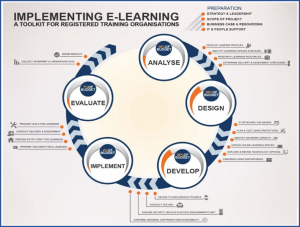
Coincidentally with Bates, I like the idea of “PADDIE” to start the process with a planning or preparation stage (Bates, 2014). Nonetheless, the ADDIE model is not the universal solution because it was conceived to deal with large projects which tend to be complex by nature. Although smaller sized projects are better served with other models (Bates, 2014), the info-graphic provided by Bates may serve as a thorough check-list to make sure all pertinent components of a given case are taken into consideration.
In order to complete the picture of the history of instructional design, Thomas mentions models and theories of various researchers among which is Jean Piaget, a psychologist whose study identified discrete phases in children’s learning as they grow (Thomas, 2010).

The progress of technology during the last fifty seven years may cause Piaget’s discrete phases to differ from his original observations, and that is because children nowadays have access to mobile digital devices which allow them to experiment and develop abilities that are additional to those Piaget recorded then, and with tools that, even though available at the time, they were not regarded as appropriate for the children to use.

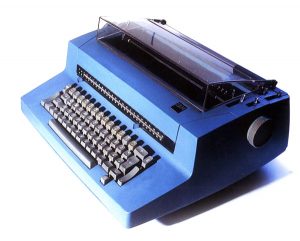
For instance, let’s consider the following inventions: The typewriter, the camera, the telephone, the computer, and the cellular phone. The first four already existed when Piaget did his research in the 1960’s, but they were designed for adult use only, as was also the case of the cellular phone when it first came out.
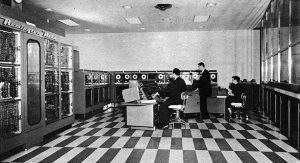

It was until capabilities like: Typing, taking pictures, store and retrieve information, and communicate –verbally, graphically, and via text messages–, were clustered in the smartphone that these tools entered the infants’ realm. The arrival of the electronic tablet made these resources completely children-friendly.

Thomas referred to Piaget stating that: “very young children are only able to process concrete, operational information; they are unable to think abstractly, reflect on the past, or project into the future. Older children develop these abilities over time” (Thomas, 2010, p. 183). In my opinion, Piaget’s assertion can be challenged today since it is common to see preschoolers and even younger children handling mobile devices more skilfully than some adults.
Thomas also cited Gustafson and Branch (2002) regarding their mention of the advent of microcomputers in 1980s which favoured “a variety of
developments and trends that have had significant impact on instructional design practices” (Thomas, 2010, p. 188). From my perspective, ID faces a multiplying factor in the 21st century which is greater than that of the microcomputers because for mobile devices, as described above, the challenge encompasses a broader range of learner’s abilities which must be taken into account if instruction is to tune-in with the audience effectively.

My conclusion is that instruction design models and theories need to consider the relevance of the role technology plays in today’s daily life, starting as early the age be at which children first become in touch with technology devices. The reason for this being that technology triggers the use of human capabilities earlier than before, probably opening new paths for learning to occur. Thus leaving the high-tech components out of the instructional equation would result in a loss of opportunity for society, as well as in harder times during instruction for both teachers and learners.
References
Bates, T. (2014, September 9). Is the ADDIE model appropriate for teaching in a digital age? [Blog post]
Thomas, P. Y. (2010). Learning and instructional systems design. In Towards developing a web-based blended learning environment at the University of Botswana. (Doctoral dissertation).