Evolution through each phase…
The development of a project includes small “moments of truth” along its path. Such moments represent the little tests any idea is subject to as it evolves into the selected model that would go into the subsequent phases, and so it goes from Empathize to Define, then to Ideate, Prototype, and finally to Test phase (Warman, 2015).
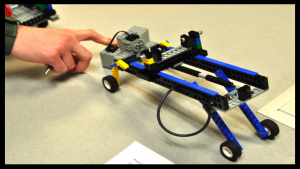
The further into the development cycle the tougher the testing gets for the model, so by the time we share our prototype to be tested by others we expect it to have a decent performance at least regarding the basic features according to the “original” concept. However, the concept frequently mutates as the ideas meet reality. When it comes to prototyping, as Morris and Warman put it, “Showing is better than telling” (Warman, 2015).
Feedback is always welcome
I have received diverse feedback from various stand points about my digital resource. People in the communications and video production fields recommended me to maintain uniformity in the backgrounds of the screens the web site employs. By the same token, they suggest I try to present the legends of buttons using fonts and colours that are easily legible (which I think I did), thus I shall look for more “universal” options to please a wider spectrum of tastes.
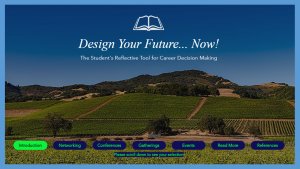
From a different perspective, individuals in the age group to which the web site is aimed commented that the concept appears to be of great help. Some of them are new in the country, thus the options the web site presents for them to explore (namely networking, conferences, gathering, and events) resulted interesting and, indeed, encouraged them to browse through the direct links. Furthermore, some students mentioned they clicked on secondary links (what would be indirect links) which turned out to be beneficial too.
These comments shall be considered to complement the feedback I will receive from Team 1, contributing to improve the next version of the web site.
The Collaborate Effect
Working with Team 6 -which includes May Bahador, Jason Keddie, and Klaus Rimke- we decided to use Assignment 2’s rubric as our evaluation criteria (Royal Roads University, 2018). The rubric assesses the following aspects of a Digital Learning Resource (DLR):
- Design of DLR – Learning theories and instructional principles in accordance to context and learning goals (Leacock, 2007), and its adequacy to the age group or audience (Evans, 2014). Organization of contents (Akpinar, 2009), and clarity (Hadjerrouit, 2010) of required activities.
- DLR’s interactivity – A student-centered approach is expected (Anderson, 2008; Hadjerrouit, 2010). Ease of use and friendliness of terminology contribute to a positive learning experience (Akpinar, 2009).
- DLR’s technology – Technological means and simple instructions for its use foster understanding of the tool and its contents, as well as interaction among users.
- DLR’s formatting and presentation – The contents are mechanically correct (Akpinar, 2009); the navigation within the tool flows without obstructions (Akpinar, 2009). All required attributions are properly noted and visible.
Thank you for stopping by and commenting on my work.
References
Akpinar, Y. (2009). validation of a learning object Review Instrument: Relationship between Ratings of learning objects and Actual learning outcomes. International Journal of Doctoral Studies, 4, 291-302.
Anderson, T. (2008). Chapter 2: Towards a theory of online learning. In T. Anderson (Ed.), The theory and practice of online learning (2nd ed., pp. 45-74). Edmonton: AU Press.
Creative Commons (2018). Picture retrieved from https://www.google.com/search?site=imghp&tbs=sur:fmc&tbm=isch&q=testing+prototype&chips=q:testing+prototype,g_1:prototyping&sa=X&ved=0ahUKEwiuvseRiObcAhV1FzQIHf9LDlIQ4lYIKSgD&biw=1366&bih=662&dpr=1#imgrc=YRWXbc_41Vzt3M:
Evans, R. (2014). Cooking up cauldron content: Recipes for video tutorials. Computers in Libraries, 34(7), 11-5.
Hadjerrouit, S. (2010). A conceptual framework for using and evaluating web-based learning resources in school education. Journal of Information Technology Education, 9, 53-79.
Leacock, T. L., & Nesbit, J. C. (2007). A framework for evaluating the quality of multimedia learning resources. Educational Technology & Society, 10(2) 44-59.
Mac Gregor, A. (2018). Design your future… now! An assignment submitted in partial fulfillment of the requirements of the course LRNT527 – Creating Digital Resources. MALAT Program. Royal Roads University, Victoria, BC, Canada. Retrieved from https://a4macgregor.wixsite.com/test
Warman, G. (2015). Using design thinking in higher education. EDUCAUSE Review. Retrieved from https://er.educause.edu/articles/2015/1/using-design-thinking-in-higher-education