
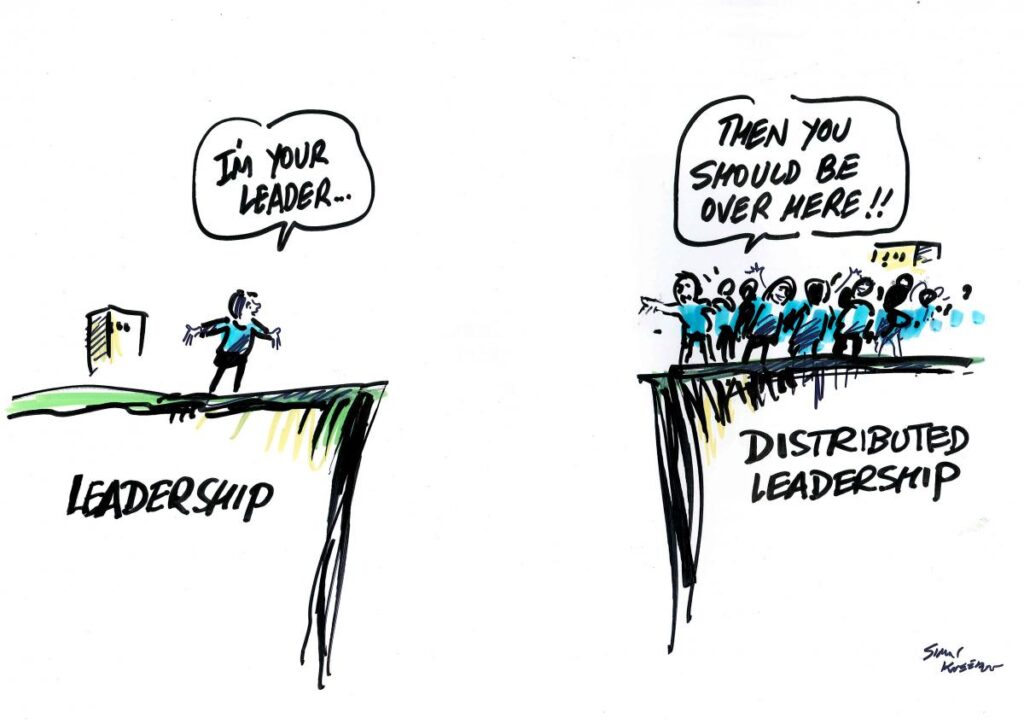
The topics we have explored during this course have been: leadership, initiating change, leading change, data driven change, and implementing a project plan for a change in our own organization. One of the most interesting topics I found was the idea of leadership from within an organization. When I think about the characteristics of leaders, I reflect on the team exercise requiring us to rank traits of admired leaders in order of most important to least important. I was not surprised by how different our rankings were, as it is debatable what the definition of an ‘admired leader’ even is. I was however, surprised that we all identified the attribute “independent” as almost last, myself ranking it 17 out of 20.
The idea of distributed leadership was a new definition to me. I align myself most with the idea of distributed leadership, or shared management. This sharing of roles, responsibilities and knowledge resonates with the values I ranked the highest; inspiring, honest, supportive, mature, broad minded. In sharing the role of leader, we not only benefit from the expertise of many, we hold our leaders to task. Independence is not a good quality in a leader. In order to be a leader we should act with the best interest of the organization and each other.
Initiating change in a digital learning environment is a great environment for distributed leadership to take hold. Collaboration between instructional designers, facilitators, students and all other stakeholders is important to meet the needs of the ever-changing landscape of digital education. This can be a great way to enhance a shared vision. Leading does not mean stepping ahead, it can be as simple as keeping the forward momentum.