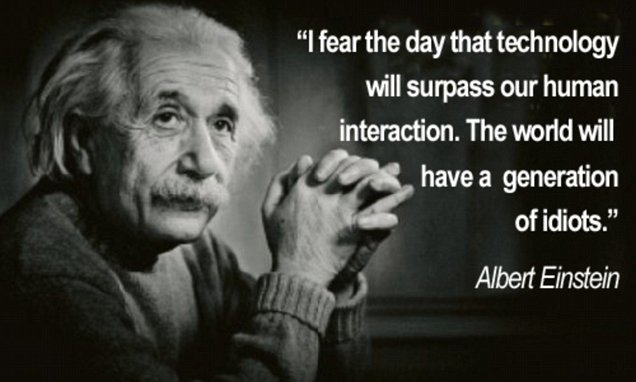
Do we in fact, need each other?

Hodges (2008) defines academic self-efficacy as “one’s confidence to perform successfully in academic endeavors” (p8).  Self-efficacy in learning falls under cognitive constructivism learning theory, which views student motivation as an intrinsic process where students motivate themselves to learn and set their own learning goals (Hodges, 2008). This is highly relevant to MOOCs which are designed to function within an environment of student autonomy; the students are responsible for enrolling, participating, and completing their own courses. Despite the unique profile of this learning technology, the MOOC appears to have failed to produce the gold standard of education; student completion rates are staggeringly lower than most other educational environments. One proposed reason is the lack of engagement from their peers. Observation of peers completing a task has been shown to improve motivation through increasing self-efficacy in learners, conveying to them that they too can complete the task (Miltiadou & Savenye 2003). 

MOOCs do not offer the same face-to-face learning environment as traditional classroom learning and have little to no accountability within the learning environment itself. There may be almost no interaction between students, or between the student and teacher. In his own review of an online Yale course, Professor Edmundson (2012) acknowledged the content was very good, but it had an anonymous, vacant feeling from the seemingly one directional flow of knowledge. He describes learning as collaborative, and “a truly memorable college class, even a large one, is a collaboration between teacher and students” (Edmundson, 2012, para. 14). The need for peer contact and support within an online learning environment may be a contributing factor to the lack of completion from some learners. Lack of connectedness in a social context is directly linked to decreased performance and lack of initiative (Ryan & Deci, 2000), further supporting a learning environment where the students engage with each other will increase motivation and performance. 

One might purpose the benefits of the MOOC are vast, but if you’re looking for a successful intimate learning experience, best stick to your local college for a traditional education. 

References:

Edmundson, M. (2012, July 19). The trouble with online education. New York Times. New York. https://www.nytimes.com/2012/07/20/opinion/the-trouble-with-online-education.html

Hodges, C. B. (2008). Self-efficacy in the context of online learning environments: A review of the literature and directions for research. Performance Improvement Quarterly, 20(3‐4), 7-25. https://doi.org/10.1002/piq.20001

Miltiadou, M., & Savenye, W. C. (2003). Applying social cognitive constructs of motivation to enhance student success in online distance education. AACE Journal, 11(1). https://www.learntechlib.org/primary/p/17795/

Ryan, R. M., & Deci, E. L. (2000). Self-determination theory and the facilitation of intrinsic motivation, social development, and well-being. American Psychologist, 55(1), 68-78.

Just a number in the massive MOOC?

image source

As part of our critical inquiry into MOOCs, I have reflected on switching my thought process from consumer to critical observer.  Personally, I have a lot of experience with distance education, more so in the formal education realm but web-based nonetheless. My experience with reviewing a MOOC has been an exercise in self-reflection as well as critical observation. 

We chose to review The Science of Well-being course through Yale University and hosted by Coursera. To date this course has over 3.9 million students ‘enrolled’ and a 4.9 star rating with over 11,000 reviews. Despite this seemed popularity, most MOOCs and even courses from Coursera can have a dropout rate above 90% (Reich & Ruiperez-Valiente, 2019) . I’m sad to say I will only add to this statistic as myself and my team enrolled in the course and will not complete it. 

Initially I had the idea that this type of learning technology would be similar to other courses I have taken through distance. What I have found to date is this MOOC has a distinct flavour of commercialization to it. There are pop ups and ‘atta boys’ that keep prodding you along the course material in response to completing a section. These are clearly autogenerated and start to become ironically less motivating as they pop up. The video lectures seem more staged than a low budget daytime TV show with a strategically placed culturally diverse audience sitting pleasantly in the background. 

Several of the exercises link the learner to other data heavy online quizzes or characteristic surveys that I can only imagine is benefitting from the web traffic in some hidden way. The focus seems to be on volume not learning. 

My concern with this MOOC is the subtle feeling of being just a number. Much like McDonalds’ advertising its massive success in the “billions and billions served” campaign, I get the distinct feeling that the term “massive” in MOOCs is spot on. Call me old fashioned, but I still feel that I’d rather learn in an environment where I feel like a person. 

References

Coursera. (2022). https://www.coursera.org/learn/the-science-of-well-being

Reich, J. & Ruiperez-Valiente, J.A. (2019). Science 363(6423):130-131

DOI:10.1126/science.aav7958

Making the MOOC Meaningful

As a team we chose to critically review the technology of Massive Open Online Courses, or MOOCs. We chose one specific course to review to achieve the most relevant, comprehensive critical academic reflection on the modern MOOC. The course we are reviewing is The Science of Well Being offered from Yale University, through the host Coursera. Coursera is known as one of the primary MOOC providers, partnering with universities and colleges and offering most everything from online courses, certificates, and even a variety of degrees (Coursera, 2022). 

The specific issue I will be exploring through critical inquiry is the engagement, motivation, and retention of students, specifically ‘How do we improve MOOC completion rates by increasing student participation and motivation?’ Although MOOCs have emerged as the golden ticket to providing open access to education, they still seem to fall short of this promise. Enrollment numbers for specific MOOCs can be staggering, however many completion rates sit barely above 10% (Murphy et al, 2014). I hope to evaluate this mismatch between enrollment and completion to determine what factors influence the completion of MOOCs, and in turn, how to improve the success of the MOOC. 

To date, my review of The Science of Well Being has been focussed on the strategies in place to encourage students to participate in the course. The course is packed with visual cues and positive reinforcement as you progress through the course: reminder emails, weekly goal charts, progress tracking, and a clear, green check mark that appears when you have finished a section. There is even a disclaimer from the professor directly in the course content that informs the students “You’re not going to have homework in the way of readings or that kind of stuff, but you are going to have homework if you want the stuff to stick” (Santos, 2022, 2:18). Even in my limited exposure to the course so far, I find myself becoming more immune to the bombardment of “atta boys” for completing a section. So, will this approach work? I am interested to see how far Coursera will go to draw my attention back to the course, and whether it will improve my own motivation to engage with the material. 

Throughout my continued critical inquiry into The Science of Well Being review, I will aim to shift the focus off shiny new technologies that are offered to students and instead, look at the outcomes of these new methods. Is there a way to decrease the divide and get more students over the finish line of their MOOC education?

References

Coursera. (2022, April 16). https://about.coursera.org

Murphy, J., Williams, A., & Lennox, A. (2014). MOOCs in VET and higher education. 22nd National Vocational Education and Training Research Conference ‘No Frills’: refereed papers. Australian College of Applied Education. 76-82. https://www.ncver.edu.au/__data/assets/file/0025/16765/22nd-no-frills-2728.pdf#page=78

Santos, L. (2022, April 12). The Science of Well Being: Become Happier by Learning and Applying Psychological Science. [Lecture]. Yale University. https://www.coursera.org/learn/the-science-of-well-being/lecture/1SQxW/become-happier-by-learning-applying-psychological-science