Assignment 3- Digital Literacy in a Nomadic Future

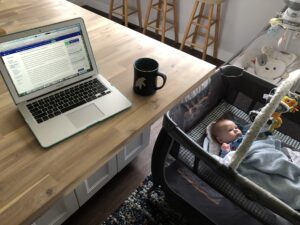
Lillian sat with her coffee steaming as she read over her assignment for this week. As a first year surgical resident at Columbia University she had a lot on her plate, but the virtual surgeries were her favourite assignments. The waves crashed softly in the background as she read on. Being able to study abroad was one of the reasons she chose Columbia’s residency program, much of her learning was virtual and could be done wherever she had a reliable internet connection, her parent’s home in Cambodia was doing quite nicely. Her father was a property lawyer and was able to continue working from home ever since the Covid-19 pandemic in 2019. Her parents relocated to a luxury beach home in Cambodia shortly after where she finished high school and obtained her undergraduate degree through online courses.  

         The future of education can not be know, but predictions are possible as we move towards a predominantly digital educational system. Artificial intelligence, virtual reality and digital tools are increasingly used to deliver information. The classroom is fading away and being replaced by ‘anytime, anywhere’ learning. Widening of the digital divide is producing a new breed of student: independent, digitally competent, and informed.

The recent COVID-19 pandemic illustrated how quickly we can transition out of a traditional classroom environment and into a digital-based learning structure for both K-12 and postsecondary education. The days of having to get up and go to class are over. Selwyn et al (2020) discuss how a flexible almost nomadic education has blurred the lines between school time and leisure time creating a distance learning environment that is unlike the normal classroom education. In the future it will become normal for students to study from anywhere (Pelletier et al, 2021). Many students will reject the formal model of education in exchange for a system that worked for them. Mature students also find distance education more fitting as their jobs and lives become more flexible. “Working nine to five in a location-bound job, investing oneself in the rat race, and converting time into wages was rejected by these expanding nomadic networks” (Macgilchrist et al, 2020, p.81). The post COVID-19 world caused unprecedented work from home, allowing families to relocate around the world and created a need for these ‘nomads’ to continue to educate themselves and their children from abroad.

As technology continues to advance, digital competency and access to educational technology or tools will become the new currency for admission (Pelletier et al, 2021). Students who are ill informed, unable to possess digital tools, or unfamiliar with the latest technologies will be exempt from participating in the new education system. Students must be capable users of digital technology as digital literacy becomes an important competency of the new standard for education (Macgilchrist et al, 2020). There will however, continue to be disparity in the way students use and navigate digital resources as not all students will be well connected and digitally savvy (Williamson et al, 2020). Students who do not have access to internet at home will have less digital skills than their peers, and as educational technology advances, the necessity and reliance on these digital skills will continue to increase. Digital competency is important and those students who are better off will be more able to benefit from the digital educational system (Williamson et al, 2020).

‘Going digital’ and the changes to curriculum for an online based system will replace textbooks and formal classroom resources. Virtual resources are increasingly used in education and will continue to do so in fields such as healthcare. Virtual reality learning environments will provide education to medical students who previously have limited access to patients. They can revisit lessons by resetting virtual environments to maximize the exposure to certain patient presentations and conditions, increasing their learning opportunities (King et al, 2018). Predicting patient outcomes to therapy or treatments is best learned from experience. Virtual based medical scenarios give students this invaluable experience as virtual environments provide more immersive experiences (Pelletier et al, 2021).

Surgical residents are one group that has positively responded to the integration of digital technology into their learning. Orthopaedic examination videos, interactive orthopaedic radiology skills, webinars, podcasts, and online interactive feedback with faculty are all replacing the use of textbooks in medical programs. The integration of more elearning in orthopedic surgery students increased both their hands on physical assessment skills and psychomotor skills (Thompson et al, 2021). With an increased digital curriculum, access to subject matter specialists and other resources will become easier, increasing the quality of education. Students will have access to subject experts rather than relying on the institution’s internal faculty (Thompson et al, 2021). This is particularly interesting in the healthcare field where information can change rapidly and being current is of particular importance to patient outcomes. The integration of virtual resources allows students to experience ‘safe fails’ to practice procedures and skills without impacting live patients (King et al, 2018). The increased use of elearning in healthcare also addresses the heavy burden of teaching being placed on practitioners. Along with administrative tasks and limited clinical time, elearning resources will overcome these challenges: faculty will prerecord their lectures and can respond to students digitally from anywhere (Bhatti et al, 2011). Elearning allows students to work without time constraints and is beneficial to learning in groups and as independent learning (Jäger et al, 2014). Virtual reality learning environments will allow students to participate in their own learning at a time and place that works for them, for healthcare students, creating any number of clinical practice scenarios (King et al, 2018).

The changes brought about by Covid-19 pandemic have forever altered how education is delivered. Remote living, teaching, and learning will continue to be a reality decreasing barriers for students (Pelletier et al, 2021). The previous ‘gold standard’ of teaching face-to-face will be obsolete as the geographical limitations and demand on resources becomes unacceptable by institutions and students, the advantages of virtual learning are clear (Thompson et al, 2021). The future is shaped by the consumer: students will shape an environment they want and need. Self sufficient learning, self directed distance curriculum delivery, and the emerging reliance on digital learning tools will be the future, a student driven education system.


 References

Bhatti, I., Jones, K., Richardson, L., Foreman, D., Lund, J. & Tierney, G. (2011). E-learning vs lecture: which is the best approach to surgical teaching? doi.org/10.1111/j.1463-1318.2009.02173.x

Jäger, F., Riemer, M., Abendroth, M. et al. (2014). Virtual patients: the influence of case design and teamwork on students’ perception and knowledge – a pilot study. doi.org/10.1186/1472-6920-14-137

King, D. Tee, S., Falconer, L., Angell, C., Holley, D., & Mills, A. (2018). Virtual health education: Scaling practice to transform student learning: Using virtual reality learning environments in healthcare education to bridge the theory/practice gap and improve patient safety. https://doi.org/10.1016/j.nedt.2018.08.002

Macgilchrist, F., Allert, H., & Bruch, A. (2020). Students and society in the 2020s. Three future ‘histories’ of education and technology, Learning, Media and Technology, 45(1), 76-89. https://doi-org.ezproxy.royalroads.ca/10.1080/17439884.2019.1656235

 Pelletier, K., Brown, M., Brooks, C., McCormack, M., Reeves, J., Arbino, N., Bozkurt, A., Crawford, S., Czerniewicz, L., Gibson, R., Linder, K., Mason, J., & Mondelli, V. (2021). 2021 EDUCAUSE Horizon Report, Teaching and Learning Edition. https://library.educause.edu/resources/2021/4/2021-educause-horizon-report-teaching-and-learning-edition

Selwyn, N., Pangrazio, L., Nemorin, S., & Perrotta, C. (2020). What might the school of 2030 be like? An exercise in social science fiction. Learning, Media and Technology45(1), 90-106. https://doi-org.ezproxy.royalroads.ca/10.1177/20427530211022951

Thompson, J., Thompson, E., & Sanghrajka, A. (2021). The future of orthopaedic surgical education: Where do we go now? https://doi.org/10.1016/j.surge.2021.05.005

Williamson, B., Eynon, R., & Potter, J. (2020). Pandemic politics, pedagogies and practices: digital technologies and distance education during the coronavirus emergency, Learning, Media and Technology, 45(2), 107-114, doi: 10.1080/17439884.2020.1761641




The Future is Already Here


Image source
 

No one can predict the future, or which digital platforms or tool will emerge as the front runner in an ever-changing world, however, there are some key themes that emerge when we look at where the future of Ed Tech is going: the use of AI, increasing reliance on digital tools, and the freedom to study online and what that means for the traditional classroom environment. The recent COVID-19 pandemic has shown us how quickly we can transition out of a traditional classroom environment and into a digital-based learning structure for both K-12 and postsecondary education. The days of having to get up and go to class are over. Today students can study from anywhere from virtually any educational institution, the race for online enrolment is well underway. Selwyn et al (2020) discuss how a flexible almost nomadic education has blurred the lines between school time and leisure time creating a learning environment that is unpredictable, at least for now.

Selwyn, N., Pangrazio, L., Nemorin, S., & Perrotta, C. (2020). What might the school of 2030 be like? An exercise in social science fiction. Learning, Media and Technology, 45(1), 90-106.

Great Media Debate

Authors: Ben Chaddock & Emma Keating

Today’s post compares Kozma’s (1994) and Clark’s (1994) positions in the Great Media Debate with recent examples of techno-deterministic thinking by pro-tech firms. The Great Media Debate took off in 1983, with Clark’s article summarizing how fundamental learning methods will remain fundamental, despite technological changes in delivery methods or content that may improve efficiency.

Below we review articles about a new learning app for Microsoft teams and a sales-support article from a wifi installation and management firm and overlays Kozma and Clark’s outlook on both.

Article 1: New learning app for Microsoft Teams LINK 

This new app allows employers to collaborate all the learning they want their employees to do in one place (Our Training tab), including company-specific training. Users of the app can assign activities to their employees and track who has completed them.  Group chats enable peer conversation, and users can share links to media and training with each other. The app also links to Microsoft Learn and LinkedIn Learning for professional collaboration.

Kozma argues that the attributes that make media successful are not consistently present in the various forms of media to be relied upon to assist in learning. For example, in this new Teams learning app, many attributes may impact the quality of the learning, but it is very challenging to isolate a particular component that guarantees success. Moreover, the app does not provide a comprehensive library of modules, contributing to an inconsistent student experience that should not be relied upon for successful learning.

Clark would comment that the new media of the Teams app may not influence learning as it may not consider the cognitive or motivational factors of learning. Although the app includes some social components (chats and inter-user communication), it does little to support those aspects throughout the methods of the actual learning. For example, tracking employee training completion progress may motivate some, but little evidence is available that shows this action will positively influence learning or ensure comprehension and retention.

Article 2: Pro-Techno stance from cloud company LINK

American wireless internet implementation and management firm SecurEdge is in the business of helping install custom wifi systems to schools and companies. This article lists numerous ways that digital tools and classrooms can help students learn.  Their claims include that digital classrooms help students of different learning styles, increase student engagement, that “traditional passive learning model is broken… [and] technology transforms the learning experience” (Mareco, 2017).

Kozma (1994) would agree that technology and digital mediums help create objects that generate conservation from an interactionist perspective. The unique features of the students, their beliefs and goals, interact with these digital objects and transform them from inert tools into a host for emerging ideas and hopefully meaningful dialogue between all parties (p. 21). However, Kozma (1994) also claims that traditional teaching models do not acknowledge or accommodate the interplay between media, method, and situation (p. 21); and that they are bound by the tenets of behavioural psychology and shy away from the messy nature of social constructivism (p. 21).

Clark (1994) retorts that any medium, digital or otherwise, that supports learning includes characteristics that cause learning. For example, the difference between a printed textbook and a digital textbook.

Clark (1994) would associate the digital nature of the latter as a surface feature of the learning environment, and that the structural or fundamental element of the resource is the fact that both tools consolidate large amounts of information into a helpful and encouraging format for consumption, or most aptly, comprehension. Further, that the “active ingredient” should be distinguished in the process of assessing the quality of new teaching technology. Otherwise, we may become lost in our evaluation of what is fundamentally impacting our students’ learning (Salomon, 1979, as cited by Clark, 1994, p. 4).

In conclusion, Amara’s law offers an important reminder that “we tend to overestimate the effect of a technology in the short run and underestimate the effect in the long run” (PC Mag, n.d.).

References

Clark, R. E. (1994). Media will never influence learning. Educational Technology Research and Development, 42(2), 21-29.

Kozma, R. (1994). “Will media influence learning: Reframing the debate.” Educational Technology Research and Development, 42(2), 7-19.

Mareco, D. (2017, July 28). 10 Reasons Today’s Students NEED Technology in the Classroom. Securedge Networks. https://www.securedgenetworks.com/blog/10-reasons-today-s-students-need-technology-in-the-classroom

Pradeep (2020, July 8). Microsoft reveals the all-new learning app coming to Microsoft Teams (video). MS Power User. https://mspoweruser.com/microsoft-learning-app-microsoft-teams-video/

PC Mag (n.d.) Amara’s Law. https://www.pcmag.com/encyclopedia/term/amaras-law

Khan Academy-Pioneer in open access education


Sal Khan is a huge contributor to the worldwide phenomenon of free educational resources. It all began in 2004 when he started tutoring his niece through a digital video platform. Sal Khan saw a need to fill the gaps in student’s education, and in 2006 on advice of a friend, posted his first recorded “micro lesson” to YouTube. In 2009 the Khan Academy became a full time venture for Sal as a non-profit online education institution. Since 2009, the Khan Academy has ballooned to a multi-million user platform that spans the world. Sal’s dream of providing access to free world class education to everyone has been realized.

The idea of the micro lesson is the foundation behind the success of the Khan Academy. Each lesson is roughly 10 minutes long and use a variety of visual aids and verbal lecture to produce a simple yet accurate learning style. The Khan Academy was arguably the first mainstream free video learning tool. It’s emergence on YouTube in 2006 was pioneering for the time, gaining views alongside videos of feline antics and practical jokes. Today lessons from the Khan Academy can be found right alongside mainstream education, from formal classrooms to home computer screens, helping students all over the world. The Khan Academy is a milestone representing the progress to open learning. I’m sure we’re all familiar with it as a household name which only further signifies how far reaching it is. The Khan Academy lessons confirm how successful open resources can be, one huge step forward for open access education.

Visit the Khan Academy here:  https://www.khanacademy.org

https://www.youtube.com/watch?v=8KauI17igJ4

Educational Technology in Healthcare-Reflection on 25 years in Ed Tech

25 Years of Ed Tech written by Martin Weller reviews the advances in digital technology over the last 25 years (from 1994-2018).  Some of these topics are largely used in healthcare, and some are less so. As a member of the healthcare field I see the value in the use of technology as an educational tool and the way it can enrich the learner’s experience throughout one’s education.

One idea that is highly relevant to healthcare is Weller’s chapter on virtual worlds. Virtual technology or simulations are heavily used for education in healthcare. Clearly there isn’t an ability to use real life patients in all aspects of training for healthcare so virtual simulations are a close second for patient assessments, playing out treatment plans, and practicing hands on skills. Technological advances in virtual reality simulations are very important to the quality of learning from these simulations. The closer you can get to a real world scenario, the better the student experience. Weller identifies the virtual worlds having strong roots in role playing. This is largely practiced in healthcare education where students “act out” scenarios in order to gain experience.

Weller’s chapter on e-portfollios is the least relevant to my field of healthcare. In the healthcare working environment, most employees are organized by license level or scope of practice through an external licensing body. Once your education is achieved, you usually achieve an external licence that acts as your resume or qualification. Little else is needed when applying for a job or building a collection of education (formal or informal). E-portfolios are typically used to store resources, proof of education, and proof of skills or acquired learning. In healthcare this is generally replaced by work experience in the field or other forms of merit such as references etc. E-portfolios are not widely used in the field of healthcare (yet).

25 Years of Ed Tech

25 Years of Ed Tech by Martin Weller


The book reviews educational technology since 1994, arguably since internet became more prevalent and common for home use.  This accurately reflects the history of educational technology in respect to the digital age, however various technologies have been used in education since technology began. In various fields new tools and technologies are constantly used in practice and learning, suggesting that the use of technology in education is not new, rather the use of digital technology is. Weller accurately reviews the use of digital technology since its inception roughly 25 years ago. He self identifies that the review could also be referred to as the “internet years.”

One of the arguments in this book I found particularly interesting was the idea of a year zero mentality in the field of educational technology, that ideas and theories are being discovered in the field and presented as new, rather than looking at the complete history and building upon it. I found this interesting because it almost undermines the work previously done and possibly inhibits forward progress in the field. If every new researcher is claiming to have “discovered” ideas and methodologies, the focus shifts to WHO developed the theory rather than the theory or work itself. This theme shows up again when Weller speaks about learning objects in chapter 7. Weller identifies one of the challenges in the field is agreeing on the terminology itself, and how many researchers spend time debating the term or definition (in this case what a learning object is), rather than progressing the research. I found this perspective interesting and very reflective for someone in the field to identify a very real barrier to progress. Weller demonstrates a very comprehensive reflection throughout the initial chapters of his book.


Weller, M. (2020). 25 Years of Ed Tech. Athabasca University Press.

25 Years of Ed Tech