A Speculative Future: AI in Language Education

Language Acquisition Mentor (LAM)

The year is 2030; Chloé, a Quebec university student with a background in tourism and history, struggles to learn English. Quebec has successfully reduced the amount of English spoken or taught in the province. Chloé, who is fluent in French, wants to have opportunities outside of Quebec but is struggling to find an English class, instructor, or even a tutor. She has decided to participate in an online class in Ontario. This class has weekly synchronous sessions over Zoom, where the teacher provides instruction in vocabulary, pronunciation, and sentence structure. Chloé worries about her progress; she does not know anyone in the class, and no one at home can help her practice as her family does not speak English. Setting up a meeting with her instructor, Chloé explains her concerns, and her instructor provides her with a Language Acquisition Mentor (LAM). 

LAM is a tutor bot developed to help students learn a language, as it is equipped with various languages worldwide using Artificial Intelligence (AI). More specifically, it is an Intelligent Language Tutoring System (ILTS) designed to help with language learning (Tafalozi et al., 2019).  In this case, Chloé will use LAM to help her practice English outside class. Chloé is excited to use LAM as she has heard that AI language bots are helpful for students. Back in 2023, applications such as Duolingo and Carnegie Speech were already in use, and the University of British Columbia was working on a project called Language Chatism (Pelletier et al., 2021; Stone et al., 2022). These applications were developed to help students with their language acquisition. Similar to those applications, the developers of LAM included Natural Language Processing (NLP) in order to help students like Chloé to have a conversation. 

The instructor explained that because LAM has NLP, the AI tutor can understand Chloé when she speaks to it. Once the LAM has processed the information, it can appropriately respond to what was said (Son et al., 2023). Developers have created a more sophisticated form of NLP to be more effective when using an AI bot like LAM to help with language learning based on past research recommendations (Son et al., 2023). Chloé is intrigued; she had never thought she would be able to have an actual conversation with an AI tutor. Along with NLP,  LAM has Automatic Speech Recognition (ASR). ASR helps LAM to understand both speech and written text. Chloé enjoys using this feature as she can have a more interactive learning experience. The great use of ASR is when Chloé dictates her notes to be transcribed, and she can review her mistakes and correct them (Son et al., 2023). LAM providing instant feedback is something that Chloé benefits from because she can work on her pronunciation and her written English, too, by being able to see her errors herself and learn to self-correct (Wang et al., 2022; Son et al., 2023). Finally, Chloé is excited about using something like LAM as she can choose her mentor’s appearance and virtual world, which makes her feel more motivated to learn as she feels a connection to her tutor (Shiban et al., 2015). While she enjoys her experience using LAM to help with learning English, some people are not convinced this type of tutor will work. 

Hearing Chloé speaking to LAM, her parents sometimes tell her they still cannot believe that this is how she is learning a language and that they are sceptical that an application like LAM is helping her. Chloé explains to her parents that using an AI tutor helps to lessen her anxiety when speaking English as she does not feel judged (Yang & Kyun, 2022; Jeon et al., 2023). Since she cannot practice with her family or friends, and in Quebec, speaking English is not well received, this is the only way she can make progress. She continues to tell her parents that LAM, being an intelligent tutor and a goal-oriented chatbot, can personalize the learning to fit her learning style (Son et al., 2023; Huang et al., 2023). LAM can assess her mistakes, observe her English language ability, and tailor the activities to her needs. Finally, Chloé tells her parents that using a tutor such as LAM is very convenient for her; she can use it anywhere as it is downloaded onto her mobile devices (Yang & Kyun, 2022). While she understands her parent’s worries, she tells them that while LAM is there to help her outside of class, it does not replace her human instructor; LAM supports her learning but is not her primary teacher. 

LAM, her teacher explained, is not there to be Chloé’s instructor but to be a helper outside of class. With the instant feedback that Chloé gets, the instructor can also see her progress in learning English and where her language abilities lie (Son et al., 2023). While there used to be concerns that AI will replace language education teachers, research showed that it is the combination of both her human teacher and the AI tutor bot that helps students like Chloé in their pursuit of learning another language (Yang & Kyun, 2022). 

In the end, Chloé finds that there has been much progress in learning English. Using a tutor like LAM, she has been able to work on her pronunciation, sentence structure, and written work (Tafalozi et al., 2019). One of Chloé’s aspirations was to one day move out of Quebec, but she was worried about her lack of English language skills. With her newly acquired understanding of English, she is ready to branch out to look for job opportunities in other provinces and countries. Sending her resume to many different places, an international touring company has contacted her to work for them. With her being fluent in French and knowing English, they believe that her bilingualism will be an asset. She is delighted that she found a course that provided a tutor such as LAM; without it, she may not have been able to practice or progress in learning English. Now in Europe, Chloé is excited for the next step in her life as a tour coordinator. Chloé smiles as she takes the bus to work, “I would not have had this opportunity without the help of LAM.”


References

Huang, X., Zou, D., Cheng, G., Chen, X., & Xie, H. (2023). Trends, research issues and 

applications of artificial intelligence in language education. Educational Technology & 

Society, 26(1), 112-131. https://doi.org/10.30191/ETS.202301_26(1).0009

Jeon, J., Lee, S., & Choe, H. (2023). Beyond chatgpt: A conceptual framework and systematic 

review of speech-recognition chatbots for language learning. Computers & 

Education, 206, 104898. https://doi.org/10.1016/j.compedu.2023.104898 

Pelletier, K., Brown, M., Brooks, Christopher D., McCormack, M., Reeves, J., & Arbino, N. 

(2021). 2021 Educause Horizon Report Teaching and Learning Edition. EDUCAUSE.

Shiban, Y., Schelhorn, I., Jobst, V., Hörnlein, A., Puppe, F., Pauli, P., & Mühlberger, A.

(2015). The appearance effect: Influences of virtual agent features on performance and

motivation. Computers in Human Behavior, 49, 5–11.

https://doi.org/10.1016/j.chb.2015.01.077

Son, J., Ružić, N. & Philpott, A. (2023). Artificial intelligence technologies and applications for 

language learning and teaching. Journal of China Computer-Assisted Language 

Learning. https://doi.org/10.1515/jccall-2023-0015

​​Stone, P., Brooks, R., Brynjolfsson, E., Calo, R., Etzioni, O., Hager, G., … & Teller, A. (2022). 

Artificial intelligence and life in 2030: the one hundred year study on artificial 

intelligence. arXiv preprint arXiv:2211.06318. https://doi.org/10.48550/arXiv.2211.06318

Tafazoli, D., María, E. G., & Abril, C. A. H. (2019). Intelligent language tutoring system: 

integrating intelligent computer-assisted language learning into language education. 

International Journal of Information and Communication Technology Education (Ijicte)

15(3), 60–74. https://doi.org/10.4018/IJICTE.2019070105

Yang, H., & Kyun, S. (2022). The current research trend of artificial intelligence in language   

learning: A systematic empirical literature review from an activity theory perspective. 

Australasian Journal of Educational Technology, 180–210. 

https://doi.org/10.14742/ajet.7492

Wang, X., Pang, H., Wallace, M. P., Wang, Q., & Chen, W. (2022). Learners’ perceived AI 

presences in AI-supported Language learning: A study of ai as a humanized agent from 

community of inquiry. Computer Assisted Language Learning, 1–27. 

https://doi.org/10.1080/09588221.2022.2056203

Language Education in 2030

Upon reading about the potential future of education and technology in the not-so-distant future of 2030, there were a few intriguing ideas. Swelyn et al. (2019) offer various scenarios in which they hope to spark debate. Bozkurt et al. (2023) also provide different speculative stories that focus more on AI while identifying themes and how they could potentially impact education. 

A scenario that intrigued me was entitled “AI Kindred Spirits” ( Bozkurt et al., 2023, p.66), in which a student named Paloma is taking an English course at a university. Since the course is online and asynchronous, the professor uses an AI mobile app that helps the students practice their grammar and sentence structure and has voice recognition to help with pronunciation. 

This scenario interested me as someone who is bilingual and did not grow up with this type of technology that could help me learn a second language. AI in education continues to grow, and as Pelletier, et al. (2021) mention, it is a key technology and could be used to help teaching and learning. Within this report, they discuss a project that the University of British Columbia is looking into called Language Chatsim, in which students can learn a language. 

With AI continuing to grow, it is possible to believe that in 2030, there could be an increased use of AI in language education. Therefore, I would like to explore further the idea of using AI as a means to help students learn a language. The essay could be a continuation of Paloma’s scenario or could be expanded to include students in the k-12 sector and learning languages other than English. 

References

Bozkurt, A., Xiao, J., Lambert, S., Pazurek, A., Crompton, H., Koseoglu, S., Farrow, R., … & 

Jandrić, P. (2023). Speculative Futures on ChatGPT and Generative Artificial Intelligence 

(AI): A Collective Reflection from the Educational Landscape. Asian Journal of Distance 

Education, 18(1). Retrieved from 

https://www.asianjde.com/ojs/index.php/AsianJDE/article/view/709

Pelletier, K., Brown, M., Brooks, Christopher D., McCormack, M., Reeves, J., & Arbino, N. (2021). 2021 Educause Horizon Report Teaching and Learning Edition. EDUCAUSE. 

Selwyn, N., Pangrazio, L., Nemorin, S., & Perrotta, C. (2019). What might the School of 2030 be 

like? an exercise in social science fiction. Learning, Media and Technology, 45(1), 

90–106. https://doi.org/10.1080/17439884.2020.1694944

The Great Media Debate Continued

~Clark versus Kozma nearly three decades later

Image from Canva

Technology in education continues to become popularized as there are many learning options in or out of a classroom. Based on a survey of 2,000 parents, the majority agree that technology has had a role in enhancing how children learn (BusinessWire, 2021). As pointed out in the article, there is more than one correct way to learn, and technology allows children to learn based on their style. Furthermore, parents find many benefits to allowing their children to watch educational shows like Sesame Street, Mister Roger’s Neighborhood, and more. 

Kirkorian et al. (2008) explored the effects of exposing children aged two or more to electronic media, specifically educational TV shows, and how it could impact their cognitive development. As highlighted by Kirkorian et al. (2008), benefits arise when content aligns with “… specific goal[s] to teach academic or social skills can be effective with potentially long-lasting effects” (p.47). For instance, they feature shows such as Blues Clues and Sesame Street, which benefit cognitive development. 

There is a continuous debate on the uses of technology in early childhood or elementary education. Like Clark’s (1994) view on media in education, Kirkorian et al. (2008) discuss the idea of an adult viewing the show with the child to expand on their learning by asking and answering questions, which makes the instruction just as crucial as the content. Clark (1994) would then argue that television alone is not beneficial to learning, and Kirkorian et al. (2008) would agree. For example, Kirkorian et al. (2008) bring up several TV shows that do not have educational benefits, such as Teletubbies, as they use “baby language” (p.41) and, therefore, are negatively associated with language development. Comparatively, TV shows such as Blue’s Clues and Dora the Explorer offer content that helps develop language through repetition and asking questions and prompts to viewers, allowing them to reflect and respond using their problem-solving skills. These examples connect with Clark’s (1994) thoughts on the importance of instructional design, not just media use.

On the other hand, Kirkorian et al. (2008) finish their discussion on co-viewing by mentioning that children do not have to view the shows with an adult, as they still need the freedom to interact with the content independently. Kozma (1994) would agree with this statement as he thought media could allow for more active engagement and enhance problem-solving skills. Using educational television shows like Blues Clues and Dora the Explorer, Kozma (1994) would say that children can interact with the shows independently to enhance their learning abilities. 

Fast forward decades later: robots and education 

 The types of media used in education have changed since the 1990s; there is more access to educational technology with the invention of mobile phones and tablets and the creation of applications. Continuing to look at media and educational technology in early childhood education (ECE), there has been an increased interest in apps that help children with programming, such as Matatalab. 

Yang et al. (2021) used this app to study the efficiency of kindergarten children’s participation in robot programming compared to the traditional ECE block play activity. The results showed that the robot programming group experienced more significant gains in sequencing ability than the block play kindergarteners. Specifically, the robot programming with lower levels of self-regulation at baseline showed more extensive improvements in sequencing ability over time compared to the block play kindergartners. 

Clark (1994) would argue that the instructional design and pedagogical approach are more important than the app. In his media comparison, Kozma (1994) might highlight the advantages of using robot programming over traditional block play activities. However, both researchers may agree upon the importance of considering individual characteristics and contextual factors such as children’s ages and self-regulation baseline levels.

References

BusinessWire. (2021, September 23). Customized, interactive, and entertaining: New data from BYJU’s reveals how parents say their children learn best. [Press release]. Retrieved from https://www.businesswire.com/news/home/20210923005290/en/Customized-Interactive-and-Entertaining-New-Data-from-BYJU%E2%80%99S-Reveals-How-Parents-Say-Their-Children-Learn-Best

Clark, R. E. (1994). Media will never influence learning. Educational Technology Research and Development, 42(2), 21-29.

Kirkorian, H. L., Wartella, E. A., & Anderson, D. R. (2008). Media and young children’s learning. The Future of Children, 18(1), 39-61. https://www.jstor.org/stable/20053119

Kozma, R. B. (1994). Will media influence learning: Reframing the debate. Educational Technology Research and Development, 42(2), 7-19.

Yang, W., Ng, D. T. K., & Gao, H. (2021). Robot programming versus block play in early childhood education: Effects on computational thinking, sequencing ability, and self-regulation. British Journal of Educational Technology. https://doi.org/10.1111/bjet.13215

By Catherine & Marni

Women in Ed Tech: Audrey Watters

Audrey Watters’ (2010a) comments about education technology in Weller’s book 25 Years of Ed Tech were intriguing and were why she was chosen to explore further. For instance, she is an ed tech critic, as pointed out in Weller’s (2020) book, and offers insight on various topics within the field of education technology. 

Watters is mainly known as a writer and a spokesperson for education technology. In July 2010, shortly after becoming a technology journalist, Watters (2010b) created her blog Hack Education. Hack Education was created because Watters wanted a place to discuss educational technology, as she felt there was insufficient coverage. Furthermore, she has written various books such as Teaching Machines, a series called The Monsters of Education Technology (2014), and Claim Your Domain (2015). These books cover topics such as personalized learning, the history of education technology and the potential future of this field. She is a freelance writer whose work has appeared on multiple websites and has written many academic essays

Her contribution to the field of education technology is similar to Martin Weller’s, as they both write about the predigital history of education technology, particularly in her book Teaching Machines. Moreover, she has been a spokesperson at various conferences discussing and critiquing the idea of “open” education, gender and technology, and the politics in education technology. While education technology is no longer her main focus, she remains a prominent figure as she offers an interesting perspective as a technology journalist and woman in the technology field.

References

Watters, A. (2010a). Audrey Watters. September 17, 2023, https://audreywatters.com/

Watters, A. (2010b, July). Hack Education. September 17, 2023, https://hackeducation.com/

Watters, A. (2015, October 16). Claim your domain–and own your online presence. Solution Tree Press.

Watters, A. (2014). The monsters of education technology. CreateSpace Independent Publishing Platform.

Weller, M. (2020). 25 years of ed tech. AU Press.

A Trip Down Ed Tech Memory Lane-Videos

While reading the second part of Weller’s (2020) book, spanning 2002 to 2011, I felt a few chapters were relevant to what I have experienced as a student and teacher. The chapter I chose to focus on is Chapter 12: Videos. 

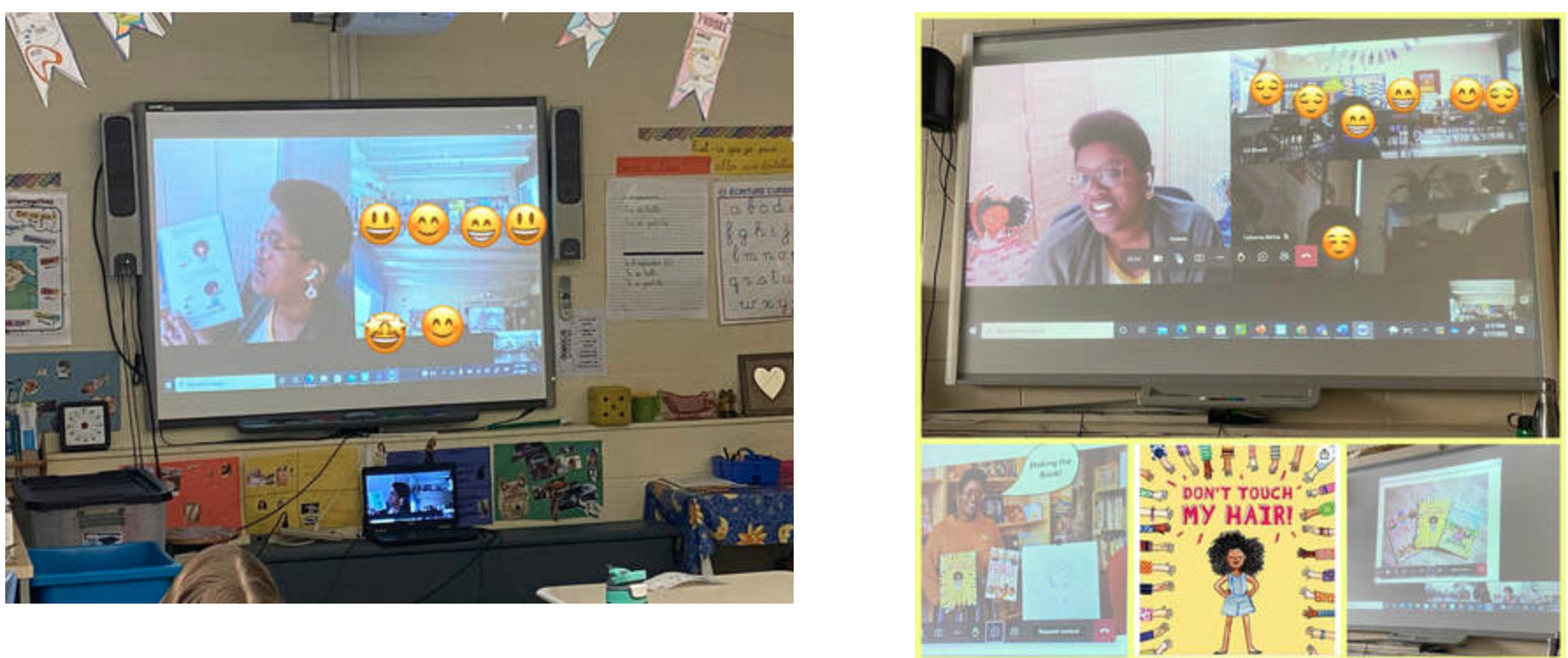
In the companion podcast hosted by Laura Pasquini (2021), she and her guest, Lee Skallerup Bessette, discuss both videos and other forms of media that can be used in learning. A topic that was brought up was the idea of teachers being purposeful in using videos and other forms of media when teaching. While I was a student teacher, I was strongly encouraged by my university professors to include technology in most of my lessons. As I reflected on how to do so, I knew I wanted to use technology mindfully. While teaching, my cooperative teacher helped me plan a unit for black history month. One of the topics the school was focusing on was the history of black hair. I found the book Don’t Touch My Hair by Sharee Miller, and the children were interested in it. Instead of reading the book to them, I used a YouTube read-aloud, allowing the students to see the text on a bigger screen with added captions. 

I researched the author and noticed she offered virtual meet and greets with schools, so I reached out to her and organized a time in which she would be able to meet with both my classes simultaneously. My intention in using a live stream with the author was for the students to have the chance to discuss different topics such as black history, writing stories, becoming an author and more. Thus, using a live-streaming video in such a way was meaningful as it contributed to their learning and based on their interests. 

Kids participating in zoom call in class with author Sharee Miller

However, there is a privilege of having access to the type of technology that would allow such a lesson to occur. As Pasquini and Bessette (2021) and Weller (2020) mention, there is a lack of access to these technologies for some students (this could be due to having no internet at home or not having a laptop to do the work on). Thus, when considering incorporating videos or other media forms, I kept it in school to ensure all students could participate. Reading the chapter and following along with the podcast showed me the importance of reflecting upon certain education technologies, especially when discussing universal design and student access. 

Moreover, while reading the chapter, Weller (2020) mentions that the use of videos as an assessment tool “is still relatively limited” (pg. 89). I found that incredibly interesting due to my experience in secondary school, where I had multiple instances in using creating videos as an exam or final project. Perhaps it was not a popular assessment form in the last few years, but when I was in secondary school (2008-2013), I remember various opportunities to create videos showing my learning. For instance, instead of writing about something newsworthy in my French class, we had to develop a news broadcast where my group members wrote a script, filmed, edited and presented the video in front of the class. For history, we chose a historical figure, remixed a song by changing the lyrics to a melody to describe their historical significance, and then created a music video. As Weller points out, projects and assessments such as these can make students participate more and more satisfied with their work. Therefore, if there is still a lack of using videos as an assessment tool, I was unaware of that. I hope that with students’ skills today using TikTok and other video platforms, educators will find a way to incorporate videos to assess their learning. 

To conclude, reading the second part of the book allowed me to reflect on my learning as someone who grew up at the peak of some of these technologies. It has brought back many memories I have had as a student. As an educator, I will continually consider using them in a classroom setting while considering accessibility issues and being purposeful in my choices. 

References

Pasquini, L. (Host). (2021, January). Between the Chapters #12 talking videos with @readywriting[Audio podcast episode]. In 25 Years of Ed Tech. Spotify.

Weller, M. (2020). Chapter 12: 2005 Videos. In 25 years of ed tech (pp. 43–47). essay, AU Press.

History of EdTech: E-Learning

I was excited when Weller’s (2020) book on the history of educational technology was the first reading we would do for LRNT 523. Early in the book, Weller (2020) mentions that people do not realize how far back educational technology goes; I am one of those people. I did not know that it dates back that far (actually, further than where he starts).

The topic that resonated with me the most was chapter six on e-learning. Weller (2020) discussed some criticisms of e-learning, including that people believe face-to-face learning is superior to online learning. As in face-to-face, you can get direct feedback and work directly with peers. I had that same approach before starting in the MALAT program. Due to COVID-19, I experienced what online education is like and found myself having difficulty (I couldn’t concentrate, got easily distracted, and missed the ease of working with others in person). Although I disagree with the criticism that “face-to-face education is the only valid form of education” (p.44). Every student is different in how they prefer to learn, and as Weller (2020) showed, many students enjoy the flexibility of online education when given the option. However, upon starting the MALAT program, I understand why some would choose an online program, as it offers more freedom. 

Finally, Weller (2020) discussed e-learning and Ed Tech in terms of higher education, as do most articles/papers we read in the MALAT program. As I have more experience with early childhood and elementary education, I would like to know when EdTech was implemented in these areas of education. As elementary students primarily get their education in the traditional face-to-face sense, I understand that when discussing e-learning, it focuses on higher education. On the other hand, educational technology tools are used online, and I am sure many are being used in elementary schools (less so in early childhood). Thus, I will continue researching Ed Tech in the K-12 education sector to understand its uses for younger students.

References

Weller, M. (2020). Chapter 6: 1999 E-Learning. In 25 years of ed tech (pp. 43–47). essay, AU Press.