While at Sam Houston Elementary in Port Arthur, I. S. D., located in Port Arthur, TX., where I taught Kindergarten and Pre-K, I volunteered to make a SWOT analysis and, although the study did not focused on teaching nor learning activities, the focal point of the SWOT study has a direct impact on the educators’ main responsibility: teach.
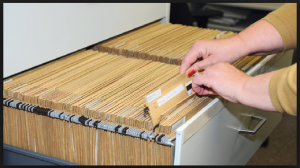
The school district requires all schools –ranging from early childhood to 12th grade– to create and maintain files of all their students. The files are referred to as “permanent folders”, and that is what they actually are: paper folders containing paper sheets. The sheets contain forms and formats in which data of specific processes have been registered, and the sheets have to be placed in the folder following this sequence:
- Birth certificate, social security card, proof of address (stapled inside of the folder’s front cover).
- Permanent record card.
- Final report card (updated at the end of the school year).
- Current school year test scores (TAKS, STARS, iStation, Chicago Early-PK).
- Current school year parent conferences (beginning and end of year).
- Current school year promotion/retention information (filed at the end of the school year).
- Important notes and communications (as required) (*).
- All previous school years information to be kept in this section, starting with most recent.
- Home language survey form (if applicable, filed before the school starts, stapled inside of the folder’s back cover).
Several school members are involved in compiling information througout the school year. The numbers of this list serve to match individuals with documents of the previous list:

- Attendance clerk receives documents from parent/guardian.
- Teacher of title.
- Teacher of title.
- Teacher of title.
- Teacher of title.
- Teacher of title.
- Attendance clerk, teacher of title, or administration staff as required.
- Current teacher of title must verify all documents are in sequence and complete.
- Admission/multilingual clerk (if applicable).
With regard to resources all is managed on paper, and the forms are manually filled out by the required person. It is important to take into account that the filing cabinets are within the attendance office, and their custody is responsibility of the attendance clerk. So a log is kept for the permanent folders to be available for consult or update only during the office hours of the attendance office –7:00 a.m. to 4:00 p.m.–, and all files checked out during the school day must be returned before attendance closes for the day.

Since the processes of compiling the information to fill out formats were all manual, there was no digital technology involved. Although the school district policies clearly stated the mandatory nature of keeping complete and flawless records of every student, every year at convocation, the superintendent emphasized that this matter was subject to a random compulsory audit process. His style of leadership was obviously power, due to the hierarchy of the post as head of the school district (O’Toole, 2017, p. 4).
In the end, the school’s principal must make sure all faculty and staff complied with the permanent folders’ procedures. The leadership style varied according to the principal of each school, and the effectiveness would differ greatly depending on the approach the principal took toward the permanent folders process.

There were several due dates during the school year to make sure the permanent folders were kept up to date. As those dates approached the need of the teachers to work with the folders increased, and the tight schedule of folders’ availability made the teachers find time during the day to get some progress with the folders’ duty. The most demanding process was the year-end massive update. To the extent that some teachers gave the students assignments to work with in the classroom while the teachers tended to the folders.
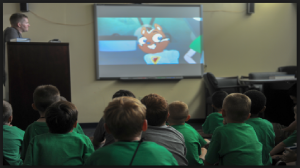
Even though faculty is not supposed to do this, it was a common practice that is easier to do the higher the grade level. On personal experience I can state that Pre-K and Kinder students do not engage long enough to allow the teacher to work on the folders, since their constant interaction with the educator might increase the chance of error. Some colleagues even resorted to have the children watching movies, but I considered it an inappropriate practice.
Instead, I requested the assistant principal for an extended schedule that allowed me access to the folders, and she agreed to let me enter the attendance office while she was in the school. I got the extra time I needed without cutting my instruction short. Her servant leadership style was absolutely helpful (O’Toole, 2017, p. 4).
The SWOT analysis is summarized as follows:
STRENGTHS > Faculty was highly commited to comply with the requirements established for the permanent folders. Even if this resulted from the convocation reminder, it still represented a strength.
WEAKNESSES > The reduced availability of access to the folders forced faculty to diminish instruction time in order to be able to complete all the folders-related administrative work, thus affecting the amount and quality of their teaching.
OPPORTUNITIES > Having an information system would greatly benefit the schools and the district. The information shall reside in a central repository, allowing online access without a restrictive schedule. The information system shall have appropriate security management in place, with access provided in accordance to a privilege structure of user and password. Additionally, back-up procedures would be in place to comply with audit processes, as well as to ensure prompt recovery of information in a crisis scenario.
THREATS > The current situation has the schools and district exposed to data loss due to unplanned events ranging from spilling coffee over one folder’s documents to floods and fires.
Undoubtedly there would be costs involved although they were not identified nor calculated at the time, and they would refer to both options: continue with the current practices and procedures, or implement the recommended measures of improvement.
Not implementing the change would mean keep affecting the learning of the students by eroding the teaching quality of the educators due to the time and effort required by the administrative duties described in the case. Additionally, the cost of re-building the paper folders again –to the extent of what would be possible– should a crisis occur must also be considered. While implementing a change would require budget to buy or develop the information system with the functionality broadly described above, the technology platform was already in place so the cost would refer almost solely to the software, its implementation, and the training of personnel.
The learning opportunities would be for all the schools’ faculty and staff, and the district’s personnel in learning how to use the information system that would help them fulfill the administrative duties of the permanent folders –they may no longer exist as such– in a much more efficient way to become digital permanent folders. There would be other benefits derived from having such information system, among which are the information available and better use of faculty’s time. And last but not least, the students would also benefit from having more time of their educators devoted to prepare class and teach.
__________________________________
(*) To further document the time shortage certain situations caused the teacher, consider the case of a student who the educator detected as candidate for special support. It is the teacher of title’s responsibility to open a file and follow the procedure, coordinate and attend meetings with parents and specialists, and do the paperwork to document the case for the school and district to evaluate. The process can take more than a school year to complete thus the student’s special needs might stay unattended for quite a long period of time, which affects not only the student’s performance taking up teacher’s time, but might also impact the quality of the classroom climate.
References
All graphic material retrieved from the creative commons website https://search.creativecommons.org/
O’Toole, J., (2008). Notes toward a definition of values-based leadership. The Journal of Values-Based Leadership, 1(1).