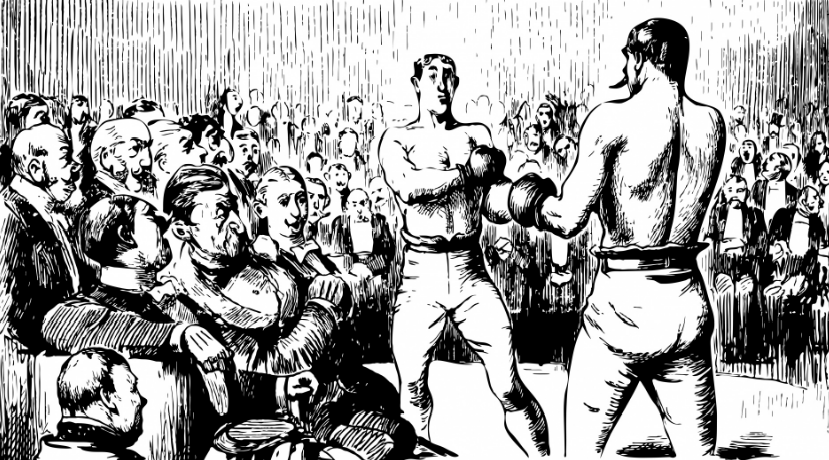
In every organisation each department is expected to complete their duties and do it well. Nobody likes the idea of having someone else stepping in to check their work. The audit department (or firm) is generally seen as an unwelcomed entity, and being regarded so makes everyone’s job less comfortable.
Why does audit exist? Regardless of the size and type of organisation, there is the need for an independent check and balances reporting, mostly on the financial aspects of the business (Braiotta, Colton, & Ramamoorti, 2010), although some corporations extend the coverage to include non-financial stand points of its operations. Such was the case of an international cement company which, by explicit request of the CEO, had not one but two departments with auditing functions in its organisational structure.
One unit, named Internal Control, was part of the Accounting and Comptrollership Division focused exclusively on financial information. The other unit, Process Assessment, reported to the Administrative Division and, as the name stated, covered all productive processes within the company linking them to the use of financial resources.
Inevitably, the auditing activities of both units overlapped when going over finance-related topics. Although not frequently, sometimes different opinions about specific audit matters were reported to the CEO generating friction between the auditing units. These unsettling situations added up to the unwelcomeness of both auditing departments, making them unpopular throughout the company.
To strengthen its then recent expansion to several countries, the company turned to the post-merger integration (PMI) team to use that same approach to all the organisation with the goal of streamlining and standardising procedures supported with computerised information systems. The audit function was not an exception. A system for Management of Internal Control (MIC) was implemented, for which a training program took place including both Internal Control and Process Assessment.
The PMI team prepared briefing information to address the top management of every country as well as pre-training guidelines and assignments to work on before attending the MIC workshop. The challenge for the PMI team was to successfully train the audit units in spite of an environment loaded with enmity.
The leadership styles I used to conduct the MIC workshop included: The shared style to open the sessions in coordination with the comptrollership of each host country; the cognitive style when teaching the participants about MIC; the transformational style to present the audience with the plan to work in small groups that combined the talents of both departments, this way the rivalry they had would loose meaning. And last but not least, the servant style when helping the teams finish their assignments (O’Toole, 2008).
References
All graphic material retrieved from Creative Commons website.
Braiotta, L. J., Colson, R., & Ramamoorti, S. (2010). The audit committee handbook. Retrieved from https://ebookcentral.pro
quest.com
O’Toole, James (2008). Notes Toward a Definition of Values-Based Leadership. The Journal of Values-Based Leadership, 1(1).
Hi Alfonso,
Interesting that two auditing teams had conflicting opinions. You would think they were after a similar result. I think you are right with your recommendation for shared and open sessions to reduce the rivalry between teams. It sounds like if the project teams had aligned a little more, the objectives could have been clarified and the collaboration of talents could have been used effectively. Al-Haddad & Kotnour (2015) quote Hatvany et al (1982), “alignment is defined as the extent to which two or more organizational dimensions meet the predefined theoretical standard with mutual agreement” (page 251).
Reference
Al-Haddad, S., & Kotnour, T. (2015). Integrating the organizational change literature: a model for successful change. Journal of Organizational Change Management, 28(2), 234-262. Retrieved from https://scholar.valpo.edu/jvbl/vol1/iss1/10/
Hi Laura, thank you for reading my post and sharing your comments and references. The fact that the two audit departments finally understood that they were compatible and complementary made a big difference. They started to collaborate instead of competing between themselves and, what was more important, they agreed on mutually improve their image throughout the company. It is interesting to know that the “truce” was not an idea from top management but from the actual people that did the field work. Unfortunately I was not around anymore to see the results but I learned that they faced some resistance from some division director. Cheers!